





















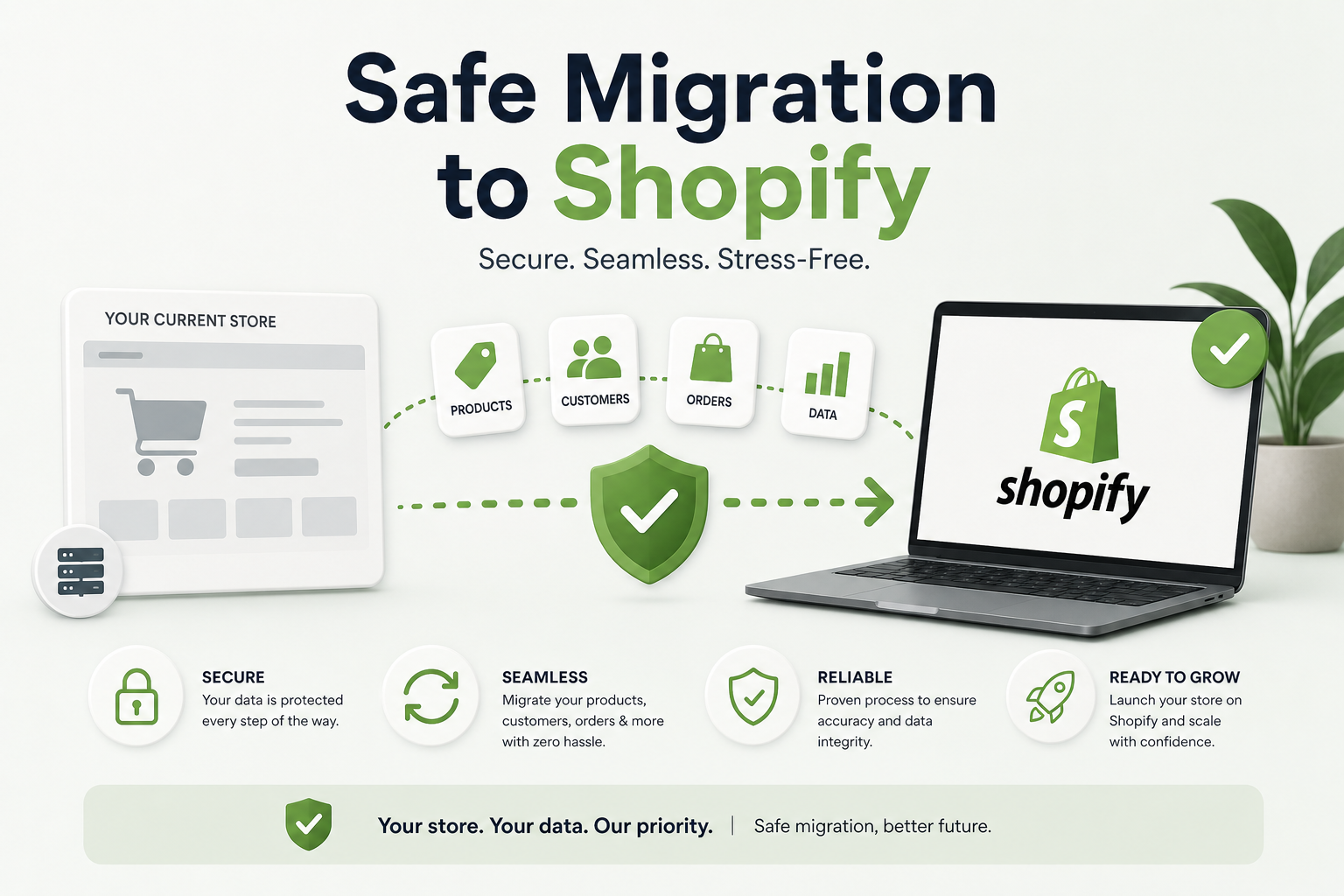
Migrating an eCommerce store to a new platform is one of the most critical decisions a business can make. While Shopify has become a preferred choice for modern online retailers due to its scalability and ease of use, the migration process itself can introduce risks if not handled properly. A safe Migration to Shopify ensures that businesses preserve their data, maintain search rankings, and continue operations without disruption.
Why Businesses Are Moving to Shopify
Shopify has established itself as one of the leading eCommerce platforms globally, supporting millions of businesses and processing billions in transactions annually.
Companies choose Shopify for several reasons:
- Scalable infrastructure that supports business growth
- User-friendly interface for managing products and orders
- Reduced operational overhead, including hosting and security
- Continuous platform updates and feature enhancements
For many businesses operating on legacy systems, migration is not just an upgrade—it is a strategic move toward efficiency and long-term growth.
What a Safe Migration to Shopify Involves
A Shopify migration is more than just transferring products and content. It is a structured process that involves moving the entire digital ecosystem of a business, including:
- Product catalogs, images, and descriptions
- Customer data and order history
- Payment systems and integrations
- SEO metadata and URLs
The process typically follows three main phases: planning, execution, and post-launch optimization.
Each stage plays a crucial role in ensuring that the transition is smooth and that no critical data or functionality is lost.
Key Risks During Migration—and How to Avoid Them
Without proper planning, migration can introduce several challenges that impact business performance.
Data Loss or Corruption
One of the most common risks is losing essential data such as customer records or order history. Backing up all data before migration is essential to prevent irreversible loss.
SEO Disruptions
Search engine rankings can drop if URLs, metadata, or site structure are not preserved correctly. Implementing proper redirects and maintaining SEO elements helps protect organic traffic.
Downtime and Operational Interruptions
Poorly executed migrations can result in temporary downtime, affecting sales and customer experience. Careful planning and testing minimize these disruptions.
Integration Issues
Existing tools such as payment gateways, inventory systems, or third-party apps may not transfer seamlessly. Identifying and reconfiguring integrations in advance is critical.
Methods for Migrating to Shopify
There are several approaches businesses can take depending on their size, complexity, and technical expertise:
- Manual Migration: Suitable for smaller stores using CSV files, though limited in scope
- Migration Apps: Automated tools that transfer products, customers, and orders efficiently
- Professional Services: Hiring experts to manage the entire process, ensuring accuracy and customization
For complex stores, working with experienced professionals is often the safest option.
The Long-Term Benefits of a Safe Migration
When executed correctly, migrating to Shopify delivers significant long-term advantages:
- Lower total cost of ownership compared to legacy systems
- Faster time to market for new products and features
- Improved site performance and user experience
- Greater flexibility for scaling across global markets
Many businesses find that the return on investment justifies the migration cost, especially when operational efficiencies are taken into account.
Why Planning Is the Most Important Step
A successful migration begins long before any data is transferred. Proper planning includes:
- Auditing existing data and removing inconsistencies
- Mapping out SEO structure and redirects
- Identifying necessary integrations and features
- Testing the new store thoroughly before launch
Migration is not a one-time event—it is a process that requires careful coordination and ongoing optimization.
Final Thoughts
Moving to Shopify can unlock new opportunities for growth, efficiency, and scalability. However, the success of this transition depends entirely on how well the migration is executed.
A safe migration ensures that businesses retain their data, protect their online presence, and continue operating without interruption. By approaching the process strategically and leveraging the right expertise, companies can make the transition confidently and position themselves for long-term success in the evolving eCommerce landscape.