



















A good fishing trip depends on preparation. Rods, reels, tackle, bait, weather, and timing all matter, but eyewear is often overlooked until the sun is bouncing hard off the water. The right sunglasses can make long hours outdoors more comfortable and help anglers stay focused from the first cast to the ride home.
Why Regular Sunglasses Are Not Always Enough
Fishing creates unique visibility challenges. Water reflects sunlight, and that glare can be intense on lakes, rivers, bays, and open coastal areas. Standard tinted lenses may make the day feel darker, but they do not always solve the glare problem.
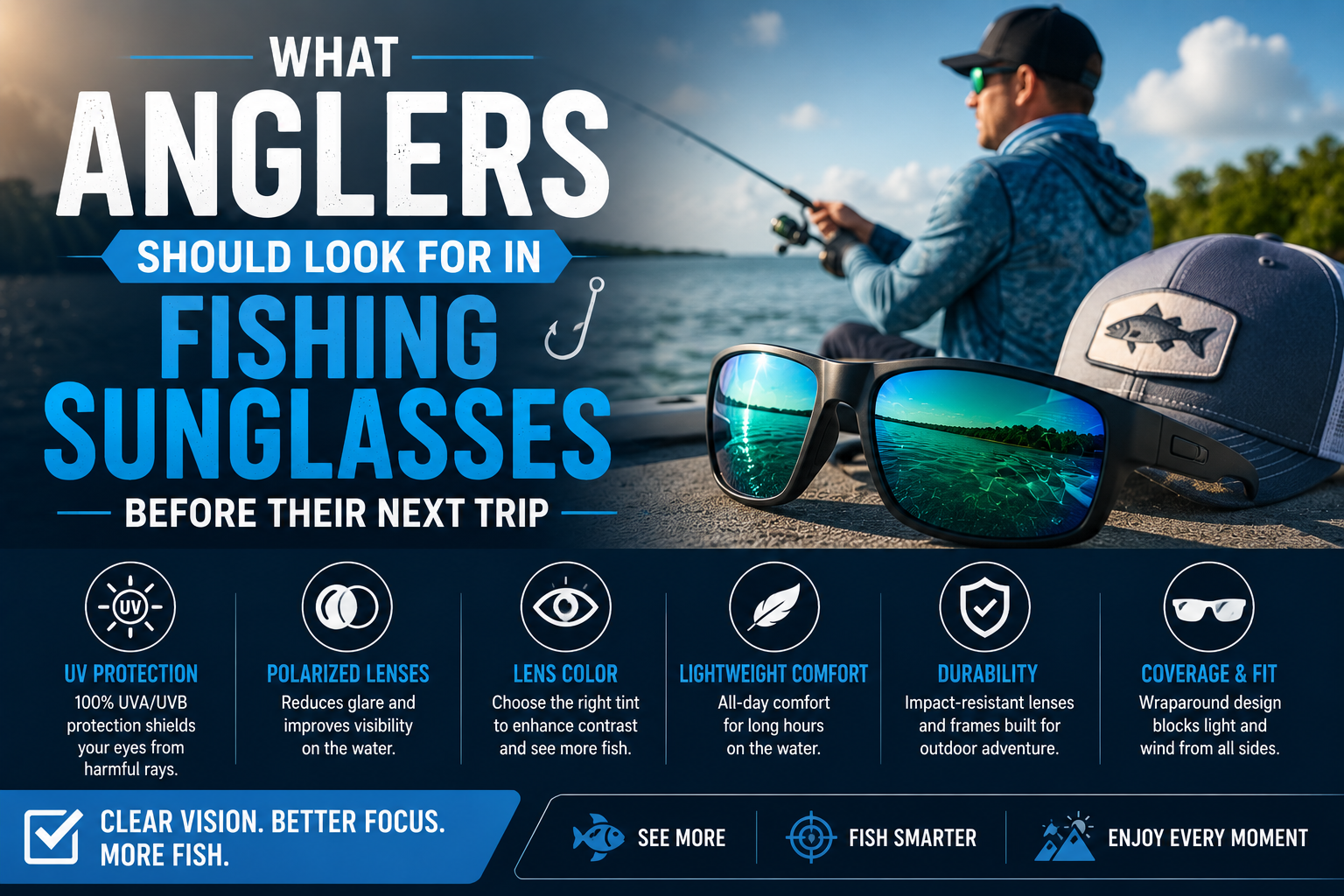
Polarized lenses are designed to reduce reflected glare, which is especially useful around water. For anglers, that can mean less squinting, better surface visibility, and a more relaxed experience during long sessions.
This does not mean sunglasses will magically guarantee a catch. They are simply one of those practical pieces of gear that can make the day easier, especially when conditions are bright.
Comfort Matters During Long Hours Outside
Fishing is rarely a five-minute activity. Whether you are bank fishing after work or spending a full day on a boat, your sunglasses need to feel comfortable for hours.
Look for features such as:
- Lightweight frames that do not press heavily on the nose
- A secure fit that stays in place when you look down
- Wraparound coverage to reduce side glare
- Durable hinges for repeated wear
- Lens colors suited to your fishing environment
- Frame sizes that match your head shape
Fit is especially important. Sunglasses that slide down your face every time you cast, lean over, or check tackle can become distracting. A snug but comfortable pair helps you focus on fishing instead of constantly adjusting your gear.
Lens Color Can Change the Experience
Different lens colors can feel better in different settings. Gray or smoke lenses are versatile for bright, open water and general outdoor use. Amber, brown, or copper tones may increase contrast, which some anglers prefer in mixed light or shallow water. Blue or green mirror lenses can also be popular for bright days and water-heavy environments.
There is no single perfect lens color for every angler. A person fishing small shaded creeks may want something different from someone heading offshore in direct sunlight. Think about where you fish most often, then choose lenses that match those conditions.
Frame Shape Is More Than Style
Fishing sunglasses should protect more than just the front of your eyes. A wider or slightly wrapped frame can help block light from the sides, which is useful when sunlight reflects from multiple angles.
This is where sport-inspired frames often shine. They are usually designed to stay secure, provide better coverage, and handle outdoor movement. For people with larger head sizes, XL-style frames can prevent pinching and improve comfort.
When comparing polarized fishing glasses, it helps to think about the kind of water you fish, how long you stay outside, and whether you need regular, larger-fit, or reader-friendly options.
Durability Should Be Part of the Decision
Fishing gear takes abuse. Sunglasses may get tossed onto a boat seat, dropped in a tackle bag, splashed with water, or exposed to sunscreen, sweat, and sand. A delicate pair may look nice, but it may not be the best choice for rugged use.
Durable frames and reliable lenses are important because fishing environments are unpredictable. You want eyewear that can handle real outdoor conditions without feeling too precious to use.
Simple care habits help them last
A few small habits can extend the life of your sunglasses:
- Rinse off saltwater or dirt after a trip.
- Use a microfiber cloth instead of a shirt or towel.
- Store them in a case when not in use.
- Avoid leaving them loose on a boat deck or dashboard.
- Check hinges periodically if you wear them often.
Good sunglasses are gear, and gear lasts longer when it is cared for properly.
Do Not Forget Safety and Eye Comfort
Fishing often means hooks, branches, wind, sun, spray, and debris. Sunglasses add a layer of coverage that can help protect your eyes during normal outdoor activity. While they are not a replacement for specialized safety equipment, sturdy eyewear is still a smart part of an angler’s setup.
Eye comfort is another benefit. Less glare and squinting can make a full day outside feel less draining. This matters on early mornings, midday outings, and late-afternoon sessions when the sun angle can become harsh.
Conclusion
Fishing sunglasses should be chosen with the same practical mindset as rods, reels, and tackle. The best pair for you depends on your favorite fishing spots, the light conditions you face, your head size, and how long you usually stay outdoors.
By choosing polarized lenses, a secure frame, comfortable materials, and a style suited to real fishing conditions, anglers can make their time on the water more enjoyable and less distracting. Good eyewear will not catch the fish for you, but it can help you stay comfortable, focused, and ready for the next cast.