






















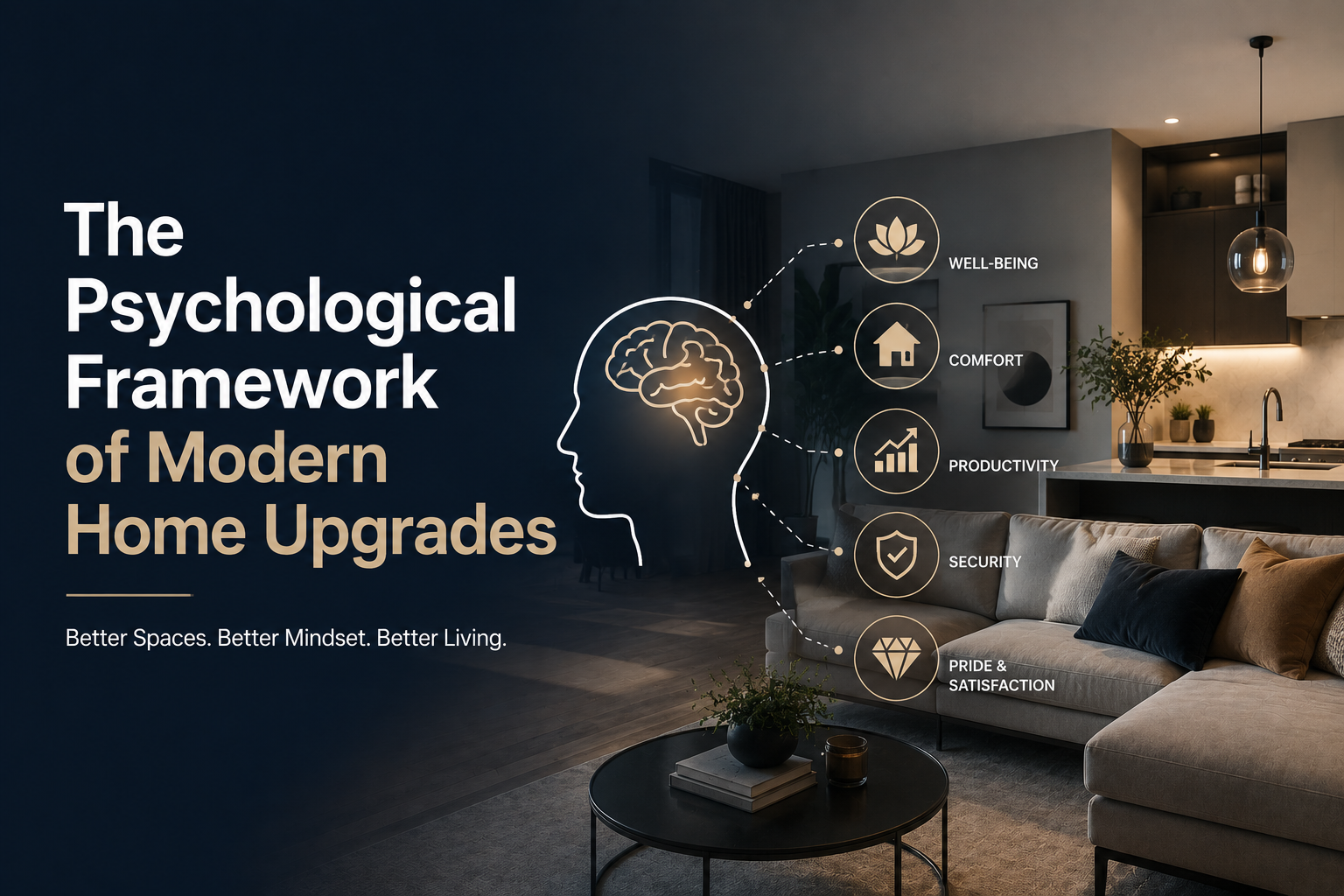
Investing in substantial residential upgrades involves more than a financial transaction; it represents a complex psychological journey for the property owner. Unlike minor retail purchases, structural improvements, such as upgrading architectural entry points, replacing HVAC networks, or re-engineering garage enclosures, carry high stakes. These systems are expected to operate flawlessly for decades under harsh environmental conditions. Because the average homeowner possesses limited technical expertise in structural mechanics, a distinct cognitive gap emerges between the desire for an upgraded property and the confidence required to execute the investment.
To bridge this gap, modern consumers rely heavily on structural validation, risk mitigation strategies, and collective consumer sentiment. Understanding how these factors influence decision-making can transform a stressful home improvement project into a structured, highly rewarding investment.
The Risk-Reward Dynamic in Residential Investments
Every major property modification carries inherent psychological friction. Homeowners naturally calculate a risk-reward ratio before committing capital to a project. The primary reward is straightforward: enhanced curb appeal, superior thermal insulation, improved operational safety, and increased overall property valuation. However, the perceived risks often loom larger in the consumer’s mind. These include the fear of choosing substandard materials, the anxiety of encountering hidden operational defects, and the dread of hiring a service provider that fails to deliver on its promises.
This psychological barrier is amplified by the fact that structural systems are highly interdependent. For instance, installing a new, heavy-duty insulated overhead door alters the physics of the entire opening mechanism. The existing tracking system, spring tension, and electric motor calibration must all align perfectly with the mass of the new installation. If any variable is miscalculated, the entire system faces premature degradation.
Because the technical complexities are dense, homeowners frequently experience choice paralysis. They become overwhelmed by technical specifications, material variants like polyurethane versus polystyrene, and complex spring cycles. To cut through this analytical fatigue, the human brain naturally seeks a shortcut: the verified experiences of peers who have already navigated the exact same dilemma.
The Mechanics of Social Proof and Structural Trust
In behavioral economics, “social proof” is the psychological phenomenon where individuals look to the behavior and outcomes of others to guide their own decisions. In the context of residential construction and repair, social proof serves as an external validation mechanism that demystifies technical claims. When a manufacturer states that an overhead door can withstand high-velocity wind zones, it is perceived as a marketing claim. When fifty neighbors confirm that the same door held up flawlessly during a severe coastal storm, it becomes a verified fact.
This collective validation is particularly critical when choosing a technical team to execute the installation or repair. A high-quality structural system is only as good as the precision with which it is installed. Misaligned vertical tracks, uneven spring tension, or improperly set travel limits on an automated opener can ruin premium materials within months. Therefore, the selection of the service provider represents the highest point of friction in the consumer journey.
To cut through uncertainty and evaluate the reliability, craftsmanship, and punctuality of a technical crew, savvy property owners routinely look for transparent, uncensored feedback from real clients. Before signing a contract, it is highly beneficial toCheck Out What People Say regarding the actual field performance, responsiveness, and problem-solving capabilities of the technicians who will be handling the heavy machinery on-site.
Evaluating Technical Competence Beyond the Marketing
When analyzing consumer feedback and testimonials, a discerning homeowner must look past generic praise. Phrases like “great job” or “friendly service” are pleasant, but they do not provide insight into technical competence. True structural trust is built on specific operational milestones that are highlighted in detailed peer reviews.
Precision Calibration and Balancing
A properly installed overhead system must be perfectly counterbalanced. This means the tension in the torsion or extension springs must precisely match the dead weight of the door panels. A great metric of a technician’s skill is whether previous clients note that their doors can be lifted manually with minimal effort, or that the automated motor runs quietly without straining.
Material Integrity and Environmental Resilience
Testimonials that reference how a system performs two, three, or five years after installation offer invaluable insights into material quality. Homeowners should look for feedback mentioning how well the weather stripping prevents water infiltration during heavy downpours, or whether multi-layer steel panels successfully resist denting and thermal transfer over time.
Emergency Responsiveness and Safety Protocols
Because a malfunctioning overhead door can trap a vehicle inside a garage or compromise home security, emergency repair reliability is paramount. High-quality feedback often centers on how quickly a technical team arrived to handle a snapped cable or a broken spring, and whether they followed strict safety protocols to secure the high-tension components before beginning work.
Overcoming the Hidden Costs of Deferred Maintenance
Another psychological hurdle homeowners face is procrastination. It is common to ignore minor operational warnings, such as a slight grinding noise, a subtle hesitation during the lifting cycle, or a worn bottom seal, hoping the issue will self-correct. This avoidance strategy is rooted in the fear of facing unexpected repair expenses.
However, the physics of mechanical systems do not accommodate procrastination. A garage door is an interconnected network of moving parts under constant stress. When one component, such as a roller bearing, begins to seize, it creates immense frictional resistance. This resistance forces the electric opener to pull harder, accelerating wear on the internal gears. Simultaneously, it places uneven load distributions on the cables and springs.
What begins as a simple, low-cost roller replacement can rapidly cascade into a catastrophic failure involving a burned-out motor and snapped torsion springs. Recognizing these early warning signs and addressing them promptly through validated professionals protects both the household budget and physical safety.
Empowering the Final Decision
Ultimately, successful home optimization requires moving from a state of anxious speculation to informed confidence. By understanding the mechanical realities of residential systems and actively leveraging the authentic experiences of the local community, property owners can bypass the pitfalls of choice paralysis. When it comes time to execute an upgrade or an urgent structural repair, relying on a verified track record ensures that your home investment remains secure, functional, and durable for years to come.