





















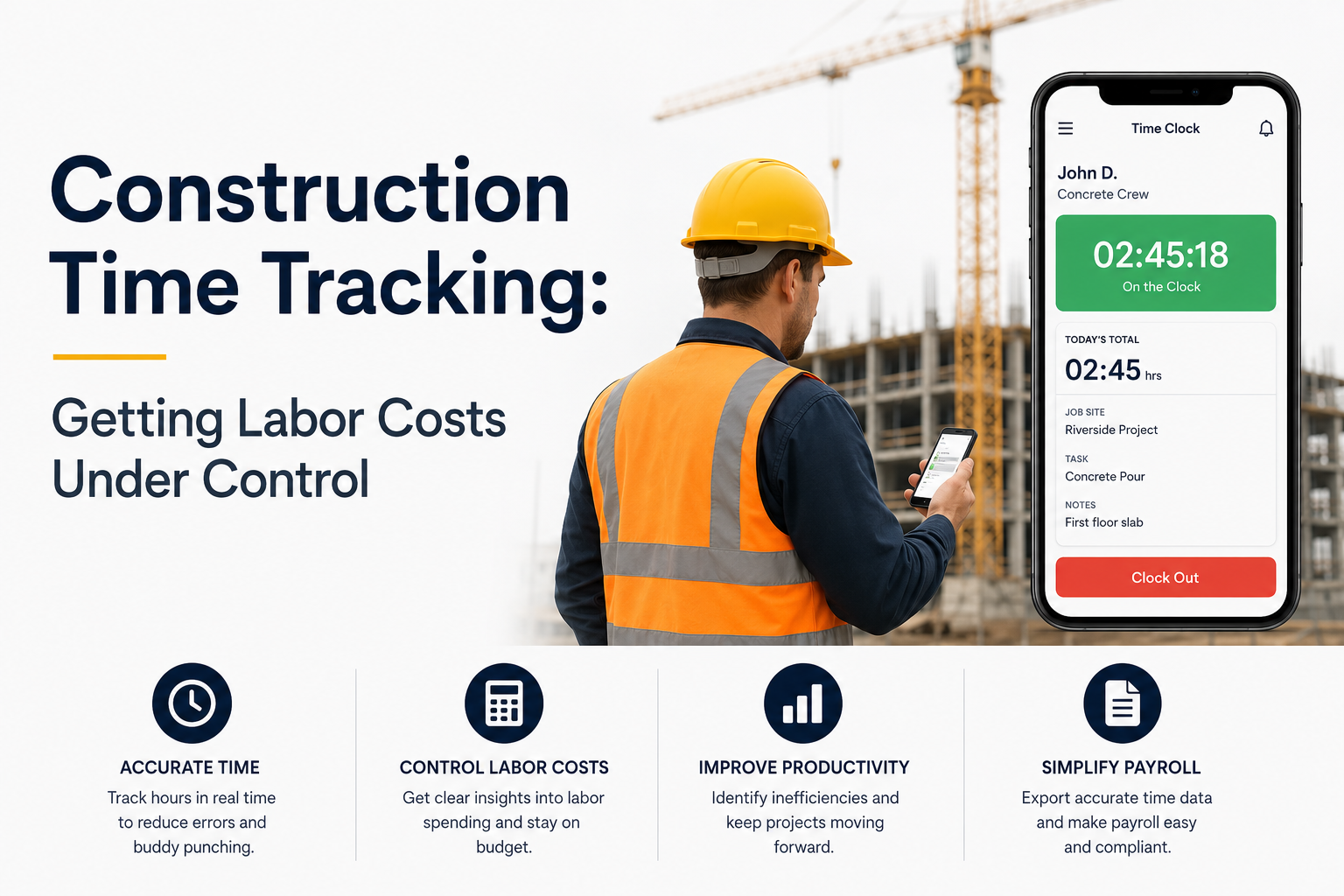
Labor is the single largest cost variable on most construction projects. Material prices are fixed at purchase; subcontractor rates are contracted in advance. But field labor — how many hours crews spend on each phase, how much overtime accumulates, how time is split between productive work and waiting — is a moving target that most firms track poorly.
Dedicated construction time tracking software changes this. Instead of relying on paper timesheets collected at week’s end and entered manually into payroll, digital tracking gives project managers real-time visibility into where labor hours are going — by crew, by phase, by cost code.
Why Construction Tracking Is Different
Construction has characteristics that make generic time tracking tools inadequate:
- Multiple job sites: Workers move between sites. Time entries need to be tied to specific locations, not just to a project name.
- Cost codes: Every hour needs to map to a cost code so labor can be compared against the estimate by work type — concrete, framing, electrical, finish work.
- Crew-level entry: Foremen often log time for their whole crew, not just themselves. The software needs to support that workflow.
- Mobile access: Field workers don’t sit at desks. Time logging has to work on a phone with minimal friction.
Connecting Field Hours to Project Profitability
A construction firm that tracks labor accurately can answer the question that matters most: is this project on budget? When actual hours are compared against estimated hours by phase, project managers can see overruns while there’s still time to act — not after the job is finished and the loss is locked in.
For firms managing both field crews and office-based engineering staff, time tracking for architects and project managers needs to feed into the same reporting system as field labor. Unified data means unified cost visibility.
Handling Subcontractors and Absences
On complex projects, you’re tracking your own crews alongside multiple subcontractors. Each needs separate time records, but the project manager needs a consolidated view. Absence tracking is equally important — knowing which of your foremen are on-site tomorrow affects crew deployment and safety compliance. Tools like actiPLANS handle leave and availability planning so project leads always know actual capacity before assigning work.
Implementation That Sticks
The most common failure mode in construction time tracking rollouts is poor adoption in the field. Workers who find the tool confusing stop using it within a week. Prioritize software with a dead-simple mobile interface, offline capability for sites with poor connectivity, and foreman-level bulk entry. Get buy-in from foremen first; the rest of the crew follows.