




















A performance improvement plan (PIP) is one of the most consequential documents a manager produces. Done well, it gives an underperforming employee a clear, documented path to meeting expectations — and gives the organization a defensible record of the steps taken before any disciplinary decision. Done poorly, it becomes either an empty gesture or a litigation liability. The structure of the document matters as much as the conversations surrounding it.
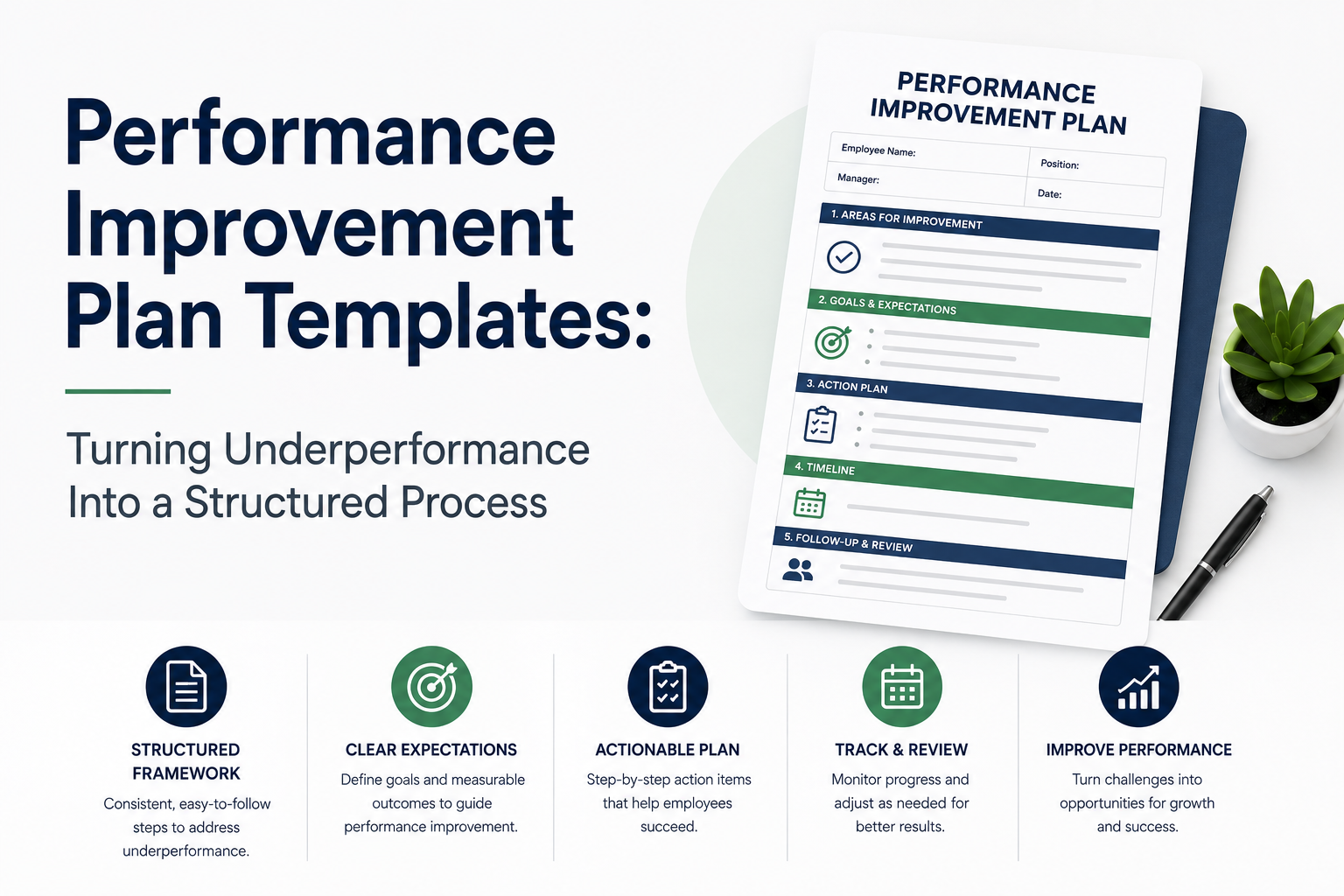
A well-designed performance improvement plan template includes: a clear statement of current performance gaps, specific measurable goals with defined timelines, the support and resources the employer will provide, check-in milestones, and the consequences of not meeting the plan. Each element has a purpose — removing any one of them weakens both the developmental intent and the legal defensibility of the document.
Connecting Performance Goals to Measurable Outcomes
The most common failure in performance improvement plans is setting goals that can’t be objectively measured. “Improve communication” is not a PIP goal. “Submit weekly project status updates by Friday at 5pm for the next 8 weeks without missing more than one deadline” is a PIP goal. The difference is enforceability — vague goals create disputes at review time because manager and employee have different interpretations of whether the goal was met.
For teams tracking time and project output, connecting PIP goals to measurable work data makes accountability cleaner. A goal tied to task completion rate, billable hour targets, or on-time delivery of specific deliverables gives both parties an objective reference point. Checklist templates used alongside PIPs give employees a structured way to track their own daily progress against the plan — which tends to improve outcomes more than milestone reviews alone.
The Role of Templates in Consistency Across Teams
Organizations where different managers handle PIPs differently create legal and cultural inconsistency. If one department uses a rigorous, documented process and another handles the same situation informally, the organization is exposed to claims of disparate treatment. Standardized PIP templates applied consistently across all teams and levels eliminate this risk — every employee goes through the same structured process, managed by the same document, regardless of which manager is responsible.
HR teams that maintain a library of standardized management templates — PIPs, goal-setting documents, review frameworks, and project tracking tools — create a more consistent management culture. Budget templates and resource planning documents that align with HR processes give managers the full toolkit to manage their teams from planning through performance review without gaps in the documentation chain.
What Happens After the PIP
A PIP is a time-bounded document. At the end of the defined period, one of three things happens: the employee has met the goals and the plan closes successfully, the employee is still falling short and further action is taken, or the situation has changed and the plan needs to be modified. Documenting the outcome with the same formality as the plan itself — a written close-out note signed by both parties — completes the record and ensures there’s no ambiguity about what was agreed and what was assessed.