




















Choosing the right support for a child with visual impairment is a significant decision for any family. In the UK, there are several organisations offering services ranging from early intervention to educational resources, emotional support, and independence training. However, not all charities provide the same level of specialist expertise or breadth of services. Understanding what to look for can help families make informed, confident choices that genuinely support a child’s long-term development.
Specialist Expertise in Visual Impairment Support
One of the most important considerations is whether a charity has dedicated expertise in blindness and partial sight in children. General disability organisations may offer broad support, but children with visual impairments often require highly tailored approaches that address sensory learning, communication, and accessibility.
Families should look for charities that demonstrate:
A clear focus on visual impairment in childhood
Evidence-based educational and developmental programmes
Experience working with schools, teachers, and specialist professionals
Specialist knowledge ensures that support is not generic but designed around the unique ways blind and partially sighted children learn and interact with the world.
Access to Educational and Learning Resources
Education is a central area where the right charity can make a transformative difference. High-quality organisations provide accessible learning materials, including tactile resources, audio-based learning tools, and adapted reading formats that support literacy development.
When evaluating a charity, families should consider:
Availability of accessible books and learning tools
Support for both home and classroom learning
Resources that encourage independent study and curiosity
Charities that invest in inclusive educational content help bridge the gap between mainstream schooling and the additional learning needs of visually impaired children.
Emotional Wellbeing and Social Development
Beyond education, emotional resilience and social inclusion are essential aspects of a child’s development. Living with sight loss can present challenges in confidence, communication, and participation in everyday activities.
Strong charities will typically offer:
Peer support networks for children and families
Activities that promote confidence and independence
Guidance for parents managing emotional and practical challenges
A well-rounded support system ensures that children are not only learning but also building self-esteem and social skills.
Family Support and Practical Guidance
Families should also consider how well a charity supports parents, carers, and siblings. The impact of visual impairment extends beyond the child, and effective organisations recognise the importance of family-wide support.
Look for charities that provide:
Practical advice for navigating daily challenges
Training or workshops for parents and educators
Clear pathways for accessing ongoing support services
The most effective organisations act as long-term partners, not just service providers.
Accessibility, Innovation, and Modern Learning Tools
In 2026, technology plays an increasingly important role in supporting blind and partially sighted children. Leading charities now integrate assistive technology, audio learning systems, and digital accessibility tools into their programmes.
Families should look for organisations that:
Embrace modern accessible formats
Continuously update their learning resources
Support digital inclusion in education and leisure
Innovation ensures that children are prepared for a world where digital literacy is essential.
Long-Term Development and Independence
Finally, families should consider whether a charity supports long-term growth rather than short-term assistance. The best organisations focus on helping children develop independence, confidence, and life skills that carry into adulthood.
This includes:
Mobility and orientation training
Preparation for further education and employment pathways
Encouraging autonomy in everyday decision-making
Long-term thinking is essential for meaningful, lasting impact.
Conclusion
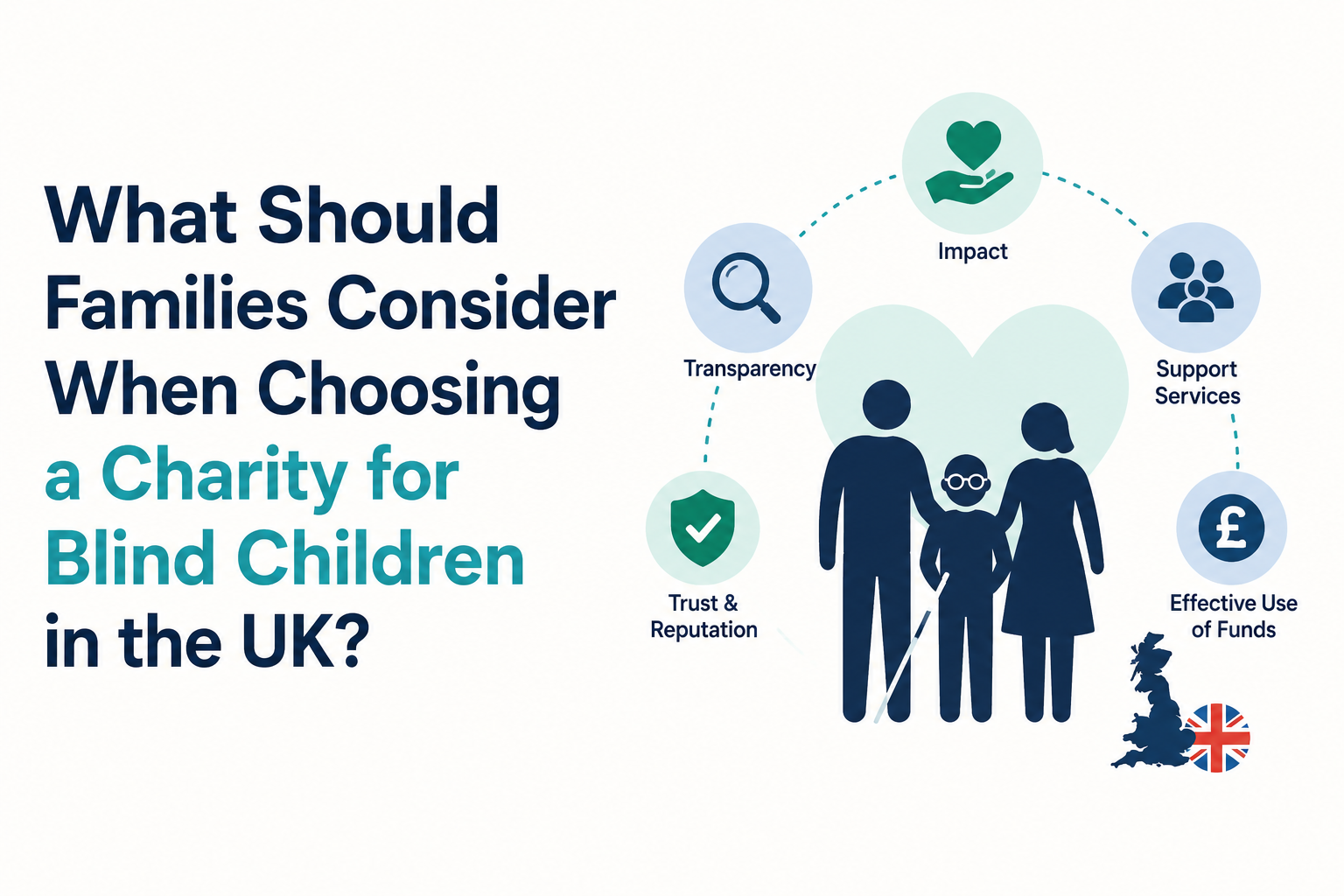
Choosing a charity for blind children in the UK is about more than immediate support—it is about finding an organisation that understands the full journey from early childhood through to independence. The most effective charities combine specialist expertise, educational accessibility, emotional support, family guidance, and modern technology to create a holistic support system.
By carefully evaluating these areas, families can ensure they connect with organisations that truly enhance opportunity, inclusion, and quality of life for children with visual impairments.