






















Introduction
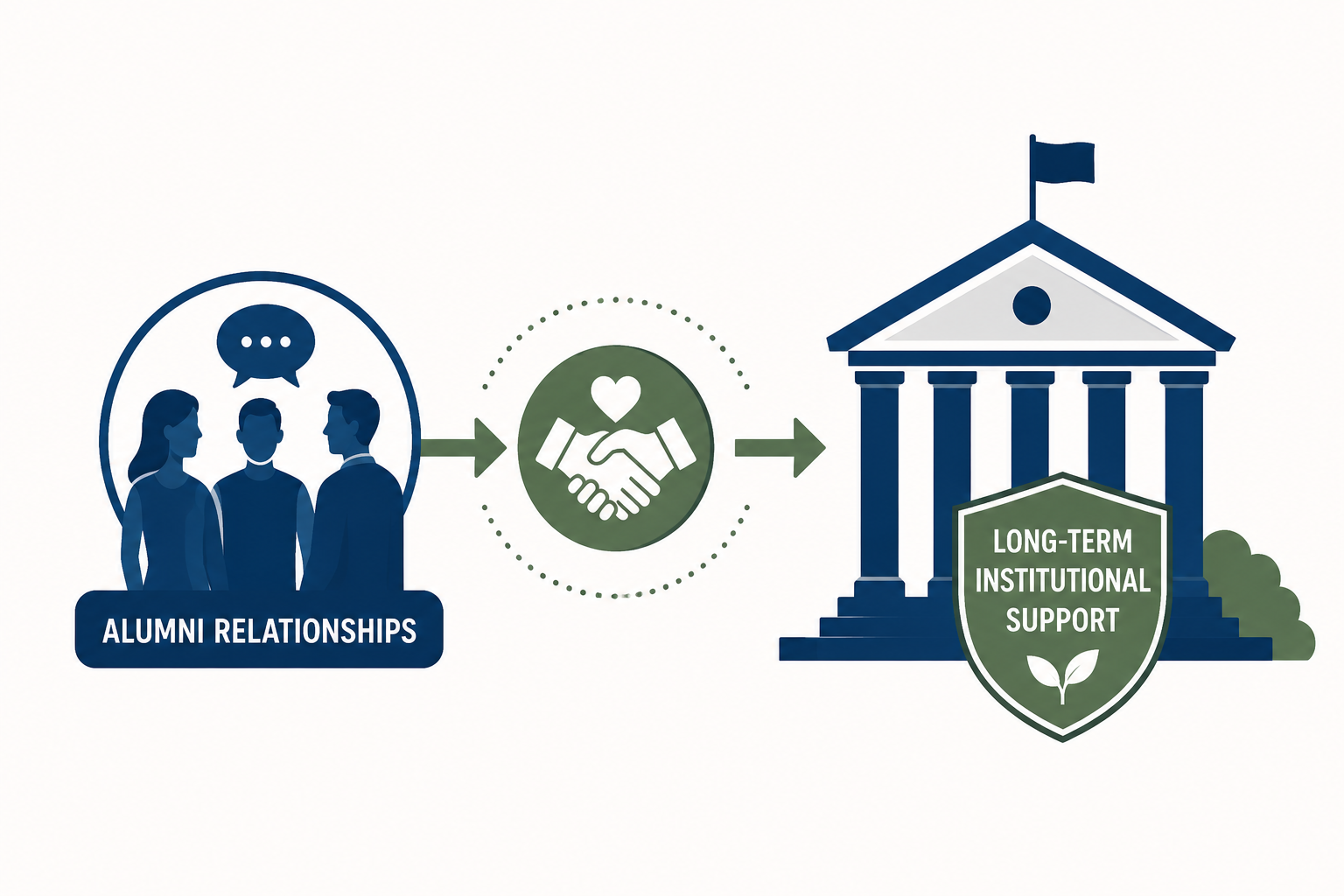
Alumni relationships are one of the most valuable assets an independent school can develop. Former pupils carry the school’s story with them long after they leave. They can become advocates, mentors, donors, volunteers, ambassadors, governors, professional contacts and sources of wisdom for future generations.
Yet many schools still treat alumni engagement as a periodic activity rather than a long-term strategic relationship. A reunion, newsletter or occasional fundraising campaign can be useful, but these alone rarely unlock the full value of an alumni community.
Long-term institutional support grows when alumni feel genuinely connected to the school’s purpose. It depends on trust, relevance, communication and a clear understanding of what former pupils want from the relationship. For schools under pressure to strengthen reputation, widen access and plan sustainably, alumni engagement deserves a more strategic role.
Alumni support starts with belonging
The strongest alumni relationships are built on a continuing sense of belonging. Former pupils need to feel that they remain part of the school community, not simply names in a database.
This begins while pupils are still at school. Their experience of teaching, friendship, pastoral care, co-curricular life, leadership and transition all influence whether they will want to remain connected later. If pupils leave feeling proud, known and valued, future engagement becomes much easier.
Schools should therefore view alumni engagement as part of the whole pupil journey. The relationship does not begin ten years after leaving, when the development office needs support. It begins in the everyday experiences that shape how pupils remember the school.
A strong leavers’ process can help. Schools can introduce pupils to the alumni network before they depart, explain how they can stay connected and make it clear that their relationship with the school continues beyond their final day.
Support should not be reduced to fundraising
Fundraising is an important part of alumni development, but it should not be the only measure of success. If alumni hear from a school only when money is needed, the relationship can quickly feel transactional.
Long-term support is broader than giving. Alumni may be willing to offer careers talks, work experience, mentoring, professional introductions, event support, archive contributions, international contacts or advocacy. These forms of involvement can be just as valuable as financial donations, especially when they strengthen the school’s reputation and enrich the pupil experience.
For some alumni, volunteering time may be the first step towards deeper future support. For others, sharing their story or mentoring a current pupil may feel more meaningful than making a gift. Schools that recognise different forms of contribution are more likely to build a generous and engaged community.
Strategic alumni development and fundraising support can help schools understand how to build these relationships in a way that feels purposeful, respectful and sustainable.
Communication needs to be relevant
Alumni communities are rarely one single audience. Recent leavers, young professionals, parents of alumni, retired alumni, international former pupils and potential major donors may all have very different interests and expectations.
A one-size-fits-all newsletter will not always be enough. Schools need to think carefully about segmentation, tone and relevance. A recent leaver may value careers networking, social events and university transition support. A mid-career alumnus may be interested in professional mentoring or reconnecting with peers. An older alumnus may respond more strongly to heritage, bursaries, legacy giving or school history.
Good communication should help alumni feel seen. It should show that the school understands where they are in life and what kind of connection may be meaningful to them.
This does not mean every message must be highly personalised. But it does mean schools should avoid sending only institutional updates. Alumni are more likely to engage when communications reflect people, stories, shared memories, future plans and clear opportunities to take part.
Stories create emotional connection
Schools are rich in stories. Alumni stories can show the long-term impact of education in a way that statistics cannot. They can celebrate different pathways, reflect the diversity of pupil experience and help current families understand the lasting value of the school community.
These stories should not focus only on the most high-profile former pupils. While notable alumni can be inspiring, schools should also celebrate everyday success, service, resilience, creativity, entrepreneurship, career changes, community contribution and personal growth.
This wider approach helps more alumni feel included. It also sends a powerful message to current pupils: there is no single definition of success.
Storytelling can support fundraising too. Donors are more likely to give when they understand the human impact of their support. A bursary campaign, capital project or mentoring initiative becomes more compelling when alumni can see the people and purpose behind it.
Trust is built through listening
Schools often communicate outwards to alumni, but the best relationships also involve listening. Former pupils may have valuable views about the school’s reputation, values, traditions, strengths and future direction.
Listening can take many forms. Schools may run alumni surveys, conduct interviews, hold advisory groups or invite feedback after events. The aim is not to let alumni dictate strategy, but to understand how they experience the relationship and where opportunities exist.
This is especially important before launching fundraising campaigns. Schools need to know which causes alumni care about, what motivates giving, what barriers exist and how connected different groups feel. Without this insight, development activity can feel poorly timed or misaligned with alumni sentiment.
When alumni feel heard, they are more likely to feel respected. That respect strengthens the relationship.
Data gives structure to relationship-building
Many schools face a practical challenge: their alumni data is incomplete, outdated or inconsistent. Contact details may be missing, career information may be limited and engagement history may be spread across different systems.
This makes it difficult to build a strategic programme. Schools may rely on the most visible or familiar alumni, while missing wider potential across the community.
Good data helps schools understand who their alumni are, how they are connected, what they have engaged with before and where future opportunities may lie. It can support segmentation, event planning, communications, fundraising priorities and stewardship.
However, data should be used to deepen relationships, not simply to manage campaigns. The goal is to understand alumni well enough to communicate with relevance and care.
Fundraising depends on stewardship
Long-term institutional support relies on stewardship. Alumni who give time, expertise or money should understand the value of their contribution. They should be thanked properly, updated honestly and shown the difference their support makes.
This is particularly important for fundraising. A donor relationship does not end when a gift is received. It continues through recognition, reporting, involvement and future communication.
Schools should be clear about what they are raising funds for and why it matters. Bursaries, facilities, partnerships, co-curricular opportunities, heritage projects and innovation funds can all be compelling, but only if the purpose is well explained.
Effective alumni fundraising strategy helps schools move from occasional appeals to long-term support built on trust and shared purpose.
Alumni can strengthen the school’s future
A strong alumni network can support many areas of school life. It can help current pupils explore careers, give prospective parents confidence, provide ambassadors in new regions, support strategic projects and contribute to financial resilience.
It can also strengthen institutional identity. In a changing education market, schools need to show what lasts. Alumni provide that continuity. They connect the school’s past with its present and future.
For independent schools, this matters. Families want evidence of long-term value. Governors want sustainable models. Leaders want communities that can support ambition. Alumni can contribute to all of these aims, but only when relationships are cultivated with care.
Conclusion
Alumni relationships should not be treated as an occasional communications task or a fundraising list. They are long-term relationships with people who know the school, carry its history and may be willing to support its future.
Turning those relationships into institutional support requires strategy. Schools need to build belonging early, communicate with relevance, listen carefully, use data well and recognise different forms of contribution.
When alumni feel valued, informed and connected to the school’s purpose, support becomes more natural. Over time, that support can strengthen reputation, enrich pupil experience and help secure the school’s long-term future.