




















Not every Spotify playlist with a big follower count is what it appears to be. Many are inflated with bots and fake activity, designed to look valuable so artists will pay to get on them. Landing on one does nothing for your career and can actively harm it. Learning to spot a fake playlist before you pitch or pay is one of the most useful skills an independent artist can develop. Here is how to do it.
Why fake playlists exist
Fake playlists are a business. Someone builds a playlist, inflates its follower and stream counts with bots, and then sells placement to artists who assume the audience is real. The numbers look convincing, so artists pay. The catch is that the streams come from bots, not listeners, which means no new fans, no saves, and no momentum. Worse, Spotify actively detects artificial streaming, and tracks tied to it can be suppressed or removed. The whole model works only because most artists do not know how to check.
Warning sign one: the numbers do not add up
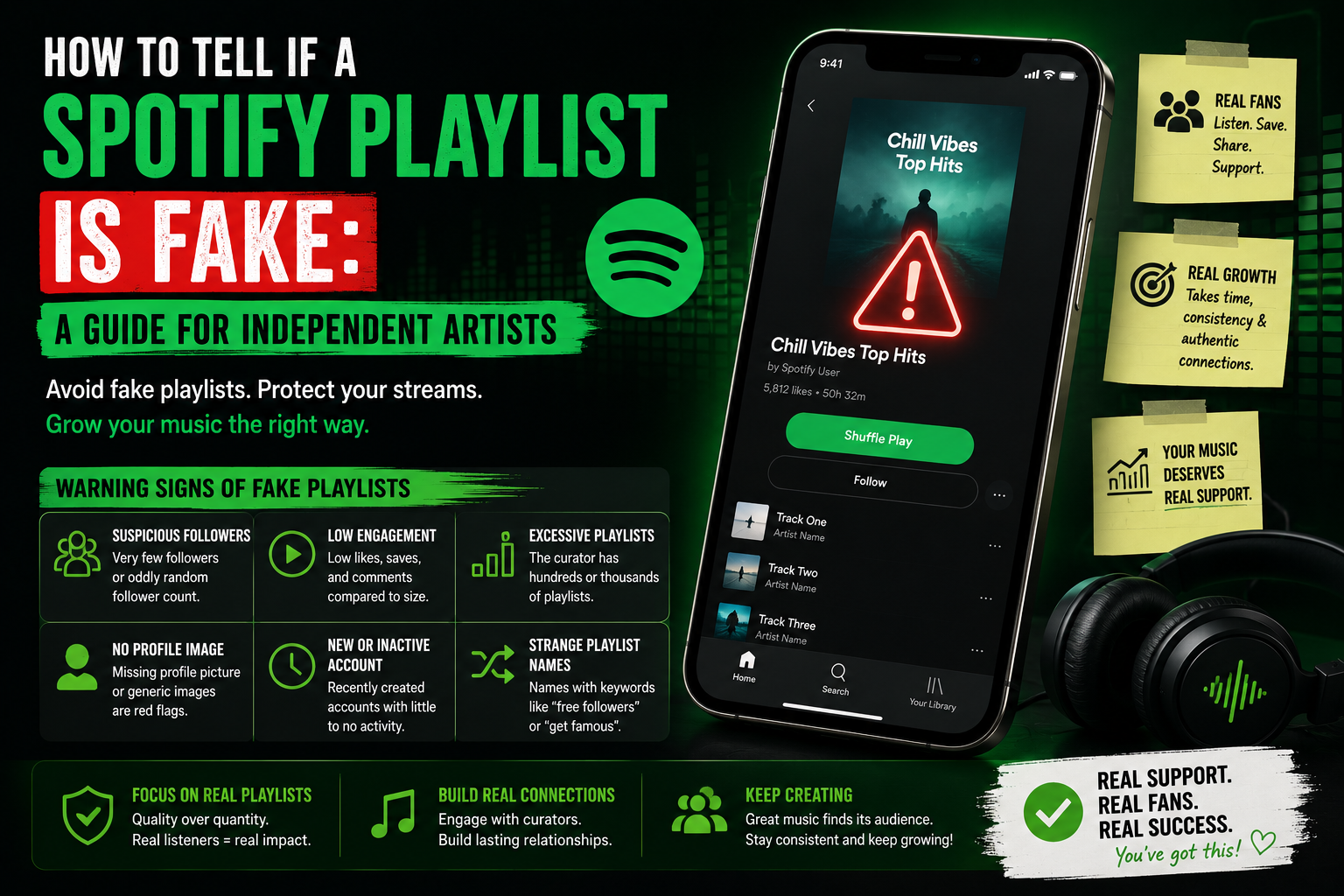
The clearest red flag is a mismatch between followers and engagement. A playlist with 80,000 followers but songs that show only a few hundred plays is almost certainly inflated. Real playlists show listening activity that tracks with their size. When the follower count is huge but the actual streams on individual tracks are tiny, the followers are likely bots.
Warning sign two: suspicious follower growth
Authentic playlists grow gradually as real listeners discover them. Fake ones often spike overnight, jumping from a few hundred to tens of thousands in a short window. If you can see signs of sudden, unexplained growth, treat the playlist with caution.
Warning sign three: generic, bloated track lists
Many fake playlists pad themselves with hundreds of songs across unrelated genres, because their goal is to sell as many placements as possible, not to serve a real audience. A genuine curator builds a focused playlist around a sound or mood. A playlist that feels like a dumping ground usually is one.
The fastest way to check: use a verification tool
Reading the signs manually works, but there is a faster, more reliable method. A free tool that flags fake playlist followers lets you paste in any playlist and instantly see whether its audience looks authentic or artificially inflated. Instead of guessing, you get a clear read in seconds. This is the single best habit to build before pitching or paying for any placement, because it removes the guesswork entirely and protects you from the most expensive mistake in independent music.
What to do once you find real playlists
Verifying a playlist is half the equation. The other half is finding genuine playlists worth pitching in the first place. Rather than digging through Spotify blind, artists increasingly use dedicated tools to find legitimate playlist curators that match their genre, complete with verified contact details, so they can pitch real curators directly instead of paying middlemen or gambling on inflated playlists. The combination of finding real curators and verifying each playlist is how artists build durable, fan-generating placements.
Make sure your music is ready to pitch
Once you have a list of real playlists and real curators, your song still has to make a strong first impression. Cover art is the first thing anyone sees, and a weak image gets a track skipped instantly. Tools like an AI cover art generator help independent artists create professional, release-ready artwork quickly, so a great song is never passed over for looking unfinished.
The bottom line
Fake playlists thrive on artists who do not check. Learn the warning signs, lean on a verification tool to confirm what your eyes suspect, and only spend your time and money on playlists with real audiences. Combine that habit with finding genuine curators and presenting your music well, and you will avoid the traps that drain so many independent artists while building the kind of real listenership that actually grows a career.