




















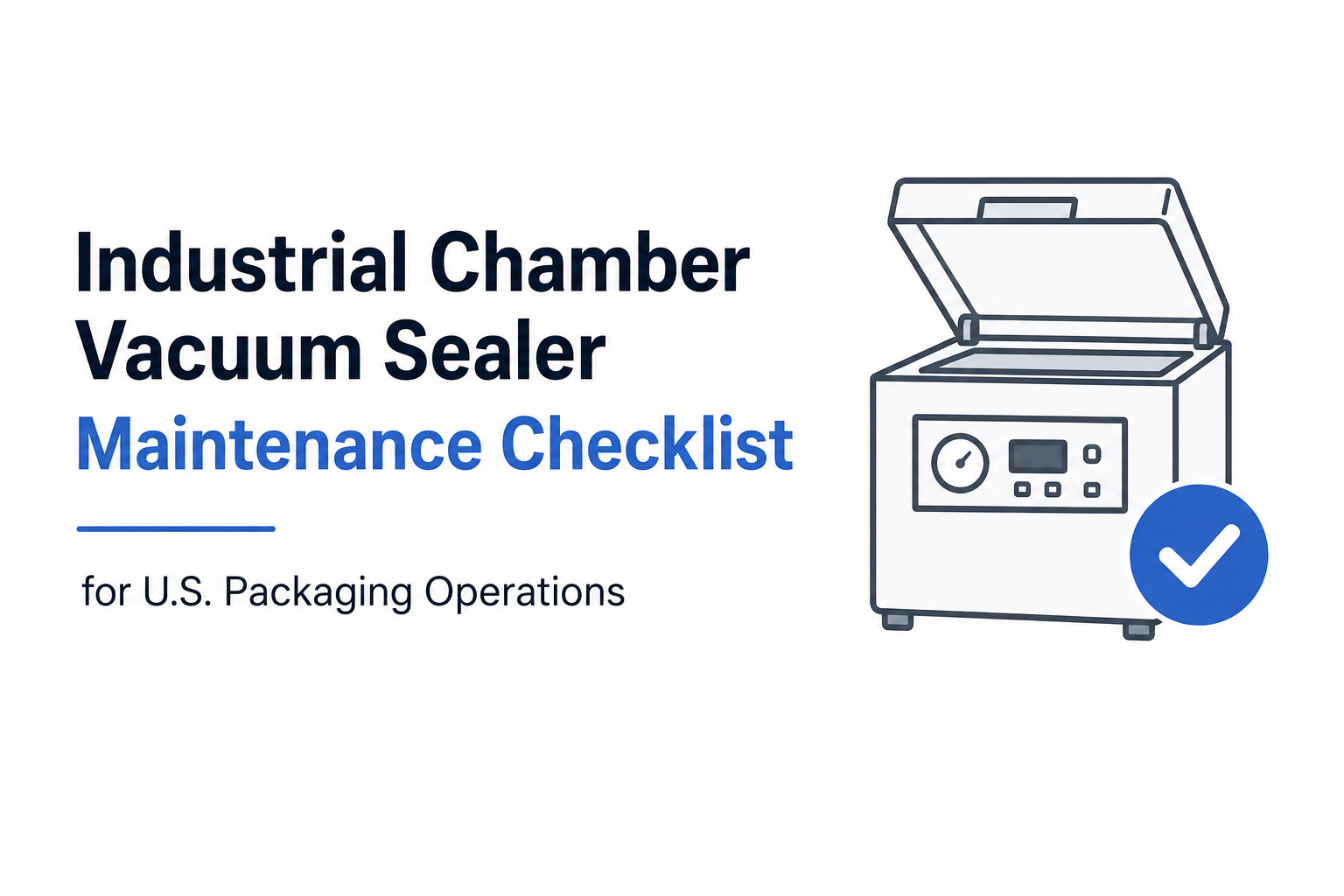
Industrial chamber vacuum sealers support packaging performance across food processing, pharmaceutical manufacturing, logistics, agriculture, and industrial production facilities. Maintaining consistent vacuum levels, seal integrity, and equipment reliability requires a structured maintenance program designed around daily inspections, preventive servicing, and operational verification.
For facilities relying on a chamber vacuum sealer for industrial packaging, routine maintenance helps support package consistency, equipment uptime, and long-term operational efficiency. A documented maintenance checklist also assists facilities in meeting sanitation requirements, quality-control standards, and workplace safety objectives.
Daily Inspection of Critical Components
Daily inspections help identify wear conditions before they affect production performance.
Before starting each shift, operators should inspect:
- Vacuum pump operation for unusual vibration, noise, or performance changes.
- Seal bars for visible wear, contamination, or damage.
- Chamber gaskets for cracks, deformation, or compression issues.
- Control panels for alarm notifications or operating faults.
- Chamber surfaces for debris, packaging residue, or contamination.
Routine inspections help maintenance teams identify potential issues before they lead to production interruptions.
Facilities operating integrated packaging systems that include Filling Machine equipment, Conveyor Machine systems, coding equipment, and other Industrial Equipment often incorporate vacuum sealer inspections into broader preventive maintenance programs.
Seal Bar and Gasket Cleaning Procedures
Seal bars and chamber gaskets play a critical role in maintaining package integrity.
Recommended cleaning procedures include:
- Clean Seal Bars After Production Runs: Remove packaging residue using manufacturer-approved cleaning agents and lint-free materials.
- Inspect Heating Components: Verify that heating elements remain free of buildup that could affect seal quality.
- Clean Gasket Contact Areas: Remove residue that may interfere with vacuum performance.
- Inspect Vacuum Channels: Verify that vacuum grooves remain clear of debris.
- Document Seal Quality Issues: Record recurring sealing defects for maintenance review.
Consistent cleaning helps maintain vacuum performance while reducing the likelihood of package failures caused by contamination or damaged sealing surfaces.
Monitoring Vacuum Pump Oil and Filter Condition
Vacuum pump performance directly affects chamber vacuum sealer operation.
Maintenance personnel should routinely evaluate:
- Oil condition according to manufacturer specifications.
- Oil contamination indicators.
- Pump operating temperatures.
- Filter cleanliness and airflow conditions.
- Vacuum performance consistency.
Most industrial vacuum pumps include recommended service intervals provided by the manufacturer. Following documented maintenance schedules helps maintain vacuum performance and reduce premature component wear.
Facilities should also monitor for:
- Vacuum leaks.
- Abnormal operating sounds.
- Reduced vacuum performance.
- Excessive operating temperatures.
- Exhaust abnormalities.
Prompt attention to these indicators can help prevent unplanned downtime and costly repairs.
Calibration Procedures for Consistent Sealing Performance
Calibration helps ensure that vacuum and sealing systems operate within intended parameters.
Routine verification may include:
- Pressure Verification: Confirm vacuum levels align with operating specifications.
- Seal Time Validation: Verify sealing cycles remain within programmed parameters.
- Temperature Checks: Confirm heat-sealing components maintain consistent temperatures.
- Cycle Testing: Conduct test cycles to verify system performance.
- Control System Verification: Review programmed settings for accuracy and consistency.
Consistent calibration supports package integrity while helping facilities maintain quality-control standards across production runs.
Parts Availability and Long-Term Equipment Support
An effective maintenance program depends on timely access to replacement components and technical support.
Facilities should evaluate:
- Replacement parts availability.
- U.S.-based technical support.
- Operator training resources.
- Preventive maintenance documentation.
- Equipment service assistance.
Technopack maintains in-stock chamber vacuum sealer solutions supported by fast U.S. shipping, U.S.-based technical support, operator training, replacement parts availability, and service assistance. Access to replacement components and maintenance resources helps facilities support equipment uptime while maintaining packaging consistency.
A structured maintenance checklist helps maximize the performance of any chamber vacuum sealer used in industrial packaging operations. Daily inspections, seal bar cleaning, vacuum pump monitoring, calibration verification, and safety compliance procedures all contribute to consistent packaging performance and reduced downtime.
For facilities operating integrated packaging systems, maintaining chamber vacuum sealers alongside Filling Machine equipment, Conveyor Machine systems, and other Industrial Equipment supports long-term operational efficiency. Combined with proper operator training, replacement parts access, and preventive maintenance planning, these practices help packaging operations maintain reliability across demanding production environments.