






















Boston gives couples plenty to work with. Historic buildings, harbor views, elegant hotels, old neighborhoods, and four very distinct seasons can all shape a wedding without requiring a forced theme.
The challenge is deciding which version of the city belongs in your day. A Back Bay hotel creates a different experience than a waterfront venue, a Cambridge restaurant, or an estate outside the city.
I have worked at weddings across New England since 2012, and the strongest Boston celebrations usually share one quality. They use the city as a setting rather than turning it into a collection of obvious references.
Choose the right part of the city
“Boston wedding” covers a surprisingly wide range of possibilities. The location affects the atmosphere, logistics, guest accommodations, photographs, and vendor access.
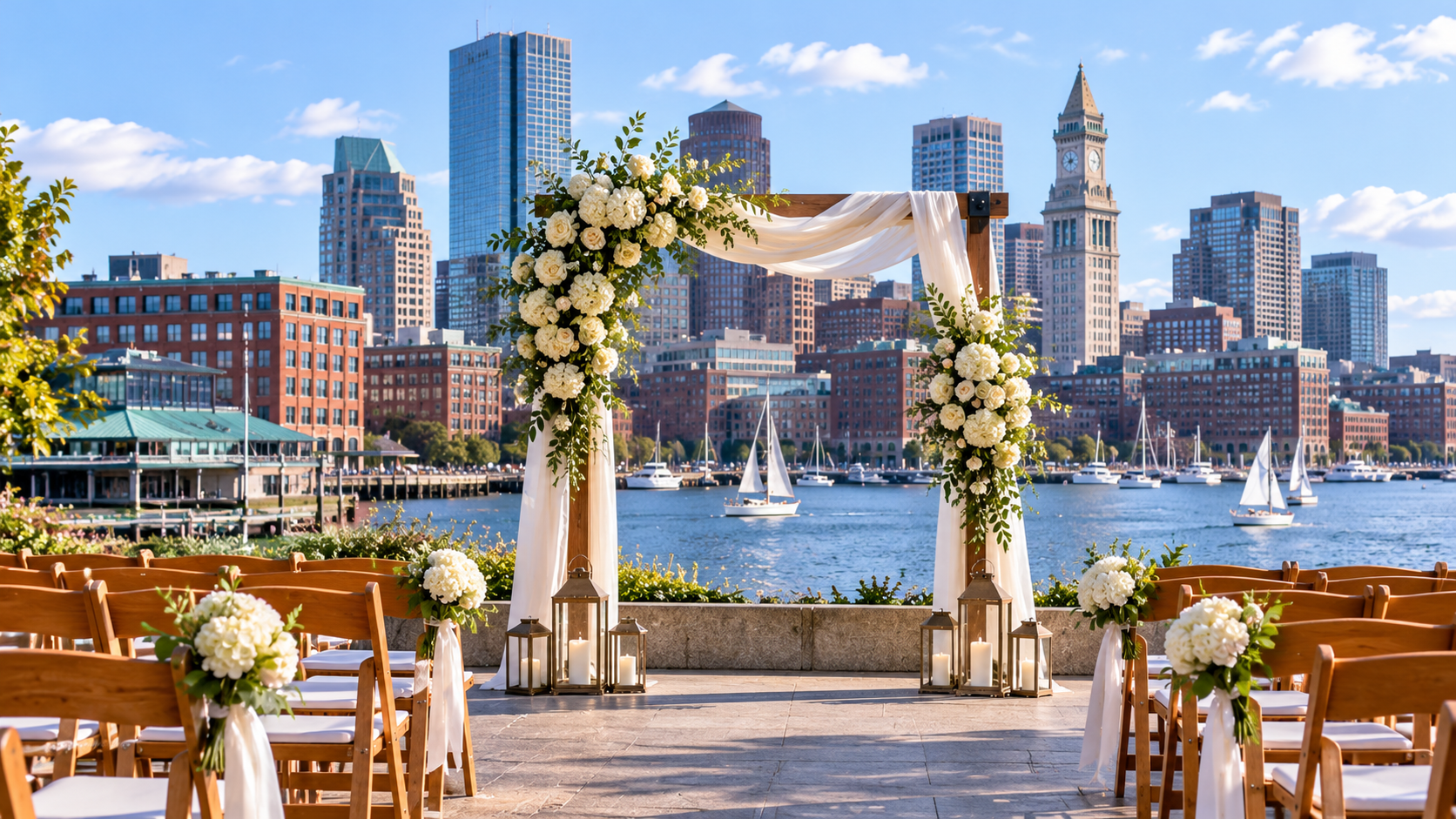
Downtown and Back Bay venues are convenient for hotels and public transportation. They also come with traffic, limited loading space, and expensive parking. Waterfront locations offer great views, but wind and changing weather deserve serious attention.
Cambridge and Somerville can feel more relaxed and contemporary. Venues outside the city may offer more space, easier parking, and fewer restrictions, while remaining close enough for guests to explore Boston during the weekend.
Choose the area based on how you want the day to feel. Then look at the practical details before becoming emotionally attached to a particular staircase or ballroom ceiling.
Let the venue provide some of the character
Boston has plenty of venues that already look interesting. Historic rooms, libraries, museums, old hotels, brick buildings, and harbor spaces often need less decoration than couples expect.
Work with the room rather than covering it. If the venue has dark wood and traditional architecture, simple flowers and warm lighting may be enough. If the space is modern and bright, cleaner arrangements may suit it better.
This can also protect the budget. Paying for a distinctive venue and then hiding its strongest features behind large installations is an expensive way to ignore what you rented.
Ask what will already be in the room on the wedding day. Chairs, tables, lighting, curtains, artwork, and seasonal decorations can all affect the final appearance.
Plan around the season honestly
Every Boston season has advantages, but none should be treated as decorative background.
Summer can be beautiful near the water, though heat and humidity may affect outdoor ceremonies. Fall offers excellent color and comfortable temperatures, but it is also popular and often more expensive.
Winter weddings can feel intimate, especially in historic venues with warm interiors. Couples still need to consider snow, transportation, coat storage, and the possibility that guests may arrive later than expected.
Spring weather changes quickly. A sunny afternoon can become cold and wet without much warning.
Choose a season you genuinely like, then plan for its less photogenic possibilities. A proper backup plan does more for the day than checking the forecast every fifteen minutes during the week before the wedding.
Make transportation easy for guests
Boston is walkable until formal shoes, unfamiliar streets, and a strict ceremony time enter the situation.
If the ceremony and reception are in separate locations, explain the route clearly. Let guests know whether walking is realistic and whether transportation will be provided.
Parking information should be specific. “Parking nearby” can mean a garage across the street or a complicated search through several one-way roads. Include the garage name, address, expected cost, and any validation details.
For hotel blocks, convenience may matter more than finding the lowest rate. Guests are often willing to pay slightly more to avoid multiple rides across the city.
If many guests are flying in, consider travel time from Logan Airport when setting the schedule. A short distance on the map does not always produce a short trip.
Use local food without creating a themed menu
Boston and New England offer plenty of recognizable food, but every course does not need to announce its geographic identity.
A raw bar, lobster roll appetizer, local oysters, seasonal produce, or a regional dessert can create a sense of place. One or two strong choices usually work better than turning dinner into a historical reenactment.
Couples should also choose food they actually enjoy. Guests will remember a well-prepared meal more clearly than a menu assembled entirely around local symbolism.
Late-night food is another chance to have fun. Small sandwiches, pizza, fries, or another familiar favorite can arrive when guests are hungry again after dancing.
Choose entertainment for the room and the crowd
Boston weddings often bring together several generations, college friends, local relatives, and guests traveling across the country. Entertainment needs to connect those groups without making the reception feel generic.
Think about the size and layout of the room before hiring musicians. A large ballroom may support a bigger stage and sound system. A smaller historic venue may require a more compact setup and careful volume control.
Ask how the musicians handle different parts of the evening. Cocktail hour, introductions, dinner, formal dances, and open dancing each need a different level of energy.
Couples comparing live entertainment can use this guide to find the right wedding band in Boston. Beyond the song list, pay attention to experience, communication, lineup consistency, and how the band manages the flow of the reception.
The best choice is not always the group with the longest repertoire or largest number of performers. It is the one that understands the event you are planning and can read the room once the dancing begins.
Build breathing room into the schedule
Boston wedding schedules are often affected by traffic, hotel elevators, loading restrictions, and travel between photography locations.
Add realistic buffers, especially before the ceremony. Those extra minutes can absorb a delayed shuttle or a wedding-party member who underestimated how long it takes to cross the city.
Do not fill every open space with another activity. Guests need time to arrive, talk, order a drink, and move between rooms.
The same applies to the reception. Too many speeches, presentations, and formalities can delay dinner and reduce dancing time. Choose the traditions that matter and let the others go without guilt.
Use the city for photographs efficiently
Boston offers beautiful photography locations, but traveling to five of them can consume a large part of the day.
Choose one or two places near the venue. Beacon Hill streets, the Public Garden, waterfront areas, historic architecture, and city views can provide plenty of variety without creating a photography expedition.
Ask the photographer about permits, crowds, parking, and travel time. A famous location may look very different on a busy Saturday afternoon.
Indoor locations are useful during cold or wet weather. The venue itself may provide enough architectural detail for portraits if outdoor plans become impractical.
Give visitors useful weekend information
Out-of-town guests may want to explore, but they do not need a six-page tourism manual.
Recommend a few restaurants, neighborhoods, and activities near the hotel. Include options at different prices and mention which places require reservations.
If the wedding schedule allows it, a casual welcome gathering can help traveling guests settle in. This can be drinks at a neighborhood restaurant, a harbor-side meeting place, or a simple gathering at the hotel bar.
Keep it optional. Guests may need rest after traveling, and nobody should begin the wedding weekend feeling late for the wedding weekend.
Keep the local details subtle
Boston references can be charming in moderation. A custom cocktail name, local dessert, historic venue, or view of the skyline may be enough.
There is no requirement to add miniature lobsters, sports references, maps, harbor motifs, and a Freedom Trail seating chart to the same room. The location will already be present.
A wedding feels connected to Boston when the venue, food, music, travel plans, and season make sense together. It does not need to explain itself through every decorative object.
Use the city where it improves the experience. Let the rest of the wedding reflect your own taste and the people you invited.
That balance creates a celebration that feels specific to its place without becoming a souvenir shop with assigned seating.