






















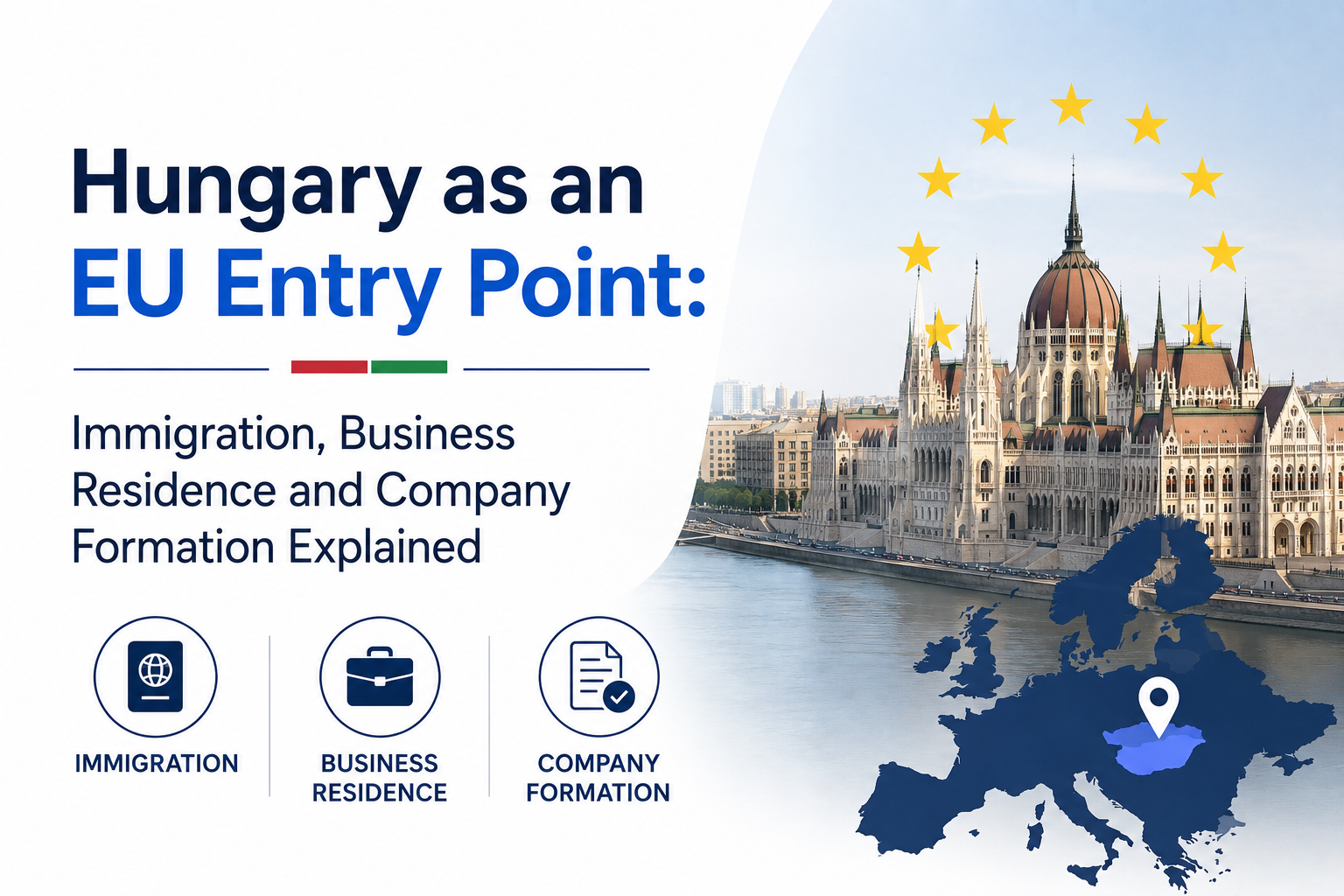
Hungary is becoming an attractive entry point for foreign entrepreneurs, investors, and business owners who want to establish a presence within the European Union. Its central location, EU membership, Schengen access, and practical company formation process make it a relevant option for those planning to enter the European market.
For many non-EU nationals, immigration to Hungary is not only about employment, studies or family reunification. Business activity may also support a lawful residence strategy, especially if the applicant intends to manage a company, provide services, build partnerships or operate from Hungary.
In these cases, company formation can be an important first step. A Hungarian company may provide the legal framework for business operations, contracts, invoicing, taxation and the applicant’s role as owner or managing director.
However, opening a company does not automatically guarantee residence rights. The company should have a real business purpose, a credible plan, proper accounting, financial background and a clear connection to the applicant’s stay in Hungary.
It is also important to distinguish between a short-term business visa and long-term residence. A business visa may be suitable for meetings, negotiations, market research or preparatory activities. But if the entrepreneur wants to stay in Hungary for more than 90 days or manage a business locally, a residence permit route may be required.
This is where business residence and company formation connect. A properly prepared Hungarian company can help support the application by showing genuine economic activity and a realistic long-term plan.
Many applicants make the mistake of treating immigration and company formation as separate matters. In reality, business immigration usually requires an integrated approach. The company structure, business plan, registered seat, accounting setup, financial documents and residence purpose should all be consistent.
For the right applicant, Hungary can offer a practical gateway to the EU business environment. But success depends on preparation. A company opened only on paper is rarely enough. The stronger approach is to build a credible business structure that supports both commercial goals and lawful residence planning.
Why Hungary Attracts Foreign Entrepreneurs
Hungary offers several advantages for entrepreneurs looking to enter the European market. Its location in Central Europe provides convenient access to neighboring EU countries, making trade and business expansion easier. The country also has relatively competitive operational costs compared to many Western European nations, which can benefit startups and small business owners.
The Hungarian company registration process is generally straightforward when supported by proper legal and accounting guidance. Many foreign entrepreneurs choose private limited companies because they provide a flexible structure for commercial activities and future growth.
In addition, Hungary’s banking infrastructure, logistics network and growing international business environment continue to attract foreign investment. For entrepreneurs seeking a base inside the EU while maintaining manageable operational costs, Hungary can be a practical option.
Business Residence and Long-Term Planning
A business-related residence strategy should focus on sustainability rather than short-term approval. Immigration authorities may review whether the company has genuine activity, realistic financial projections and evidence of operational intent.
This means applicants should be prepared to demonstrate business plans, contracts, partnerships, office arrangements or other supporting documents that show the company is active or capable of becoming active. Authorities may also assess whether the applicant’s role within the company justifies long-term residence in Hungary.
Proper tax compliance and accounting are equally important. Maintaining accurate financial records and fulfilling reporting obligations helps strengthen both the business structure and the credibility of the residence application.
Common Mistakes to Avoid
One common mistake is opening a company without understanding the related immigration requirements. Others include using incomplete business plans, failing to maintain accounting records or treating the company only as a formality for immigration purposes.
A successful strategy usually combines legal, financial and immigration planning from the beginning. Entrepreneurs who approach the process professionally are more likely to create a stable foundation for both business operations and lawful residence within Hungary and the wider EU market.
Conclusion
Hungary continues to attract entrepreneurs and investors seeking access to the European Union through business activity and lawful residence planning. While company formation can support immigration goals, long-term success depends on creating a real and sustainable business structure.
With proper preparation, financial planning and compliance, Hungary can serve as a practical gateway for entrepreneurs looking to build opportunities within the EU business environment.