
















Ask most people what an audiologist Sydney clinic does, and the answer tends to be some version of the same thing: they test your hearing and fit you with a hearing aid if you need one. It is a reasonable assumption, shaped by decades of public messaging that has centred hearing aids as the defining feature of hearing healthcare. But it is also a significant underestimate of what modern audiology actually involves, and it likely contributes to the number of people who put off making an appointment because they are not sure they are ready for a hearing device.
The reality of audiology Sydney practice in 2025 is considerably broader. Clinicians in this field work across a spectrum of services that extend from preventive care and monitoring at one end to the management of complex hearing and balance conditions at the other. For many patients, hearing aids never enter the conversation.
What Audiologists Are Trained to Do
An audiologist is a university-trained hearing healthcare professional, typically holding a postgraduate qualification in audiology and eligible for membership of Audiology Australia, the national professional body. Their training equips them to assess, diagnose, and manage a wide range of conditions affecting the auditory system and, in some cases, the vestibular system that governs balance.
This clinical scope is broader than most people realise. Beyond hearing aids, audiologists can conduct detailed diagnostic assessments of hearing across all age groups, assess and manage tinnitus, evaluate balance and dizziness concerns with an inner ear component, advise on and supply hearing protection, manage earwax, and provide rehabilitation strategies for people adjusting to hearing difficulties. They also play an important role in monitoring hearing over time, which is particularly relevant for people working in noisy occupational environments and for older adults managing age-related hearing change.
The Hearing Assessment
The diagnostic hearing assessment sits at the centre of most audiology consultations, and it is considerably more thorough than the brief screening tests many people encountered at school or during a GP appointment.
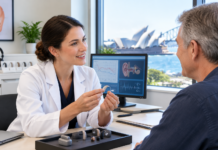
A full assessment begins with a clinical history: a conversation about symptoms, how hearing has changed, occupational and recreational noise exposure, medications with known hearing effects, and family history. An otoscope examination of both ear canals follows, checking for earwax, signs of infection, or structural factors that may affect the results or require separate attention.
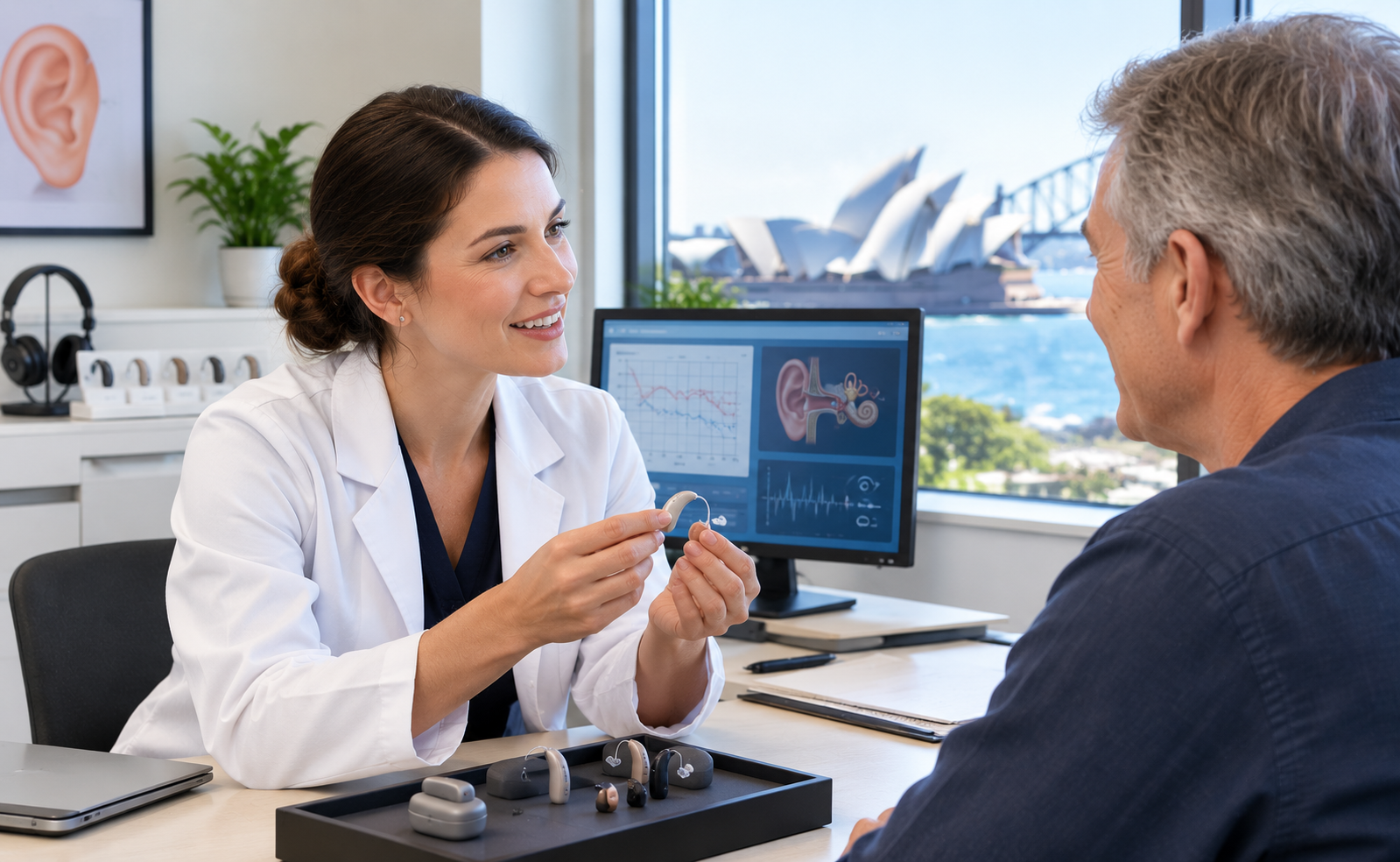
The core testing component, pure tone audiometry, is conducted in a soundproofed room using headphones. The results are mapped onto an audiogram that shows precisely how the patient hears across a range of frequencies and loudness levels, and at which frequencies any loss occurs. Bone conduction testing may be added to determine where in the hearing pathway any difficulty is arising, and speech recognition testing evaluates how clearly speech is processed rather than simply whether sound is detected.
The resulting picture is specific and detailed, and it informs every subsequent recommendation. Different types of hearing difficulty have different causes, different implications, and different management pathways. A conductive hearing loss arising from earwax or middle ear fluid is managed differently from sensorineural hearing loss caused by noise exposure or ageing, which is again different from a sudden hearing change that warrants medical referral.
Tinnitus: A Common Reason to Seek Hearing Healthcare
Tinnitus, the perception of sound in the absence of an external source, is one of the most common conditions an audiologist assesses. It affects a significant proportion of the adult population at some point, and for those who experience it persistently, its impact on sleep, concentration, and wellbeing can be considerable.
Audiologists are trained to assess tinnitus in the context of a broader hearing evaluation, identify possible contributing factors, and work with patients on management strategies that reduce its impact on daily life. These strategies vary by individual and may include sound therapy, counselling approaches, hearing devices in cases where tinnitus accompanies hearing loss, and practical guidance on environmental and lifestyle factors that can influence how intrusive tinnitus feels.
Tinnitus is not always linked to measurable hearing loss, and a professional assessment helps clarify what is driving a patient’s specific experience rather than applying a generic approach.
Hearing Technology When It Is Appropriate
When hearing aids are appropriate, the process of selecting, fitting, and managing them is considerably more involved than it might appear from the outside. A qualified audiologist uses the results of a full hearing assessment to identify which devices are clinically suited to a patient’s specific hearing profile, and programmes them to that individual’s audiogram rather than to a general setting.
Modern hearing aids have become sophisticated sound processors capable of separating speech from background noise, connecting wirelessly to smartphones and other devices, adjusting automatically to different sound environments, and providing rechargeable all-day performance in increasingly discreet form factors. The technology available across different price points and styles has expanded considerably in recent years.
Fitting is only the beginning. Hearing devices require adjustment and fine-tuning as the wearer adapts to amplification, and their programming should be reviewed as hearing changes over time. Ongoing support from the same audiologist across this process produces better long-term outcomes than a one-appointment fitting.
Communication Strategies and Rehabilitation
For many patients, managing hearing difficulty involves more than a device. Audiologists can work with patients on communication strategies that make listening in everyday situations easier, from how to position oneself in a room to how to communicate more effectively with family members or colleagues about hearing needs.
Aural rehabilitation, a structured approach to adjusting to hearing loss and maximising communication, is an established part of audiology practice that is often underutilised simply because patients do not know it exists. For people who are new to hearing loss, or who are adjusting to hearing aids after a significant period without them, this kind of guided support can make a meaningful practical difference.
Hearing Protection and Prevention
Hearing loss caused by noise exposure is irreversible, but it is largely preventable. Audiologists advise on and supply hearing protection for a range of occupational and recreational contexts, including custom-moulded ear plugs for musicians, workers in noisy industries, swimmers, and motorcycle riders.
For those working in environments where occupational noise exposure is significant, baseline hearing monitoring over time is clinically valuable. It provides a longitudinal record of how hearing is changing, which is important both for the individual’s awareness and, where relevant, for WorkCover or regulatory purposes.
Earwax Management
Earwax is among the more straightforward concerns an audiologist manages, but it is also one of the most commonly mishandled outside a clinical setting. Professional earwax assessment and removal, where appropriate, sits comfortably within the audiology scope of practice, and many clinics offer it as a component of broader hearing healthcare rather than as a standalone procedure.
Examining the ear before removal is standard clinical practice and matters more than many people realise. Earwax is not always the cause of blocked ear symptoms, and other conditions can present similarly. Professional assessment establishes what is actually present before any intervention is attempted.
Hills Audiology: Independent Hearing Care in Sydney
For Sydney residents looking for access to the breadth of services described in this article, Hills Audiology is an independent audiology clinic based in Castle Hill that provides comprehensive hearing assessments and a full range of audiology services for adults and children across the wider Sydney community.
As an independent practice, Hills Audiology approaches clinical recommendations without the commercial pressures associated with large retail hearing chains, and services span the full scope of audiology practice from preventive care to hearing device management.
A Broader Picture of Hearing Health
The perception that audiology is primarily about hearing aids has narrowed the public understanding of what hearing healthcare can offer. For many people who might benefit from an assessment, that perception is a reason not to seek one.
Modern audiology is a clinical discipline that encompasses prevention, assessment, diagnosis, management, rehabilitation, and ongoing monitoring. It is relevant at every stage of adult life, from people in noisy industries who want to protect what they have, to older adults managing a gradual change, to anyone whose hearing has been raising quiet questions for longer than they have been comfortable acknowledging.
The ears are worth understanding properly. The clinical resources to do that extend well beyond the hearing aid.