





















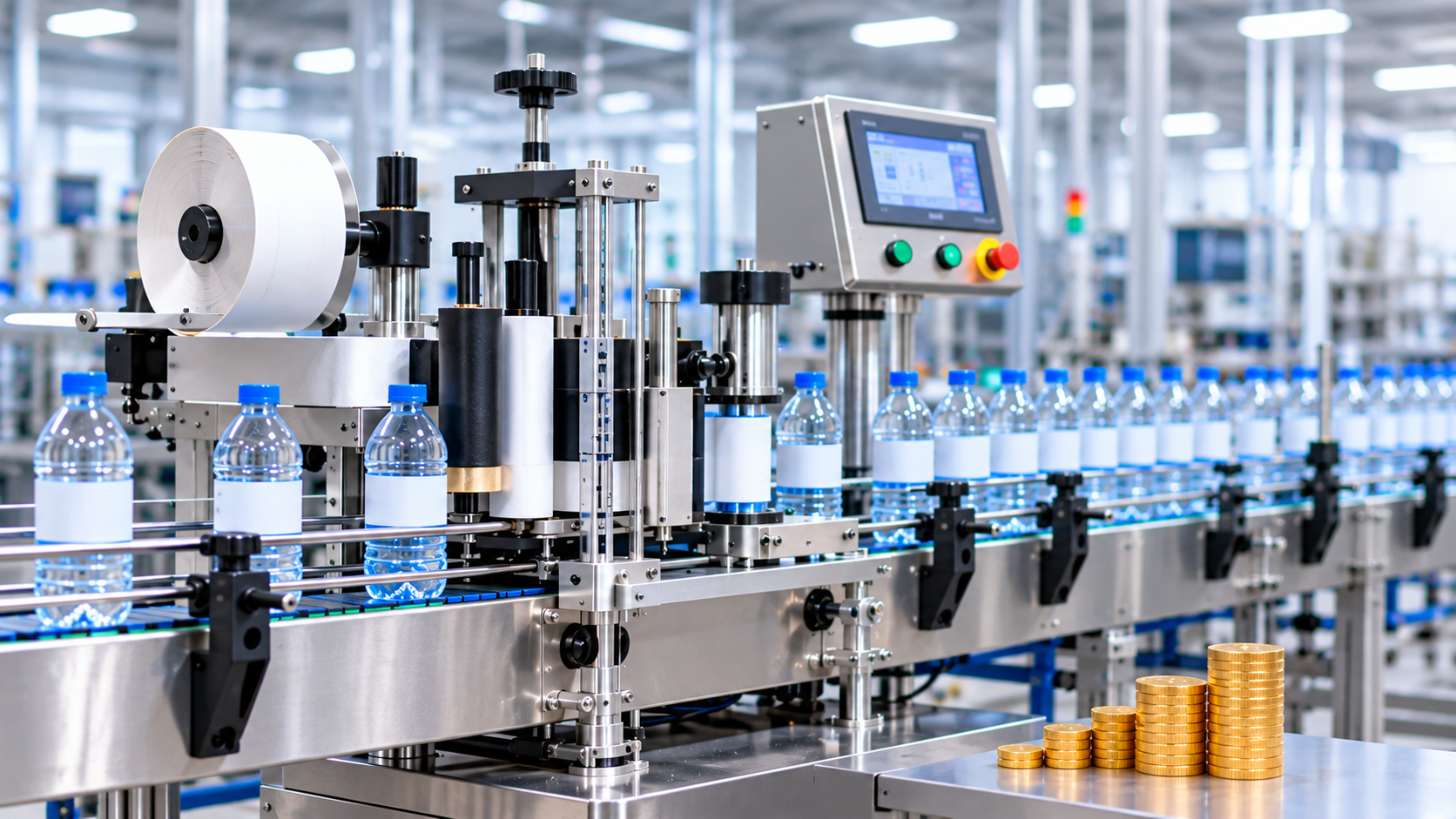
Selecting automatic bottle labeler equipment requires more than comparing the initial machine price. Every purchase brings ongoing costs that can change the return on investment over time. These include expenses for consumables, labor for operation and training, planned maintenance, and potential losses from downtime or scrap.
Factoring in these elements helps buyers build a full cost projection and make better-informed decisions when budgeting for new packaging equipment. A clear understanding of both fixed and variable expenses supports more accurate vendor comparisons and long-term planning.
Breaking Down the Initial Investment: Machine, Installation, and Essential Accessories
Estimating the initial investment for a bottle labeler machine means looking beyond just the price tag on the equipment.
- First, the base cost of the machine itself is a major factor. This includes selecting a model that matches production needs, with features such as speed, compatibility with existing lines, and compliance with safety standards. Installation charges, which can cover shipping, setup, and system integration, are also part of the upfront spend.
- Next, required accessories add to the total. Essential items may include infeed and outfeed conveyors, change parts for different bottle sizes, or guarding upgrades for safety. Some facilities need custom mounting hardware, control panels, or product handling modules, which can increase the starting budget.
- Third, there are costs for commissioning and validation. Bringing in factory technicians to test performance, train staff, and verify system readiness can be necessary before routine use. These steps help ensure the automatic bottle labeler equipment operates as intended, but they do require additional funding at the outset.
Factoring in Consumable Expenses: Labels, Adhesives, Liners, and Waste Handling
Consumable costs are a key part of the long-term budget for automatic bottle labeler equipment, and they can affect the total cost of ownership.
- Label stock is one of the most visible ongoing expenses. The type, size, and print quality of labels needed for each product line will drive recurring costs, which can fluctuate with order volume and material changes.
- Adhesive use also plays a role in ongoing spending. Some applications require specialty glues for unique bottles or challenging environments, and these can be more expensive than standard options.
- Liner and release backing materials add another layer of cost. While some systems allow for linerless operation, most still rely on waste liners that require disposal and may add to both supply and waste management budgets.
- Waste handling must be considered as well. Scrap from misapplied labels, spent liners, and adhesive residue can create disposal costs and environmental fees, which should be factored into cost projections for a realistic ROI estimate.
Evaluating Ongoing Maintenance and Replacement Part Costs
Understanding the ongoing maintenance and replacement part costs is essential for estimating the true cost of automatic bottle labeler equipment.
- Prophecy Market Insights highlights that the high cost of labeling equipment can be a barrier for many buyers, which signals that ongoing expenses such as maintenance and parts are substantial and should not be overlooked.
- Most automatic bottle labeler machines require regular attention, including the replacement of wear parts like rollers, belts, and sensors. Planning for these predictable interventions helps minimize unexpected breakdowns and associated downtime.
- Some systems rely on proprietary or specialized components that may be more expensive or take longer to source. Factoring these variables into maintenance budgets supports more reliable cost projections and reduces the risk of unplanned production delays.
Labor and Training Requirements for Optimal Operation
Labor and training requirements for automatic bottle labeler equipment depend on the level of automation, the complexity of the system, and the skill sets of plant staff. Operators must learn not only the basic controls but also how to handle changeovers, routine cleanings, and simple troubleshooting. As automation trends advance, training programs must include digital interfaces or software-driven controls, as noted by Research and Markets in their 2026 market analysis. There is a cost to onboarding new users, updating skill sets, and keeping staff up to date as features evolve.
Teams may also need refresher courses or cross-training if the production line adds new packaging equipment or integrates with conveyor systems. Higher automation can reduce manual labor but often shifts costs toward technical training and periodic certification.
Factoring in these recurring labor and training needs enables a more realistic long-term budget, helping buyers avoid underestimating operational costs as technology advances.
Accounting for Production Downtime and Speed Loss Risks
Production downtime and speed loss risks are key factors that can change the real cost of operating automatic bottle labeler equipment.
- Scheduled maintenance impact: Planned machine maintenance will pause output at regular intervals. These stops are necessary to keep equipment running well, but each one lowers overall production hours.
- Unplanned breakdowns: When a bottle labeler fails without warning, the line can sit idle for hours or longer. This lost time reduces the number of finished goods and can put delivery deadlines at risk.
- Speed adjustments for product changeovers: Some lines must run slower during label or bottle size changes to prevent errors or jams. This temporary speed loss can add up over months of operation.
- Effects on order fulfillment: If output drops due to downtime or slower speeds, companies may need overtime labor or extra shifts to meet targets. This increases labor costs and may reduce profit margins over the equipment’s lifecycle.
Estimating Scrap Rates and Waste During Line Changeovers
Scrap and waste generated during line changeovers can be a hidden but significant factor in the total cost of owning automatic bottle labeler equipment. The TCO Calculator for Public Buyers prompts procurement teams to include such less obvious costs when estimating lifetime ownership, clarifying that waste from changeovers should be treated as a distinct, trackable category for more accurate comparisons and budget planning.
- Changeovers often lead to increased scrap rates, particularly when switching between bottle sizes or label formats. Each transition can result in wasted labels, bottles, and adhesives as operators dial in new settings to ensure quality application, leading to extra material costs and potential disposal fees.
- Operator experience and the machine’s ease of adjustment can greatly influence how much scrap is produced. Well-trained staff and equipment designed for rapid, precise changeovers can help keep material losses low, while complex setups or insufficient training may drive waste higher.
- Over time, cumulative waste from frequent changeovers can erode profit margins and complicate long-term financial planning. Recognizing and tracking these losses allows companies to set more realistic expectations for total cost of ownership and to identify opportunities for process improvement.
Energy Consumption and Utility Costs Over the Equipment’s Lifecycle
Estimating the energy consumption and utility costs of automatic bottle labeler equipment means considering operation speed, 24/7 run time, and machine efficiency. These labeling machines are engineered for high-speed, accurate application, which lets production lines run continuously and reduce labor costs. The automation and ability to operate at all hours can increase utility spending over the equipment’s lifecycle. Higher output often leads to increased power use, especially if the line rarely stops. Machines that are designed to minimize material waste can also help cut some indirect utility costs by reducing the need for extra runs or rework.
Since these systems serve industries like beverages, pharmaceuticals, and cosmetics, the demand for consistent, uninterrupted output is high. The versatility to handle different bottle sizes and label formats adds to the base energy footprint, since adjustment periods may use more power per bottle. Factoring in utility and energy spending over several years gives plant managers a more realistic sense of total ownership cost. This approach supports more informed investment decisions, especially when comparing machines that promise higher speed or flexibility.
Estimating the total cost of ownership for automatic bottle labeler equipment goes far beyond the upfront machine price. The actual investment includes installation, essential accessories, consumables like labels and adhesives, and waste management. Ongoing costs for maintenance, replacement parts, operator labor, and technical training can add up year after year. Speed losses, production downtime, and scrap during changeovers also impact the long-term budget.
Energy and utility expenses grow as production speeds and hours increase. Considering these factors helps finance and operations teams set more accurate budgets, compare vendor quotes fairly, and better predict return on investment over a typical five-year period.