






















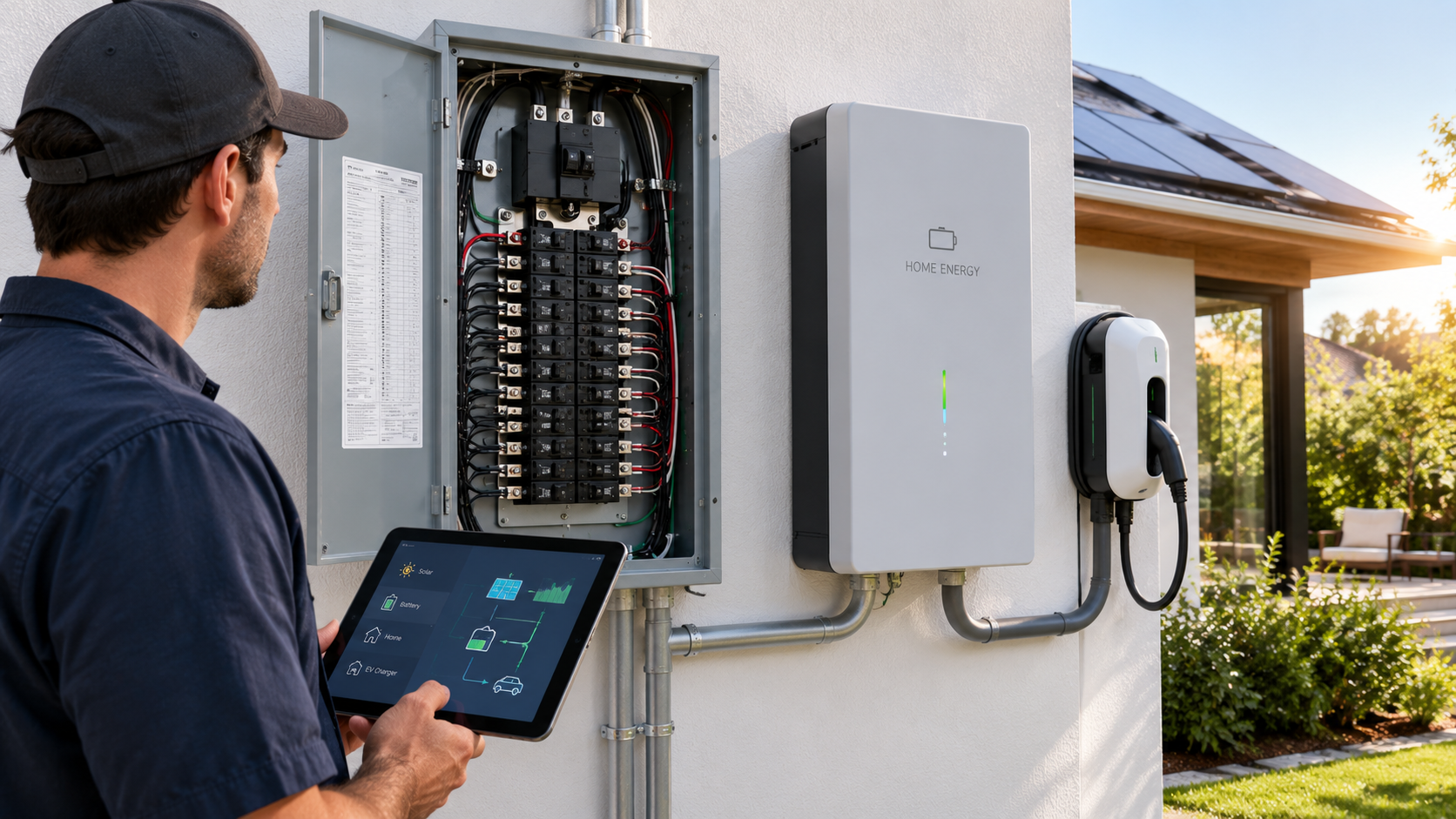
The average home uses electricity differently than it did even a decade or two ago. Electric vehicles, heat pumps, induction ranges, home offices, solar panels, battery storage, and connected appliances are changing household power demands. As homeowners adopt more electrical technology, an often-overlooked component is becoming increasingly important: the electrical panel.
Once viewed mainly as a box of circuit breakers, the panel now plays a central role in determining how easily a home can accommodate new equipment. Understanding that role can help homeowners plan upgrades in the right order and avoid surprises during future projects.
Electrification Adds Up Faster Than Expected
Adding one new electrical device may not seem significant. The challenge arises when several major loads are introduced over time.
Imagine a homeowner who purchases an electric vehicle and installs home charging equipment. A few years later, the gas furnace is replaced with an electric heat pump. Eventually, the homeowner wants an induction range, solar panels, and battery storage.
Each project may make sense individually, but together they can substantially change the home’s electrical requirements.
Some of the equipment that can influence residential electrical demand includes:
- Electric vehicle charging equipment
- Heat pumps and electric HVAC systems
- Electric water heaters
- Induction ranges and electric ovens
- Clothes dryers
- Hot tubs and pool equipment
- Solar and battery systems
- Workshop equipment
- Additional dwelling spaces or major additions
This is why electrical planning increasingly requires homeowners to look beyond the next appliance they intend to purchase.
The Panel Is the Home’s Electrical Distribution Center
Electricity entering a home must be distributed safely among its various circuits. The electrical panel performs this essential job.
Circuit breakers within the panel protect individual circuits from excessive current. Different circuits serve lighting, receptacles, appliances, HVAC equipment, and other loads throughout the property.
The panel itself also has a defined service capacity. Older properties may have electrical services that made sense when they were built but are less suited to today’s collection of high-powered equipment.
This does not mean every older home automatically requires a larger electrical service. Actual requirements depend on the existing system and the loads connected to it.
That’s why homeowners considering substantial electrification projects should have their available capacity evaluated rather than making assumptions based solely on the age of the house.
Why EV Charging Often Starts the Conversation
Electric vehicles are frequently the first reason homeowners begin thinking seriously about electrical capacity.
Using an ordinary receptacle may provide sufficient charging for some driving patterns, while other households choose dedicated charging equipment that provides faster charging. Installing higher-powered equipment can introduce a significant new load.
At that point, an electrician may need to evaluate the existing service and determine whether the proposed charging setup can be supported.
This is also an opportunity to discuss future plans.
If solar panels, battery storage, an HVAC replacement, or a kitchen renovation is likely within several years, mentioning those plans during the initial assessment can provide a more complete picture of the home’s future requirements.
For homeowners researching electrical panel upgrades in San Jose, this broader planning approach is particularly relevant because panel work may be connected with EV charging, solar projects, HVAC changes, and other electrification improvements.
Instead of viewing the panel as a standalone project, it can be more useful to consider it part of the home’s long-term energy infrastructure.
Older Homes Can Present Unique Challenges
Established neighborhoods often contain houses constructed long before modern electrical lifestyles became common. Over the years, these properties may also have undergone multiple additions and renovations.
The result can be an electrical system representing several generations of work.
For example, the original portion of a house may have older wiring while a renovated kitchen has newer circuits. A garage conversion may have been completed later, followed by an HVAC replacement or outdoor improvements.
Before another major electrical load is added, homeowners should understand the condition and configuration of the overall system.
Warning signs that deserve professional attention can include breakers that trip repeatedly, unusual heat around electrical equipment, buzzing or crackling sounds, damaged components, or unexplained electrical problems.
Homeowners should not attempt to open, modify, or troubleshoot energized panel components themselves. Electrical panels contain potentially dangerous energized parts even when some breakers are switched off.
Planning Ahead Can Simplify Future Projects
Home improvement projects are often planned separately. The kitchen gets renovated one year, an EV arrives two years later, and solar becomes attractive after that.
Electrical infrastructure connects all of these projects.
Creating a basic electrification roadmap can therefore be surprisingly useful. Homeowners do not need a complicated engineering plan. They simply need to identify which major electrical changes are reasonably likely.
Think in Three Time Frames
A straightforward approach is to divide possible improvements into three categories.
Immediate needs include projects already scheduled, such as installing an EV charger or replacing a major appliance.
Medium-term plans might include renovations, HVAC replacement, or purchasing another electric vehicle within the next few years.
Long-term possibilities can include solar, battery storage, an accessory dwelling unit, a workshop, or a transition away from additional gas appliances.
An electrician can use this information when assessing electrical capacity. Even when future projects are uncertain, knowing about them can help prevent today’s upgrade from unnecessarily restricting tomorrow’s options.
A Larger Panel Is Not Automatically the Answer
Homeowners sometimes assume that adding more electrical equipment simply means installing the largest possible panel. Residential electrical planning is more nuanced.
The appropriate solution depends on factors such as the home’s calculated electrical load, existing service, utility infrastructure, equipment specifications, local requirements, and future plans.
In some situations, upgrading electrical service may be appropriate. In others, the existing system may accommodate the proposed equipment. Newer energy-management technologies may also influence how certain loads can be handled.
This is one reason professional load calculations matter. They replace guesswork with an assessment based on the actual electrical system and planned equipment.
Homeowners should also distinguish between the number of breaker spaces available and the amount of electrical capacity available. Seeing empty spaces inside a panel does not necessarily establish that the service can support another major load.
Coordinate Electrical Work With Other Improvements
Timing can make home electrification projects easier.
If a major renovation is already planned, that may be a useful opportunity to address electrical infrastructure because walls, utility areas, or other parts of the building may already be accessible.
Likewise, homeowners planning solar or EV charging can discuss whether related electrical work should be coordinated rather than handled as completely separate projects.
Good coordination can also help homeowners understand permitting, utility involvement, inspections, equipment placement, and project sequencing before work begins.
The objective is not necessarily to complete every improvement at once. It is to create an electrical foundation that makes sense for the direction the household is heading.
Conclusion
Home electrification is transforming the electrical panel from a largely forgotten piece of household infrastructure into an important part of long-term home planning.
EV chargers, heat pumps, electric appliances, solar systems, batteries, and future renovations can all influence a property’s electrical requirements. Evaluating those needs together gives homeowners a clearer understanding of what their current system can support and where improvements may be appropriate.
For San Jose homeowners in particular, combining modernization plans with an assessment of existing electrical infrastructure can help ensure that an older property is prepared for newer technology. The best time to think about electrical capacity is often before the next major appliance, vehicle, or energy project arrives—not after installation plans are already underway.