






















A roofing project can move quickly once a homeowner approves the work. Materials may be ordered, crews may be scheduled, and the property may need to be prepared before installation or repair begins. Because the roof protects the entire home, homeowners should understand the project before the first shingle is removed. Good communication can prevent confusion, reduce stress, and help the homeowner evaluate whether the proposed work makes sense.
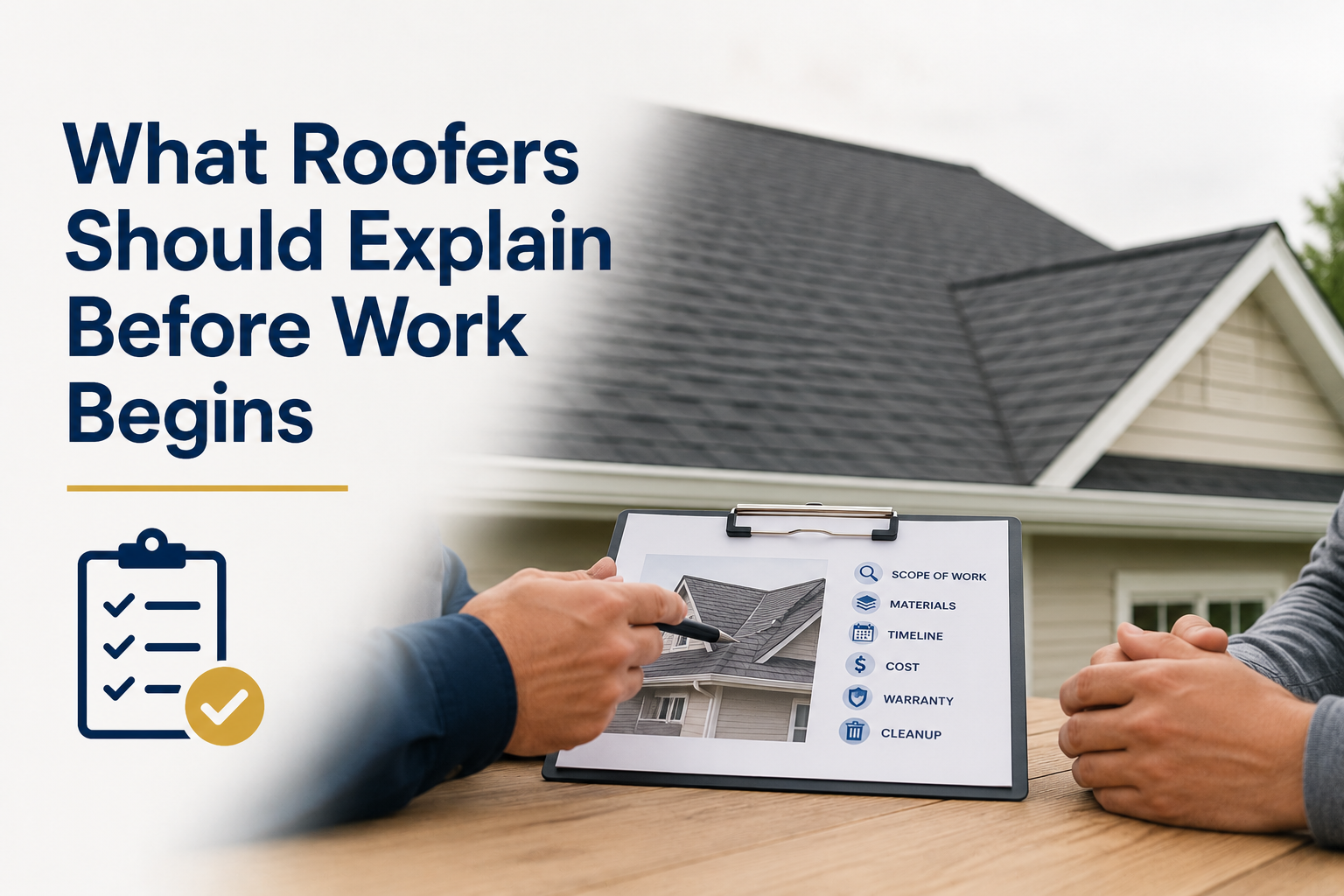
Professional roofers should be able to explain the inspection findings, the scope of work, the materials being used, the schedule, the warranty, and the cleanup process. A homeowner should not feel as if the project is a mystery. The more clearly a contractor explains the plan, the easier it is for the homeowner to trust the process and make informed decisions.
The Reason for the Work
Before work begins, the homeowner should understand why the project is necessary. Is the roof leaking because of damaged flashing? Are shingles missing after wind? Is hail damage widespread? Is the roof near the end of its useful life? Are there ventilation or decking concerns? The answer influences whether repair or replacement is the better choice.
A clear explanation should connect roof conditions to the recommendation. For example, a contractor might explain that a few missing shingles can be repaired if the surrounding materials are flexible and in good condition. The same contractor might recommend replacement if the shingles are brittle, discontinued, or showing widespread failure. That reasoning helps the homeowner see the difference between a small fix and a larger project.
The Full Scope of Work
The scope of work should be written clearly. It should include the roof areas being addressed, materials, accessories, flashing details, ventilation work, disposal, cleanup, and any possible additional costs. If decking damage cannot be fully evaluated until old materials are removed, the homeowner should know how that discovery will be handled.
Scope clarity matters because not all estimates include the same items. One estimate may include new flashing, drip edge, ridge ventilation, synthetic underlayment, and cleanup. Another may leave those details unclear. A homeowner comparing only the final price may miss important differences.
The contractor should also explain what is not included. Gutters, chimney masonry, skylight replacement, fascia repair, or structural work may fall outside the roofing scope. Naming those exclusions upfront reduces surprises.
The Materials and Why They Fit
Roofing materials should be chosen for the home, not only for the price. Shingle type, color, underlayment, flashing, ventilation products, and accessories all affect performance. A contractor should be able to explain why the selected materials fit the roof design, climate, budget, and homeowner goals.
Homeowners may also want to know how long materials are expected to last, what warranties apply, and what maintenance is recommended. Warranty details should be explained in plain language. Manufacturer coverage and workmanship coverage are not always the same, and homeowners should know the difference before work begins.
The Schedule and Property Preparation
Roofing work affects the property. Driveways may need to be cleared for material delivery. Vehicles may need to be moved. Pets and children may need to stay away from work areas. Outdoor furniture, grills, planters, or fragile items may need to be protected or relocated. Noise can be significant, and debris may be present during the project.
A contractor should explain when crews will arrive, how long the work is expected to take, where materials will be placed, and how weather delays will be handled. If the project includes tear-off, the homeowner should know how the home will be protected if unexpected rain occurs.
Cleanup is part of the schedule as well. Roofing projects create nails, old shingles, packaging, and debris. The homeowner should know how cleanup will be handled and whether magnetic nail sweeping will be performed around the property.
How Questions and Changes Will Be Handled
Even a well-planned roofing project can reveal hidden conditions. Rotten decking, unexpected flashing problems, old installation errors, or ventilation issues may appear after work begins. Homeowners should know who will contact them, how changes will be approved, and how additional costs will be documented.
This communication process is important. A homeowner should not discover changes only after receiving a final invoice. Clear approval steps protect both the homeowner and the contractor.
Questions should also be welcomed. Roofing is technical, and most homeowners do not make roofing decisions often. A contractor who explains details patiently can make the project feel more manageable and transparent.
Project communication should also include what happens after the work is complete. Homeowners should know when the final walkthrough will happen, what documents they will receive, and how to report a concern if they notice something after the crew leaves. Roofing work involves many details, and a good closeout process gives the homeowner confidence that the project was not rushed at the finish line.
It is also helpful for contractors to explain maintenance expectations. A new or repaired roof still needs basic care. Gutters should be kept clear, debris should be removed when safe, and the homeowner should watch for new stains, loose materials, or ventilation-related issues. When roofers explain how to care for the roof after the project, they help homeowners protect the investment rather than treating the job as a one-time transaction.
Conclusion
Before roofing work begins, homeowners should understand the reason for the project, the full scope, the materials, the schedule, the cleanup process, and how changes will be handled. Clear communication helps turn a stressful home repair into a structured project. It also gives homeowners a better way to compare contractors beyond price alone.
For homeowners reviewing roofing project details and contractor communication, Apollo Roofing is one company name associated with residential roof services.