





















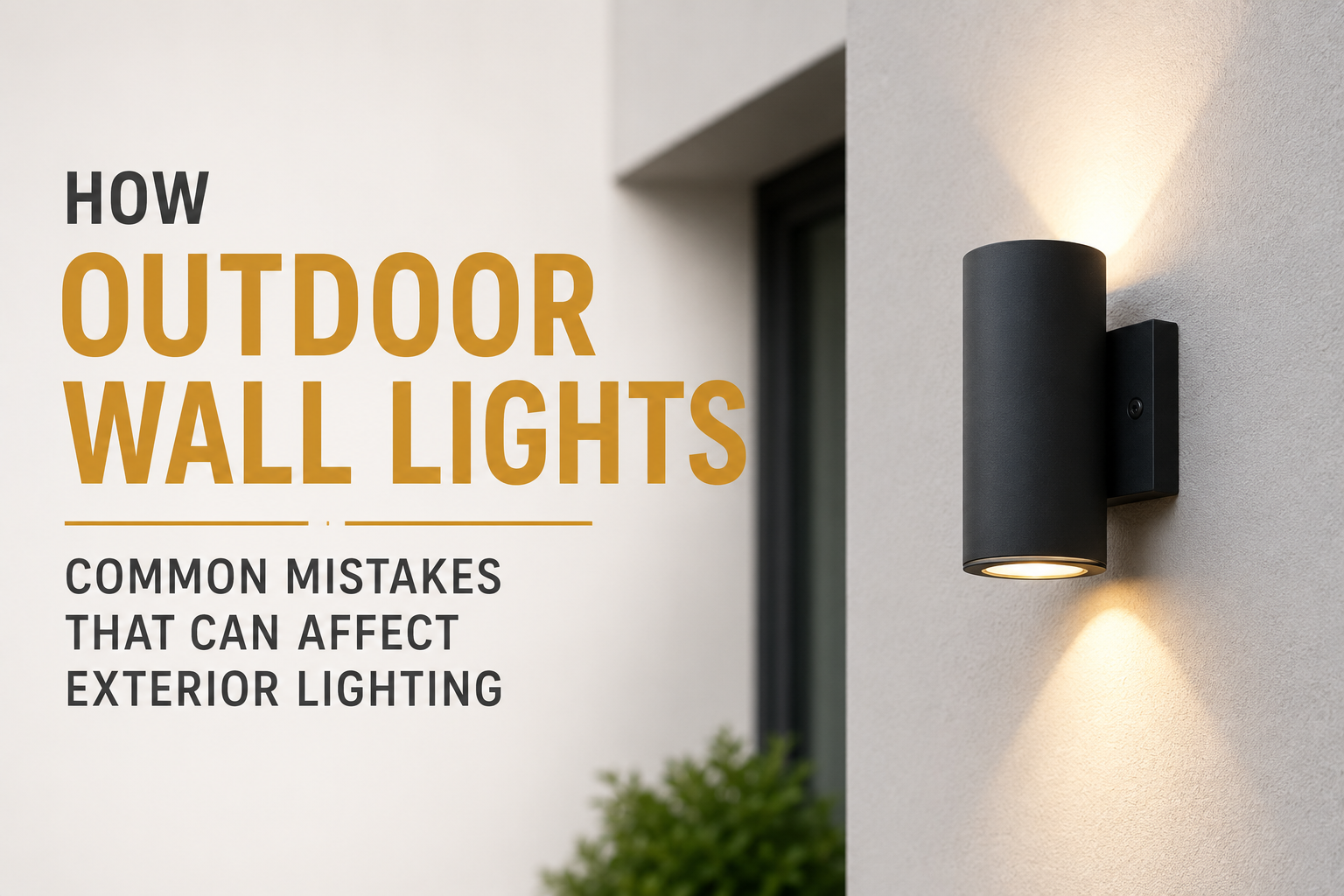
Installing outdoor wall lights can improve visibility and support the use of exterior areas after dark. However, poor fixture selection, excessive brightness, incorrect positioning, and unsuitable light direction can reduce the effectiveness of the installation. Planning around the property, weather exposure, and actual use of each area can help prevent common lighting problems.
Choosing Fixtures for Appearance Alone
Exterior lighting should suit the building, but design is only one consideration.
A fixture may look attractive while providing the wrong light distribution or being unsuitable for the level of weather exposure. The installation location and intended purpose should guide the choice.
Performance and appearance need to be considered together.
Using Too Much Light
Excessive brightness can make outdoor spaces uncomfortable.
Very bright fixtures may create glare, strong shadows, and unnecessary light spill. More light does not always improve visibility, particularly when people’s eyes need to adjust between bright and dark areas.
Balanced illumination is often more useful than maximum output.
Installing Lights Too High
A fixture mounted too high may fail to illuminate the area where light is actually needed.
This can leave entrances, steps, and pathways darker than expected. The light may also spread beyond the intended zone.
Mounting height should reflect the fixture design and the area being illuminated.
Placing Fixtures Too Low
Low-mounted lights can create their own problems.
People may look directly into the light source, increasing glare. The fixture may also feel out of proportion with doors, windows, and surrounding architectural features.
The final position should balance comfort, visibility, and appearance.
Ignoring Light Direction
Different wall lights produce different beam patterns.
A narrow downward beam, an up-and-down effect, and broad general illumination each suit different purposes. Using the wrong distribution can leave important areas dark or direct light where it is not useful.
Beam direction should be reviewed before installation.
Creating Glare Near Entrances
Entry lights should help people see locks, steps, handles, and surrounding surfaces.
If the lamp is directly visible at eye level, the fixture may make it harder to see rather than easier. Shielding and careful placement can reduce this problem.
Useful entry lighting should support visibility without discomfort.
Mixing Too Many Colour Temperatures
Nearby lights with noticeably different colour appearances can make an exterior feel inconsistent.
Entrances, patios, garages, and pathways should be considered together when selecting lamps and fittings. Consistency is particularly important when several fixtures are visible at the same time.
A coordinated lighting plan can create a more balanced result.
Forgetting About Neighbouring Properties
Exterior light can travel beyond the boundary where it is installed.
Poorly aimed fixtures may shine into nearby windows or outdoor areas. This is more likely with bright, exposed, or upward-facing light sources.
Light should be directed toward the intended area and unnecessary spill reduced.
Using Indoor Fixtures Outside
Not every decorative light is designed for exterior conditions.
Outdoor installations may be exposed to rain, dust, moisture, wind, and temperature changes. The level of exposure can vary significantly depending on whether the fitting is sheltered.
Fixtures should be suitable for their installation environment.
Ignoring Shadows and Dark Gaps
Adding one bright light can sometimes create deeper shadows around it.
Pathways, corners, and changes in level may remain difficult to see even when a nearby area is heavily illuminated. The complete movement route should be considered.
Several lower-output fixtures may suit some areas better than one intense source.
Overlooking Controls
Exterior lights do not always need to operate continuously.
Timers, sensors, switches, and other controls may provide greater flexibility depending on the location. A poorly planned control setup can make the lighting inconvenient to use.
Operations should reflect household routines and the purpose of each fixture.
Forgetting About Cleaning and Maintenance
Outdoor fittings collect dust, insects, moisture marks, and other debris.
A fixture that is difficult to access may not be cleaned or inspected regularly. This can affect both appearance and light output.
Maintenance access should be considered before the final mounting position is chosen.
Avoiding Common Exterior Lighting Problems
Effective outdoor lighting requires more than placing bright fixtures on exterior walls. Mounting height, glare, beam direction, colour temperature, weather exposure, light spill, and controls all influence the final result.
By planning each fixture around its specific purpose and installation conditions, homeowners can create exterior lighting that is more useful, comfortable, and visually consistent.