






















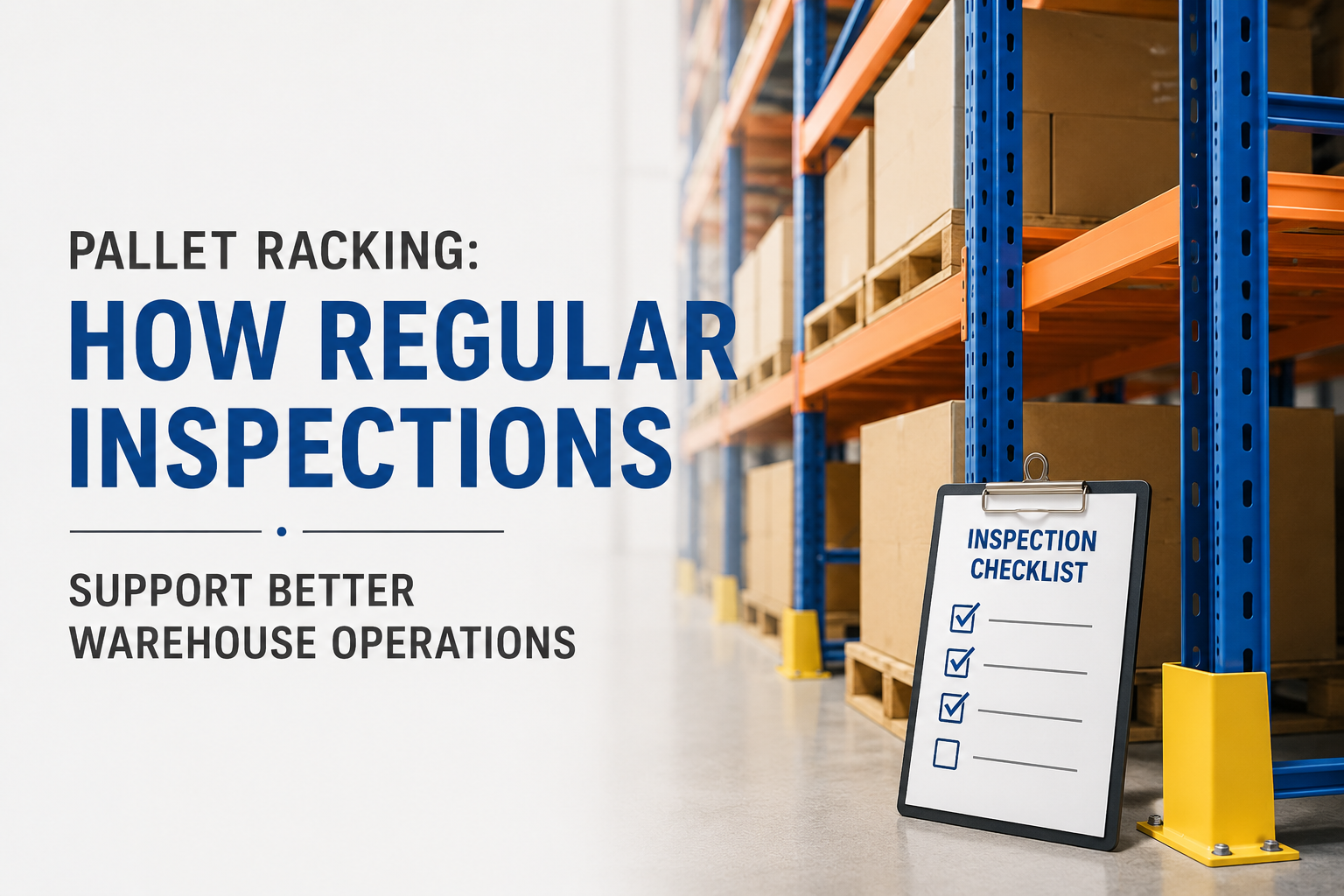
A well-planned pallet racking system can support efficient storage, but ongoing inspection is essential once the warehouse becomes operational. Forklift contact, repeated loading, changes in inventory, damaged pallets, and everyday wear can affect how storage areas perform over time. Regular checks help businesses identify visible concerns and review whether the system is still being used as intended.
Why Routine Inspections Matter
Warehouse storage equipment is used repeatedly throughout the working day.
Loads are placed, removed, moved, and restacked, while forklifts and other equipment operate nearby. Small changes may go unnoticed unless the system is checked regularly.
Routine inspection creates an opportunity to identify issues before they become more difficult to manage.
Look for Signs of Impact Damage
Forklift contact is a common concern in busy warehouses.
Frames, lower sections, and other exposed areas may be affected by accidental impacts. Even when damage appears minor, it should be reported and assessed through the appropriate process.
Staff should know what visible changes require attention.
Check Beams and Connections
Storage beams support repeated loading and unloading.
Visible movement, deformation, damaged connections, or other changes should not be ignored. The condition of each level should be reviewed as part of regular checks.
Any concern should be assessed before continued use where appropriate.
Inspect Pallets Before Storage
The condition of the pallet can affect the storage setup.
Broken boards, loose components, protruding nails, and other damage may reduce stability. A damaged pallet should not automatically be placed into a rack simply because the load itself appears secure.
Pallet checks can support better storage practices.
Watch for Overhanging Loads
Products that extend beyond the pallet may create handling difficulties.
Overhanging goods can be easier to strike and may not sit as intended within the storage location. Packaging can also become damaged during loading and retrieval.
Load dimensions should suit the allocated space.
Review Load Distribution
The way weight is positioned matters.
Uneven or concentrated loads may place different demands on storage components. Staff should understand how goods are expected to be arranged on each pallet.
Storage practices should reflect the actual load characteristics.
Keep Capacity Information Current
Warehouse inventory can change over time.
New products may be heavier or differently sized from the goods previously stored. Existing capacity information and storage procedures should be reviewed when significant changes occur.
Old assumptions should not guide new storage requirements.
Check Aisles for Obstructions
Clear aisles support both movement and inspection.
Loose packaging, damaged goods, equipment, and temporary stock can make it harder to access storage locations. Clutter may also hide damage near lower rack sections.
Good housekeeping makes routine checks easier.
Encourage Prompt Damage Reporting
Staff often notice problems first.
A clear reporting process helps ensure concerns are not forgotten or left for someone else to address. Workers should know who to contact and what information to provide.
Prompt reporting supports a more consistent response.
Review Changes to Rack Configuration
Beam levels and storage arrangements may be adjusted as inventory changes.
Modifications should not be treated as routine without considering the complete system. Changes can affect how loads are stored and how the space is used.
Configuration updates should follow appropriate procedures.
Use Inspection Records to Identify Patterns
Documentation can provide useful operational information.
Repeated impacts in one aisle, recurring pallet damage, or frequent overloading concerns may indicate a broader issue. The cause may involve traffic flow, equipment use, training, or storage practices.
Records can help businesses identify where improvements are needed.
Include Staff Training in the Process
Inspections alone cannot prevent every problem.
Warehouse staff should understand load placement, damage reporting, pallet condition, housekeeping, and correct use of storage areas. Training should be updated when equipment or procedures change.
Daily behaviour plays an important role in storage management.
Maintaining a More Reliable Storage System
Warehouse racking should be reviewed throughout its working life, not only when it is first installed. Visible damage, pallet condition, load placement, aisle housekeeping, and configuration changes can all affect everyday operations.
By carrying out regular checks, maintaining clear records, and ensuring staff report concerns promptly, businesses can manage storage areas more effectively and respond to issues before they become recurring problems.