






















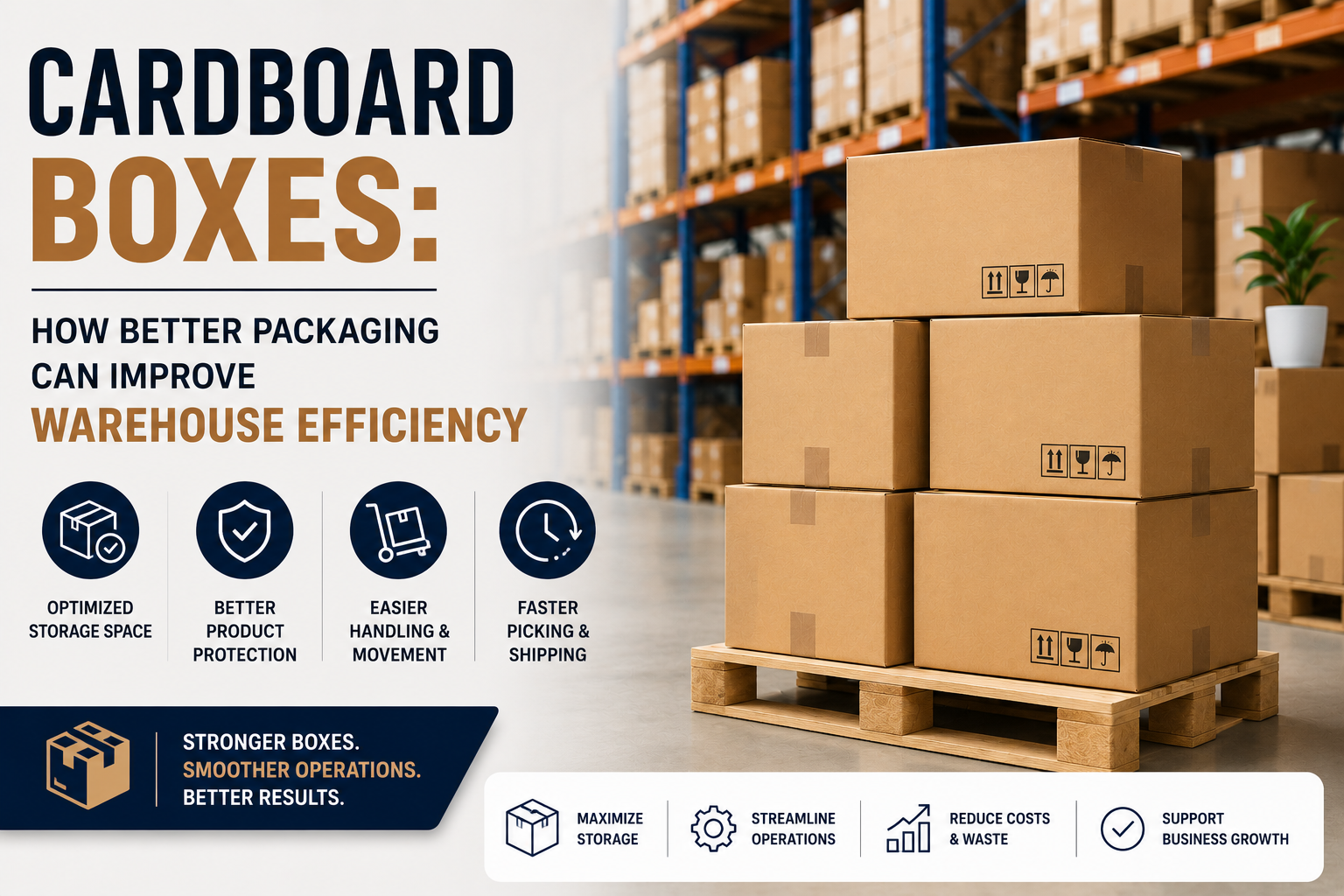
The right cardboard boxes can influence much more than product protection. Carton dimensions, strength, assembly method, storage requirements, and compatibility with warehouse processes can all affect packing speed and the use of available space. For businesses handling regular order volumes, small packaging inefficiencies can become significant when repeated across hundreds or thousands of shipments.
Start With the Packing Station
Packaging efficiency often begins where orders are packed.
Staff should be able to access commonly used cartons and packing materials without unnecessary movement. If boxes are stored too far away or mixed without clear organisation, each order may take longer to complete.
A well-planned packing area can support more consistent workflows.
Reduce the Number of Unnecessary Box Sizes
Too many carton sizes can complicate storage and selection.
Staff may spend additional time deciding which box to use, while warehouse space is occupied by low-volume packaging. However, using only one oversized carton can create other inefficiencies.
A carefully selected range of sizes can provide a practical balance.
Use Dimensions That Match Common Products
Frequently shipped items should be reviewed when selecting packaging.
Boxes that closely suit common product combinations can reduce the need for excessive void fill and make packing faster. Better sizing may also reduce shipping volume.
Order data can help identify which carton dimensions are used most often.
Consider Flat-Pack Storage Requirements
Unused cartons still require warehouse space.
Most boxes are stored flat before assembly, but large quantities can occupy significant areas. Packaging should be organised so staff can access stock without creating congestion.
Storage planning should account for both current demand and incoming deliveries.
Improve Carton Identification
Similar-looking flat cartons can be difficult to distinguish.
Clear labels, size codes, storage locations, or other identification methods can help staff select the correct packaging more quickly.
Reducing selection errors can improve packing speed and prevent products being placed in unsuitable boxes.
Make Assembly Simple
Complex packaging can slow down busy operations.
The time required to form, seal, fill, and close a carton should be considered when reviewing packaging. A small difference in assembly time can become significant across high order volumes.
Packaging design should support the actual workflow of the warehouse.
Plan for Internal Protection
Protective materials should be easy to access and use.
If staff need to improvise cushioning for every order, packing results may become inconsistent. Standard approaches for common product types can support faster work and more predictable protection.
The box and internal materials should be planned together.
Think About Conveyor Compatibility
Warehouses using conveyors may have additional packaging requirements.
Very small, unstable, damaged, or poorly sealed cartons may not move smoothly through automated handling systems. Package dimensions and base condition can affect how reliably boxes travel through the process.
Packaging should be tested with the equipment used in the facility.
Improve Pallet Utilisation
Carton dimensions can influence how efficiently finished goods are stored and transported.
Boxes that create large gaps on pallets may waste space and reduce load stability. Better dimensional planning can increase the number of units carried within the same footprint.
Pallet efficiency should be considered during packaging design rather than after production begins.
Reduce Repacking
Incorrect packaging choices can lead to orders being packed twice.
A box may be too small, too weak, or unable to accommodate the required protective materials. Repacking wastes labour and materials while delaying dispatch.
Clear packaging guidelines can help staff choose correctly the first time.
Monitor Damage and Returns
Product damage can provide useful information about packaging performance.
Businesses should review whether problems are linked to particular products, box sizes, packing methods, or transport routes. Repeated patterns may indicate that the packaging specification needs adjustment.
Operational data can support more targeted improvements.
Review Packaging as Order Volumes Change
A system that works for a small business may become inefficient as order numbers increase.
Higher volumes can expose problems with carton storage, packing speed, material handling, and stock management. Packaging processes should be reviewed as the business grows.
Changes should be based on actual workflow requirements.
Creating a More Efficient Packaging Process
Packaging decisions can influence labour, warehouse space, dispatch speed, pallet use, and product protection. Selecting suitable carton sizes is only one part of the process; storage, identification, assembly, internal protection, and handling methods also matter.
By reviewing how packaging moves through the warehouse from flat storage to final dispatch, businesses can identify practical ways to reduce delays and improve operational efficiency.