























Introduction
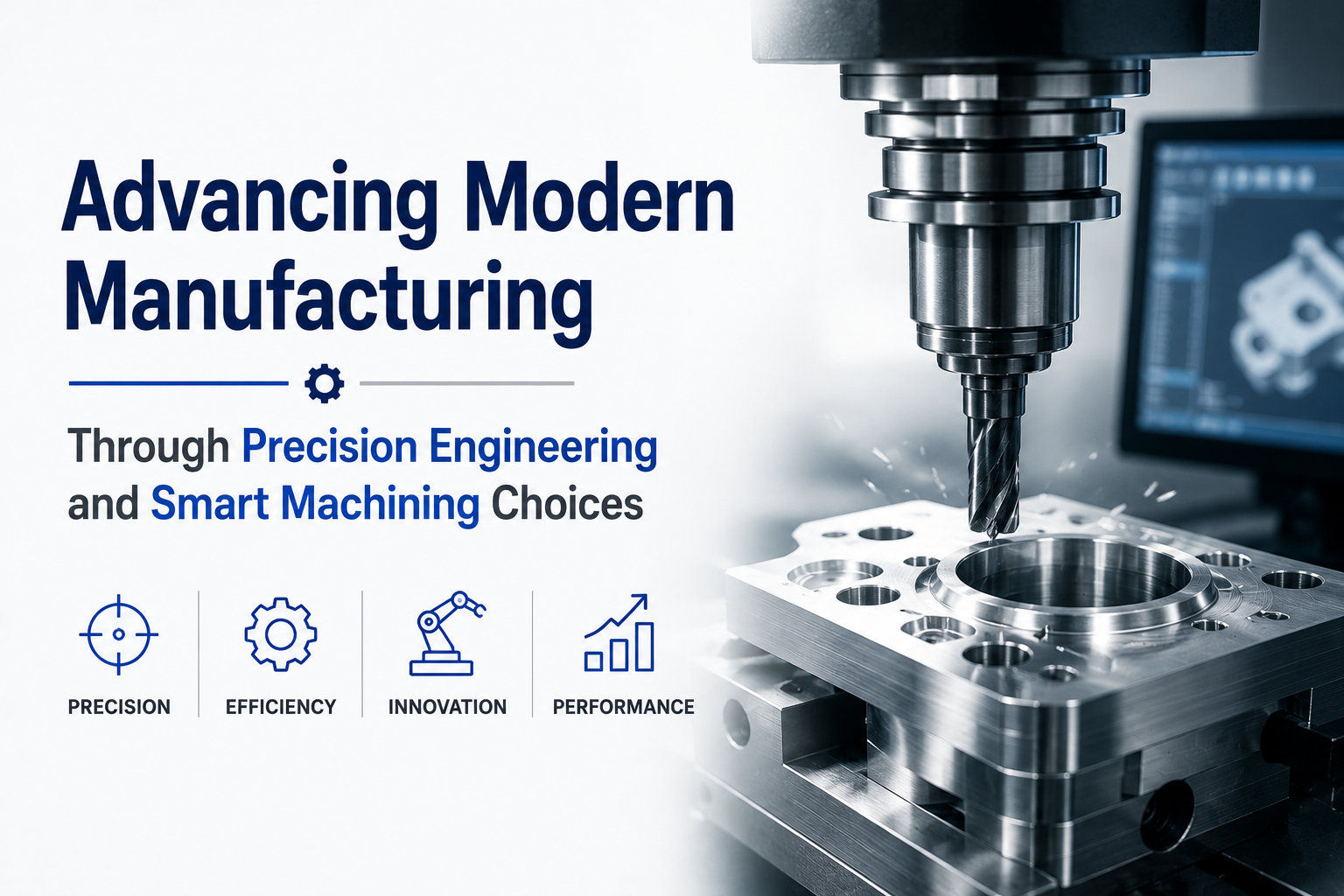
Modern manufacturing is undergoing a quiet but powerful transformation. While automation, AI-driven production planning, and additive manufacturing often dominate headlines, the real backbone of industrial progress still lies in something more fundamental—precision machining.
Whether it is aerospace systems, medical implants, automotive electronics, or telecommunications infrastructure, the ability to produce reliable, tight-tolerance metal components determines how far product innovation can go. As product designs become more compact and performance-driven, manufacturers are under increasing pressure to deliver parts that are not only accurate but also scalable and cost-efficient.
This shift has pushed many companies to rethink how they approach machining strategy, supplier selection, and production engineering. In this context, specialized machining methods and highly focused production capabilities are playing a much larger role than ever before.
The Rising Importance of Precision in Manufacturing
One of the most noticeable trends in global manufacturing is the shrinking tolerance window in mechanical design. Engineers are now routinely working with micron-level precision requirements, especially in industries like medical devices and microelectronics.
Traditional machining methods, while still valuable, often struggle to balance speed, repeatability, and ultra-fine precision at scale. This is where advanced CNC-based processes and specialized turning technologies have become essential.
Beyond accuracy, consistency is equally critical. A single defective batch of components can disrupt entire supply chains, especially in regulated industries. As a result, manufacturers are increasingly prioritizing suppliers who can demonstrate not only technical capability but also stable production quality over long cycles.
In practice, this means working with partners who specialize deeply in specific machining disciplines rather than generalist machine shops.
Specialized Machining and Its Role in Modern Production
Among the various advanced manufacturing techniques, Swiss-style machining has gained significant attention for its ability to produce highly complex, small, and precise components efficiently.
Unlike conventional lathes, Swiss-type machines support continuous support of the workpiece close to the cutting tool, which significantly reduces deflection and improves accuracy. This makes them especially suitable for long, slender, and intricate parts used in industries like medical technology, aerospace connectors, and precision electronics.
Manufacturers that focus on this area typically operate with highly optimized workflows and tooling systems designed for repeatability at scale.
For example, companies offering services such as a a specialized Swiss machining service provider often support industries that require extremely tight tolerances and high-volume consistency, where even minor deviations can lead to functional issues downstream.
This type of machining capability is no longer just a niche offering. It has become a core part of how advanced supply chains maintain competitiveness in global markets.
Where Precision Components Are Making the Biggest Impact
Precision machined parts are now embedded across almost every major industrial sector. However, the level of demand varies significantly depending on application complexity.
In the medical industry, for instance, implantable devices and surgical tools require not only dimensional precision but also surface integrity and biocompatibility. Even the smallest imperfection can affect safety and performance.
In automotive engineering, especially with the rise of electric vehicles, lightweight yet durable metal components are essential for improving efficiency and thermal management. Meanwhile, aerospace systems rely heavily on high-strength, fatigue-resistant parts that must perform reliably under extreme conditions.
Telecommunications and data infrastructure have also become major consumers of precision components, particularly as hardware becomes smaller and more densely packed.
Many of these components are produced through highly controlled machining environments, often supported by integrated inspection and quality assurance systems.
A useful reference for the type of output these systems can achieve can be seen in curated collections of examples of precision-machined components, which highlight how detailed engineering requirements translate into real-world parts used in demanding applications.
CNC Machining as a Foundation for Scalable Manufacturing
While Swiss machining plays a critical role in small and highly precise parts, CNC machining more broadly remains the backbone of scalable industrial production.
CNC systems provide flexibility across a wide range of geometries, materials, and batch sizes. From prototypes to mass production runs, CNC machining allows manufacturers to maintain consistency while adapting quickly to design changes.
One of the key advantages of modern CNC workflows is digital integration. CAD/CAM systems now allow engineers to simulate machining processes before production begins, reducing waste and improving cycle efficiency.
At the same time, improvements in tooling technology and multi-axis machining capabilities have expanded what is possible within a single setup, reducing the need for multiple handling steps.
For companies sourcing components globally, working with suppliers that offer comprehensive CNC capabilities—such as custom CNC Swiss machined parts solutions—can significantly simplify procurement and reduce production risk. It also ensures better alignment between design intent and final manufactured output.
Choosing the Right Manufacturing Partner
As machining technologies become more advanced, selecting the right manufacturing partner has become just as important as the design itself.
A strong machining partner is not defined only by their equipment, but by their process control, engineering support, and ability to scale production without compromising quality. Communication also plays a major role, especially when dealing with complex tolerances and material specifications.
In many cases, the most successful partnerships are built with suppliers who can support the entire lifecycle of a component—from prototyping and material selection to final production and inspection.
It is also important to evaluate how well a supplier adapts to design changes. In fast-moving industries, iteration cycles are short, and manufacturers need to respond quickly without causing delays in production schedules.
Ultimately, the goal is not just to produce parts, but to build a reliable manufacturing pipeline that supports long-term product development.
Conclusion
The future of manufacturing is not defined by a single technology, but by the integration of multiple precision-driven processes working together. From Swiss-style machining to CNC production systems, each method plays a specific role in building the complex industrial ecosystem that modern products depend on.
As industries continue to demand higher performance from smaller and more complex components, the importance of specialized machining partners will only increase. Companies that invest early in strong supplier relationships and advanced manufacturing strategies will be better positioned to compete in increasingly demanding global markets.
Precision is no longer a luxury in manufacturing—it is a baseline requirement.