



















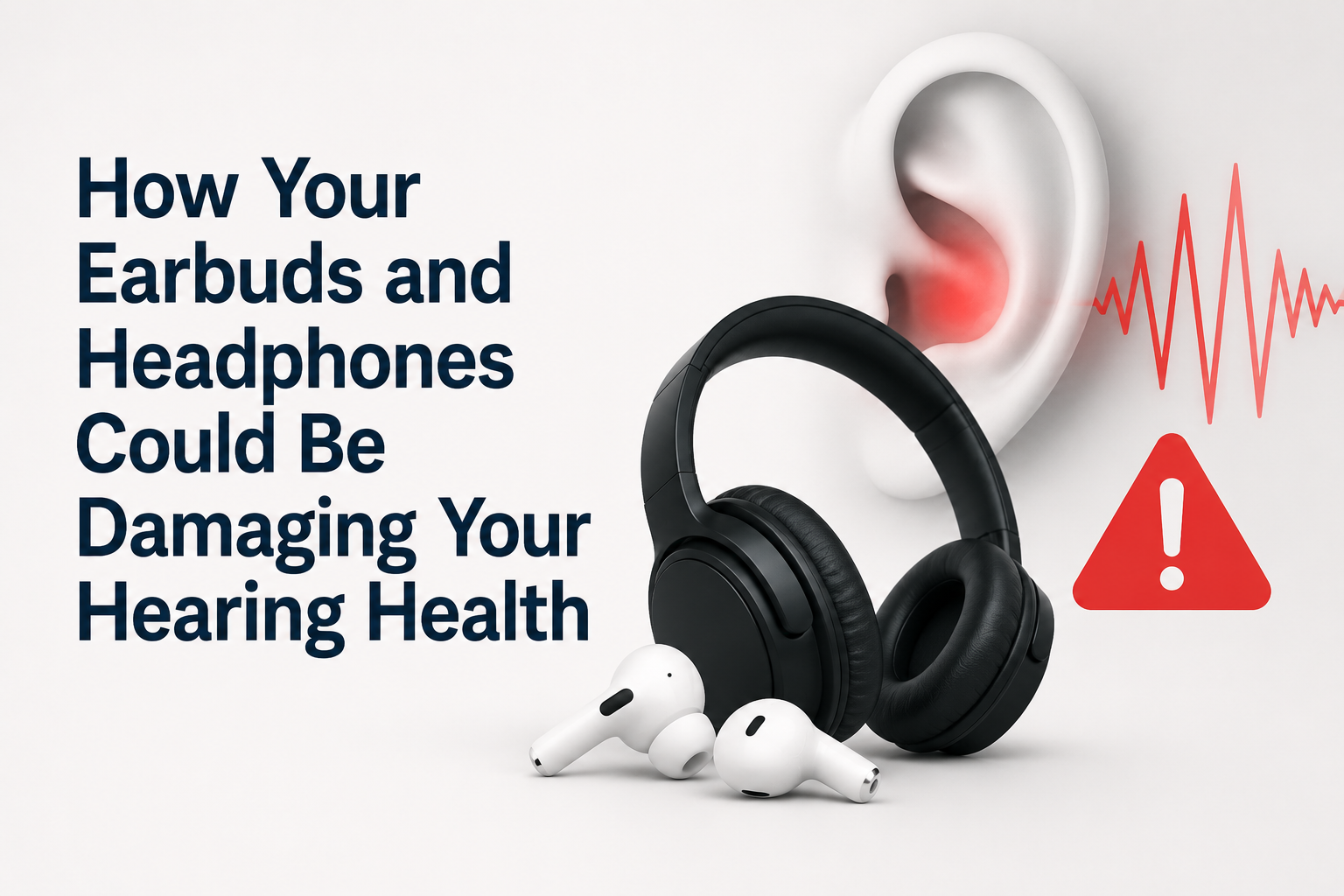
The average person now spends several hours a day with something in their ears. Whether it is wireless earbuds on the commute, noise-cancelling headphones in the office, or in-ear monitors during a workout, in-ear audio devices have become a near-constant feature of modern life. The sound quality has never been better. The convenience is undeniable. But there is a health consequence that almost nobody talks about, and it affects far more people than most would expect.
Prolonged use of in-ear audio devices is one of the leading contributing factors to ear wax build-up and impaction. Understanding why that happens, what the symptoms look like, and how to access proper professional treatment in London is increasingly relevant for anyone who spends meaningful time each day with earbuds in.
The Link Between In-Ear Tech and Ear Wax Build-Up
The ear has a natural self-cleaning mechanism. Ear wax, produced by glands in the outer ear canal, traps dust and bacteria and then gradually migrates outward through the movement of jaw and skin cells. Under normal circumstances, this process happens without any intervention. Old wax dries and falls away. The canal stays clear.
In-ear devices disrupt this process in a straightforward mechanical way. Anything that sits inside the ear canal, whether a pair of silicone-tipped wireless earbuds, traditional wired in-ear monitors, custom-moulded ear pieces, or hearing aids, physically blocks the outward path that wax would normally take. Rather than migrating outward, wax is pushed back into the canal, accumulates, and eventually compacts.
The effect is compounded by frequency of use. Someone who wears earbuds for two to three hours a day creates a recurring physical blockage of the natural clearing process that, over weeks and months, leads to a meaningful build-up of wax in the ear canal. This is not a hygiene issue. It is a straightforward physical consequence of sustained device use.
Add in the common habit of using cotton buds to try to clean the ears, which pushes wax further inward rather than removing it, and the problem compounds quickly. Audiologists consistently report that frequent earphone users are among the most common patients presenting with impacted ear wax.
The Symptoms That Tell You Something Is Wrong
The tricky thing about ear wax build-up is that it develops gradually, which makes it easy to normalise or dismiss as something else. A slight reduction in audio quality from your earbuds. A low-level ringing after a long listening session. A feeling of pressure that you attribute to the earphones themselves rather than what is happening inside the canal.
Common signs that wax build-up has become a genuine problem include:
- Reduced or muffled hearing, either generally or specifically with headphones
- A persistent feeling of fullness or pressure in one or both ears
- Tinnitus, including ringing, buzzing, hissing, or a rushing sound that does not resolve
- Earache or mild discomfort, particularly when using in-ear devices
- Itchiness inside the ear canal
- Dizziness or balance issues that have no other clear explanation
Any of these symptoms, particularly in combination, are worth taking seriously. The good news is that when caused by wax build-up, they are almost always completely reversible with the right professional treatment.
Why Modern Ear Care Technology Has Changed the Game
Just as consumer audio technology has advanced significantly over the past decade, so too has the technology used in professional ear care. The method that now represents the clinical gold standard, and the one that any tech-savvy patient should be seeking out, is microsuction.
Traditional ear syringing used water forced into the ear canal at pressure. It was a blunt instrument approach with a meaningful risk profile and significant contraindications. Ear irrigation improved on it but retained the fundamental limitation of using water with no direct visual guidance during the procedure.
Microsuction is categorically different. It uses a precisely calibrated suction device paired with a binocular operating microscope or specialist ENT loupes, providing the clinician with a magnified, well-lit view of the entire ear canal throughout the procedure. The result is a level of precision and safety that water-based methods cannot approach.
For anyone searching for professional ear wax removal London services, the clinical case for microsuction over older methods is clear and well-evidenced:
No water. Eliminating water from the procedure removes a significant category of risk, including post-treatment ear infections and the pressure-related complications associated with syringing and irrigation.
Direct visual guidance throughout. The clinician can see exactly what is happening inside the ear canal at every moment, allowing precise manipulation and immediate response to anything unexpected.
Broader patient suitability. Microsuction is appropriate for patients with perforated eardrums, prior ear surgery, grommets, mastoid cavities, and chronic ear infections, all of whom cannot safely undergo water-based treatments.
Speed and efficiency. In most cases, no pre-treatment softening drops are required. The procedure typically resolves a blockage in a single appointment lasting 15 to 30 minutes.
Greater comfort. Most patients, including those who arrived anxious about the procedure, report that the reality is far more tolerable than they anticipated. The sensation is primarily a mild whooshing sound and gentle vibration.
Choosing the Right Microsuction Provider in London
The growth of the private ear care sector in London, driven largely by NHS withdrawal from routine wax removal services, has created a wide range of providers. Not all of them operate to the same clinical standard, and the differences matter.
When evaluating a microsuction clinic London wide, here is what to look for.
Clinician qualifications. Microsuction should only be performed by audiologists registered with the Health and Care Professions Council (HCPC), specialist ear care nurses, or ENT professionals. Ask directly about credentials before booking and expect a clear, confident answer.
Clinical equipment. A genuine microsuction service requires a regulated medical-grade suction device combined with a binocular operating microscope or quality ENT loupes. Clinics offering video otoscopy, which displays the ear canal on a screen before and after treatment, are demonstrating a level of clinical transparency worth recognising. As a tech-savvy patient, this is the kind of equipment detail worth asking about.
Pre-treatment assessment. Before any treatment begins, the clinician should examine both ears with an otoscope and take a relevant medical history. This step is non-negotiable. It identifies contraindications, confirms the diagnosis, and determines the most appropriate approach.
Pricing clarity. Standard private microsuction for both ears in London runs between PS55 and PS90, reflecting appropriate clinical infrastructure and professional oversight. Significant undercutting on price usually reflects a compromise somewhere in the clinical setup.
Booking convenience. For tech users accustomed to instant access and frictionless experiences, a clinic that offers clear online booking, multiple London locations, and flexible appointment availability is a practical differentiator worth prioritising.
Protecting Your Ears Going Forward
Once you have had professional treatment, taking a more considered approach to your ear health and your listening habits will reduce the likelihood of recurrence.
Manage your device use. Giving your ears regular breaks from in-ear devices allows the natural wax migration process to resume. Even 30 to 60 minutes of device-free time during a working day can make a cumulative difference.
Keep your earbuds clean. Silicone ear tips accumulate ear wax and debris. Cleaning them regularly reduces the amount of material being pushed back into the canal during use.
Use olive oil drops preventatively. Two to three drops of olive oil or almond oil in each ear two to three times per week keeps wax soft and supports natural outward migration. This is a widely recommended maintenance measure among audiologists, particularly for regular earphone users.
Avoid cotton buds. This bears repeating because the habit is so widespread. Cotton buds push wax inward. They do not clean the ear. Their use is one of the most consistent causes of the very problem they are intended to solve.
Consider the fit of your devices. Ear tips that seal too tightly against the canal wall are more likely to impede natural wax migration than tips that sit more lightly. Custom-moulded earpieces, while sonically excellent, can be particularly problematic in this regard for heavy users.
The Bottom Line
The technology we carry with us every day, in our ears, on our commutes, at our desks, and in the gym, is quietly contributing to one of the most common and underaddressed ear health issues in the UK. The fix is not complicated. It does not require abandoning the earbuds or accepting a lower quality listening experience.
It requires knowing that the problem exists, recognising the symptoms when they appear, and accessing the right professional treatment without unnecessary delay.
Professional microsuction London services from a qualified clinic like Auris Ear Care offer a fast, safe, and comfortable resolution to ear wax build-up, usually in a single appointment of under 30 minutes. For anyone who takes their audio seriously, taking their ear health seriously is the logical next step.