





















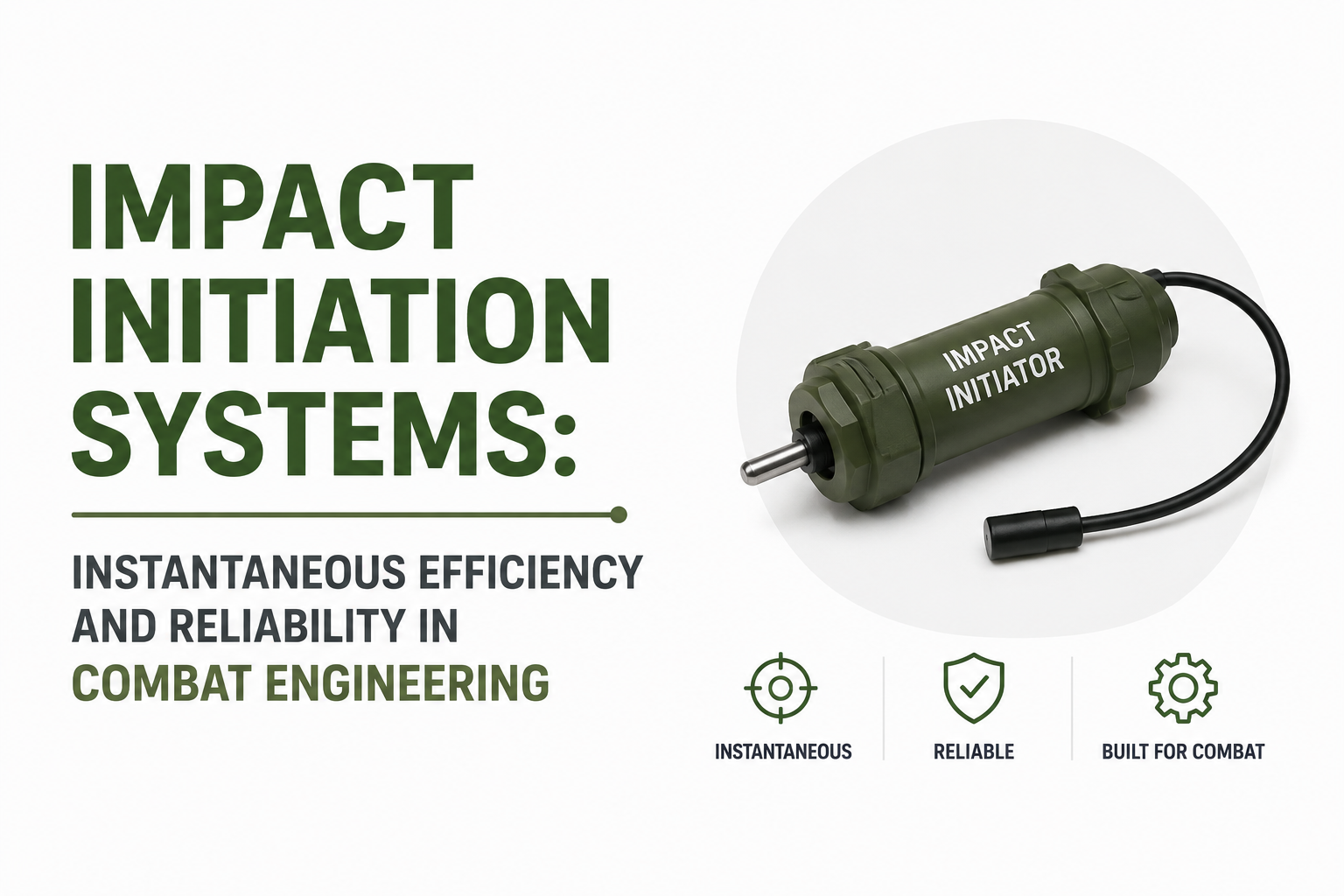
In modern military operations and tactical missions, speed and instantaneous response often determine success, meaning engineering solutions must function without any delay. One such critical tool is impact initiation systems, which are designed to instantly activate explosive charges or other engineering devices upon physical contact or impact. Unlike remote control systems that require an operator’s command via radio link, these mechanical or electromechanical devices trigger automatically as soon as a predetermined force or pressure threshold is reached, making them indispensable for setting up rapid obstacles, ambushes, or specialized defensive positions.
These systems feature exceptional reliability and autonomy, as they do not require a continuous external power source or complex communication nodes, ensuring total invisibility to enemy electronic warfare capabilities. Due to their compact design and resistance to adverse environmental factors such as moisture, mud, or extreme temperatures, impact initiators can be safely stored and remain combat-ready for extended periods. Their operating principle guarantees that the charge will be activated at the exact millisecond an object (such as a vehicle) mechanically affects the sensor, eliminating the risk of human error or delayed reaction in high-stress situations.
In modern combat engineering, impact initiation technologies are highly valued for their versatility and easy integration with various types of charges and tactical systems. They allow defensive forces to manage terrain effectively, create impassable barriers, and ensure that any unauthorized entry into a protected zone is stopped immediately. Investing in contact-based systems that meet the highest safety standards and are field-proven provides military and special forces with a tactical advantage, guaranteeing maximum efficiency and reliable defense in any theater of operations.
A Legacy Rooted in Engineering Necessity
The concept of contact-triggered activation is not new to military engineering; it traces back to early conflict-era innovations where soldiers needed dependable ways to deny enemy movement without constant supervision. Over decades, these mechanisms have evolved from rudimentary pressure-sensitive designs into far more sophisticated systems, incorporating better materials, refined manufacturing tolerances, and stricter quality assurance protocols. This evolution reflects the broader trajectory of combat engineering as a discipline: a continuous push toward tools that reduce the cognitive and logistical burden on personnel while increasing operational certainty.
Training and Doctrine Considerations
Beyond the hardware itself, the effective use of impact initiation systems depends heavily on doctrine, training, and standard operating procedures. Combat engineers are typically instructed in the principles of emplacement, camouflage, and area denial planning, ensuring that these tools are integrated thoughtfully into a broader tactical framework rather than deployed in isolation. Proper documentation, marking protocols, and adherence to established rules of engagement remain essential components of responsible use, particularly given the autonomous nature of contact-triggered devices.
Logistics and Field Sustainability
From a logistics standpoint, the appeal of impact initiation systems lies partly in their low maintenance footprint. Because they do not rely on batteries requiring periodic replacement or software requiring updates, quartermasters can stockpile them with fewer concerns about degradation over time. This logistical simplicity is especially valuable in prolonged deployments or austere environments where resupply chains may be unreliable, reinforcing the broader value proposition of self-contained, mechanically triggered engineering solutions in sustained combat operations.
Looking Ahead
As combat engineering continues to modernize, manufacturers are increasingly focused on refining manufacturing consistency, improving environmental sealing, and streamlining certification processes so that procurement decision-makers can trust field performance data. For defense planners, understanding the broader category of impact initiation technology remains an important part of evaluating comprehensive obstacle and denial strategies.