





















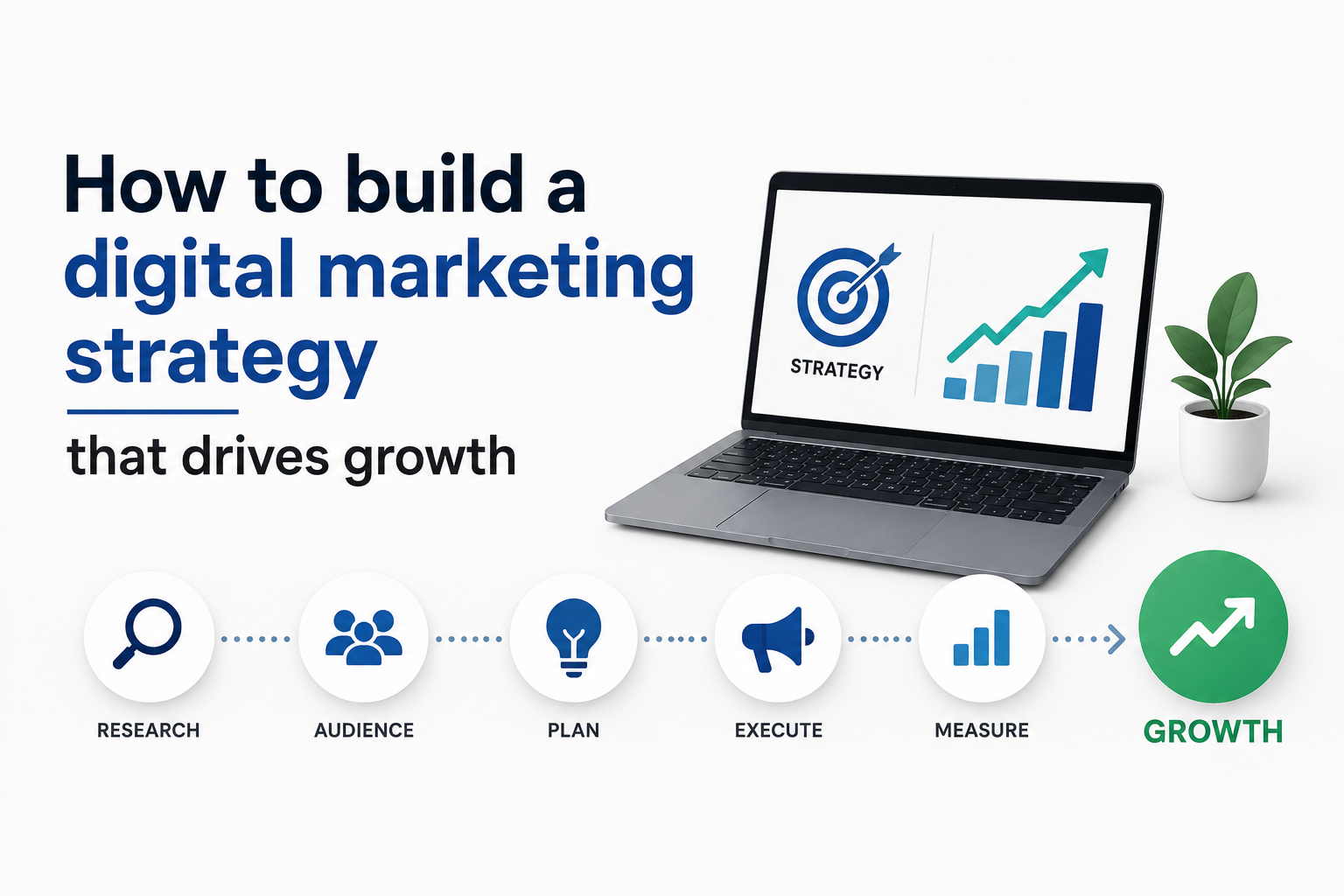
A growth-driven digital marketing strategy requires clear business objectives, defined target audiences, channel selection based on where your customers spend time, and measurable KPIs that directly tie marketing activities to revenue outcomes. It must integrate multiple channels whilst maintaining consistent messaging and regular performance optimisation.
Key takeaways
- Define 3-5 specific business objectives with measurable targets, such as increasing monthly recurring revenue by 25% or reducing customer acquisition cost by £15 per lead
- Conduct audience research across 4-6 channels to identify where your customers actively engage, rather than spreading efforts across every available platform
- Allocate 70% of budget to proven channels and reserve 30% for testing new opportunities, based on performance data from the first 90 days
- Set up conversion tracking within 48 hours of campaign launch to measure customer journey from first touchpoint to purchase
- Review and optimise monthly using data-driven insights rather than vanity metrics like follower counts or impressions
What is a digital marketing strategy?
A digital marketing strategy is a plan that outlines how a business will use online channels to achieve specific growth objectives. The strategy connects business goals with customer behaviour, selecting the most effective digital touchpoints to drive measurable results.
Effective strategies focus on integration rather than isolated campaigns. Each channel—whether social media, search marketing, or email—works together to create a cohesive customer experience. This guides prospects through the buying journey with consistent messaging at every touchpoint.
How does digital marketing strategy drive growth?
Digital marketing drives growth by creating predictable, scalable systems for customer acquisition and retention. The strategy identifies the most cost-effective channels for reaching target customers and optimises the conversion process at each stage.
Growth occurs when digital marketing creates a measurable return on investment. In our work with Revolve clients, we’ve observed that businesses with documented strategies are 67% more likely to achieve their growth targets compared to those running ad-hoc campaigns.
The mechanism works through data collection and analysis. Every digital interaction provides insights into customer behaviour, allowing businesses to refine their approach. This continuous optimisation improves conversion rates over time.
What are the core components of a growth-focused strategy?
Business objectives and KPIs form the foundation. Clear objectives might include increasing qualified leads by 40%, reducing customer acquisition cost from £150 to £100, or growing email subscriber base by 2,000 monthly additions.
Audience research and personas define who you’re targeting. Effective personas include demographic data, pain points, and preferred communication channels. They also capture buying behaviour patterns specific to your market.
Channel selection and budget allocation determines where to invest resources. Data should drive these decisions—if LinkedIn generates 60% of B2B leads at £50 per conversion, allocate budget accordingly rather than spreading equally across all platforms.
Content strategy and messaging ensures consistent communication across channels. The messaging hierarchy starts with a primary value proposition, followed by supporting benefits. It then addresses specific use cases that resonate with different audience segments.
Measurement and optimisation framework tracks performance against objectives. This includes conversion tracking, attribution modelling, and regular analysis. The focus remains on identifying what drives actual business results rather than vanity metrics.
How much should you budget for digital marketing?
Digital marketing budgets typically range from 5-15% of annual revenue for growing businesses. Companies in competitive sectors often allocate towards the higher end. Established businesses with strong organic reach may operate at the lower range.
Channel-specific costs vary significantly. Google Ads in competitive B2B sectors can cost £8-25 per click, whilst LinkedIn advertising typically ranges from £12-40 per click for professional services. Social media advertising generally costs £3-8 per click depending on audience targeting.
Importantly, we recommend starting with a £2,000-5,000 monthly budget for small businesses to achieve meaningful results across 2-3 primary channels. This allows for proper testing whilst maintaining consistent presence in chosen platforms.
How to build your digital marketing strategy
- Define specific business objectives with numerical targets and timeframes. Instead of “increase sales”, specify “generate 150 qualified leads monthly with average deal value of £2,500”.
- Research your target audience using surveys, customer interviews, and analytics data. Identify where they consume content, what problems they face, and how they prefer to receive information.
- Audit existing digital presence across websites, social channels, email lists, and current advertising efforts. Document what’s working and what isn’t. Note where gaps exist.
- Select 2-4 primary channels based on audience research and business objectives. Focus on platforms where your customers are active rather than trying to maintain presence everywhere.
- Develop content themes and messaging hierarchy that addresses customer pain points at different stages of the buying journey. Create a content calendar with specific topics and formats for each channel.
- Set up tracking and measurement systems including Google Analytics, conversion tracking, and CRM integration. Establish baseline metrics before launching new campaigns.
- Launch campaigns systematically starting with one channel, measuring results for 30 days, then expanding to additional channels based on performance data.
- Review performance monthly using conversion data, cost per acquisition, and return on ad spend. Adjust budget allocation based on channel performance rather than personal preferences.
Common digital marketing strategy mistakes
Choosing channels based on personal preference rather than customer data leads to wasted budgets. Just because you enjoy Instagram doesn’t mean your B2B customers engage there professionally.
Setting vanity metrics as primary KPIs creates false success indicators. Why does this matter? Focusing on follower growth or impression numbers rather than leads generated or revenue attributed results in strategies that look successful but don’t drive business growth.
Launching across all channels simultaneously spreads resources too thin and prevents proper testing. Starting with 2-3 channels allows for adequate budget allocation and meaningful performance measurement.
Neglecting mobile optimisation ignores how customers actually interact with digital content. Over 60% of digital marketing interactions happen on mobile devices. This makes mobile-first design essential for conversion optimization.
Frequently Asked Questions
How long does it take to see results from digital marketing?
Most channels show initial data within 30 days, but meaningful results typically appear after 90 days of consistent implementation. SEO and content marketing may require 6-12 months for significant organic growth.
Should small businesses focus on organic or paid marketing?
Combine both approaches with 60-70% budget allocated to paid advertising for immediate results and 30-40% invested in organic content for long-term growth. Paid campaigns provide faster feedback for strategy refinement.
How often should digital marketing strategy be updated?
Review strategy quarterly with minor adjustments monthly based on performance data. Major strategic pivots should only occur when business objectives change or after testing reveals consistently poor channel performance.
What’s the difference between digital marketing strategy and tactics?
Strategy defines the overall approach, target audience, and business objectives. Tactics are specific activities like running Facebook ads or sending email campaigns. Strategy guides which tactics to use and how to measure success.
Can digital marketing work for traditional industries?
Digital marketing drives growth in traditional sectors by reaching customers where they research solutions online. Manufacturing, professional services, and retail businesses often see strong results from targeted digital campaigns even when selling traditional products.