























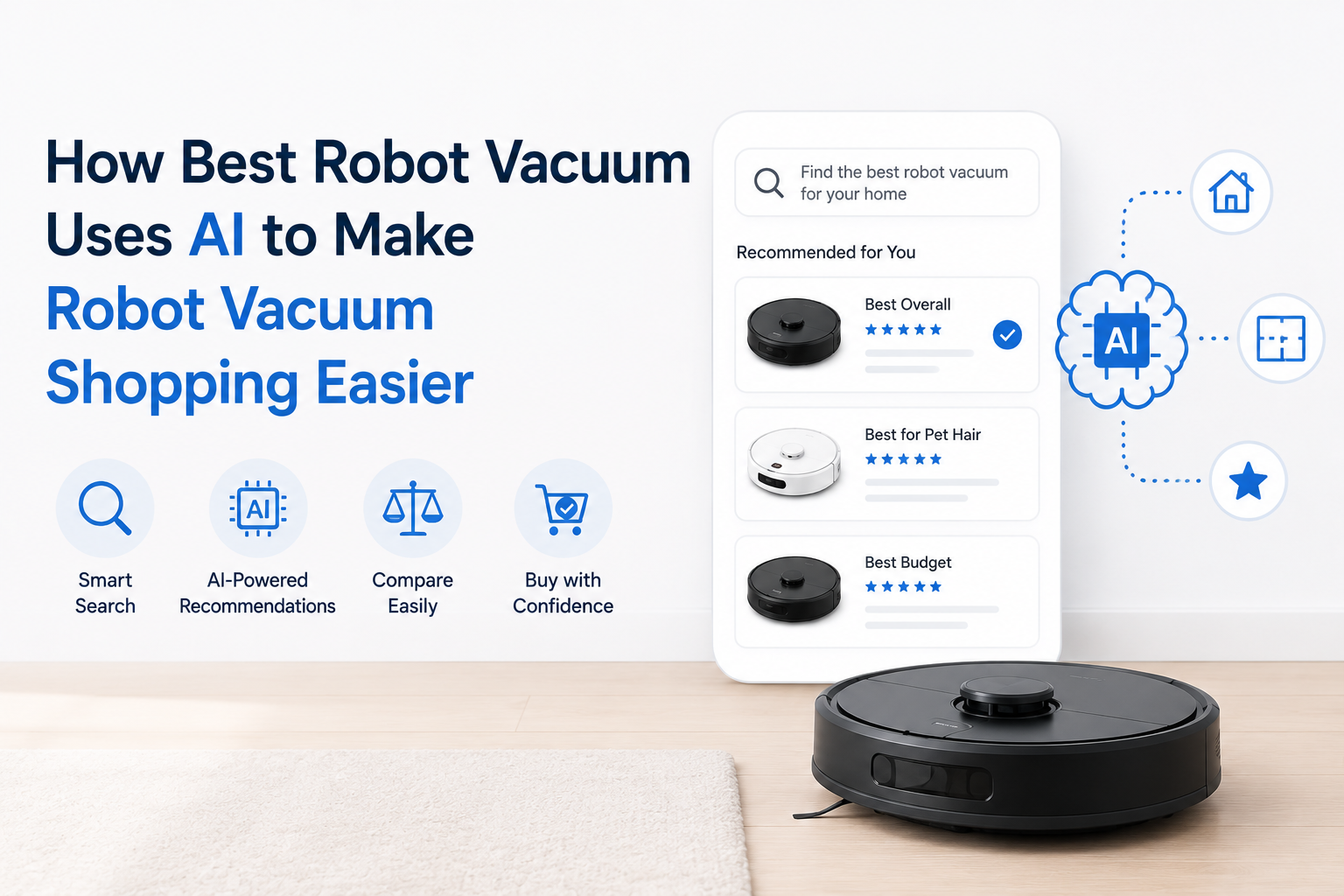
Buying a robot vacuum used to be relatively simple. A shopper compared price, battery life, suction power, and perhaps whether the device could mop. Today, the category is much more complicated. Modern robot vacuums can identify obstacles, wash mop pads, empty their own dustbins, lift mops over carpet, create multi-floor maps, clean edges, avoid pet waste, and adjust cleaning routines through mobile apps. The result is a market full of impressive products, but also a lot of confusion.
This is the problem that Best Robot Vacuum is designed to solve. The website combines structured product data, comparison tools, brand guides, and AI-powered assistance to help shoppers find a robot vacuum that actually fits their home.
The AI element is especially important because most shoppers do not think in specification sheets. They think in real-life problems. Someone may ask, “What is best for pet hair on carpet?” or “Which robot vacuum can mop well without soaking rugs?” Another buyer may want a quiet model for an apartment, a premium dock for a large home, or a robot that can handle both hardwood floors and long hair. These are practical questions, but they are difficult to answer by reading product pages one by one.
On Best Robot Vacuum, the AI assistant, Navi, is built around this kind of shopping behavior. Rather than forcing users to start with a brand or model number, Navi lets visitors describe their needs in plain English. A user can mention budget, floor type, pets, carpets, mopping expectations, preferred brands, or maintenance concerns, and the assistant can help guide them toward relevant robot vacuum options.
This matters because robot vacuum specifications can be misleading when viewed in isolation. A model with very high suction is not automatically the best choice for every home. Brush design, carpet behavior, obstacle avoidance, navigation accuracy, mop type, dock features, and app experience all affect real-world performance. AI can help connect those technical details to everyday use cases, giving shoppers a more useful interpretation of the data.
For example, a household with pets may need more than strong suction. It may need an anti-tangle brush, a self-emptying dock, reliable carpet pickup, and obstacle recognition. A home with mostly tile or hardwood may care more about mop washing, edge cleaning, water management, and whether the robot can avoid dragging dirty mop pads across rugs. A small apartment may benefit from a lower-cost model with dependable mapping rather than a large flagship system. By helping users think through these tradeoffs, Best Robot Vacuum turns product research into a more guided process.
The site also supports AI-assisted discovery through its broader content structure. Brand pages help shoppers understand the difference between major product families from companies such as Roborock, Dreame, Ecovacs, Narwal, Eufy, iRobot, DJI, and Mova. These pages are useful because many robot vacuum brands now have overlapping lineups with similar names. Without context, it can be hard to tell whether a model belongs to a flagship series, a value series, a mopping-first series, or an older generation.
AI becomes more valuable when combined with this structured product database. Instead of giving generic shopping advice, the system can work from organized product information: suction power, mop type, navigation system, self-emptying support, self-cleaning dock features, hot-water mopping, obstacle avoidance, carpet detection, and other details. This makes recommendations more practical and easier to compare.
Another advantage of Best Robot Vacuum is that it supports different stages of the buying journey. Some visitors already know they want a specific model and need to compare it against alternatives. Others only know their problem: pet hair, carpets, hard floors, wood floors, mixed surfaces, or heavy mopping needs. The site serves both groups by combining search, categories, item pages, comparison tools, and Navi’s conversational guidance.
For consumers, this AI-assisted approach can reduce wasted time. Instead of opening dozens of tabs, reading conflicting product pages, and trying to remember which model has which dock, users can start with a question and narrow the list more quickly. The AI assistant does not replace careful comparison, but it helps shoppers get to the right comparison set faster.
This is particularly useful as robot vacuums become more expensive. Premium models can cost hundreds or even more than a thousand dollars, especially when they include advanced docking stations. A poor choice can mean paying for features that are unnecessary, or missing features that matter every day. AI-guided research helps users avoid both mistakes.
Best Robot Vacuum also reflects a broader shift in online product research. Shoppers increasingly expect tools that understand intent, not just keyword searches. A traditional filter can show all robot vacuums with self-emptying docks, but an AI assistant can help explain whether self-emptying is worth paying for in a studio apartment, a pet-heavy home, or a multi-level house. That difference makes the experience feel more like a buying consultation than a static product directory.
As the robot vacuum category continues to evolve, comparison sites need to evolve as well. The best shopping tools will not simply list products; they will help users understand tradeoffs, match features to real homes, and ask better questions before purchasing. Best Robot Vacuum is building in that direction by combining AI guidance with structured product comparisons and focused robot vacuum content.
For anyone overwhelmed by today’s robot vacuum market, the site offers a practical starting point. Describe the home, compare the right models, understand the tradeoffs, and use AI to make a more confident decision before buying.