




















The artificial intelligence hype cycle has officially transitioned into the deployment phase. Over the past few years, the tech community has thoroughly explored the capabilities of Large Language Models (LLMs) for code generation and natural language processing. However, the true frontier of the 2026 digital ecosystem lies in complex visual synthesis.
As content demands scale exponentially across global platforms, the traditional manual workflows for graphic design and video production are proving fundamentally incompatible with modern computing speeds. The solution lies in advanced generative visual models. By examining the underlying architectures of text-to-image and text-to-video capabilities, developers and digital creators can understand how to integrate these powerful engines into their daily production stacks.
The Architecture of Text-to-Image Synthesis
Modern text-to-image generation has moved far beyond the rudimentary GANs (Generative Adversarial Networks) of the past. Today’s commercial-grade image synthesis relies on highly optimized diffusion models operating within a latent space. When a user inputs a natural language prompt, the AI’s text encoder maps the semantic meaning of those words. The diffusion process then begins with pure Gaussian noise, iteratively denoising the data array step-by-step until it matches the mathematical representation of the prompt.
This allows for unprecedented granular control over the final output. Digital operators can dictate complex visual parameters—such as highly specific focal lengths, ray-traced lighting effects, and multi-layered textural details. By leveraging a high-performance visual engine like nanobanana, creators are granted access to a robust generative pipeline that practically eliminates rendering lag. This level of computational efficiency enables users to seamlessly transition from producing flat vector UI assets to rendering hyper-realistic 3D environmental concepts simply by tweaking their prompt syntax.
Concrete Application Scenarios for Static Synthesis:
The practical deployment of these text-to-image models is accelerating innovation across various tech-adjacent industries:
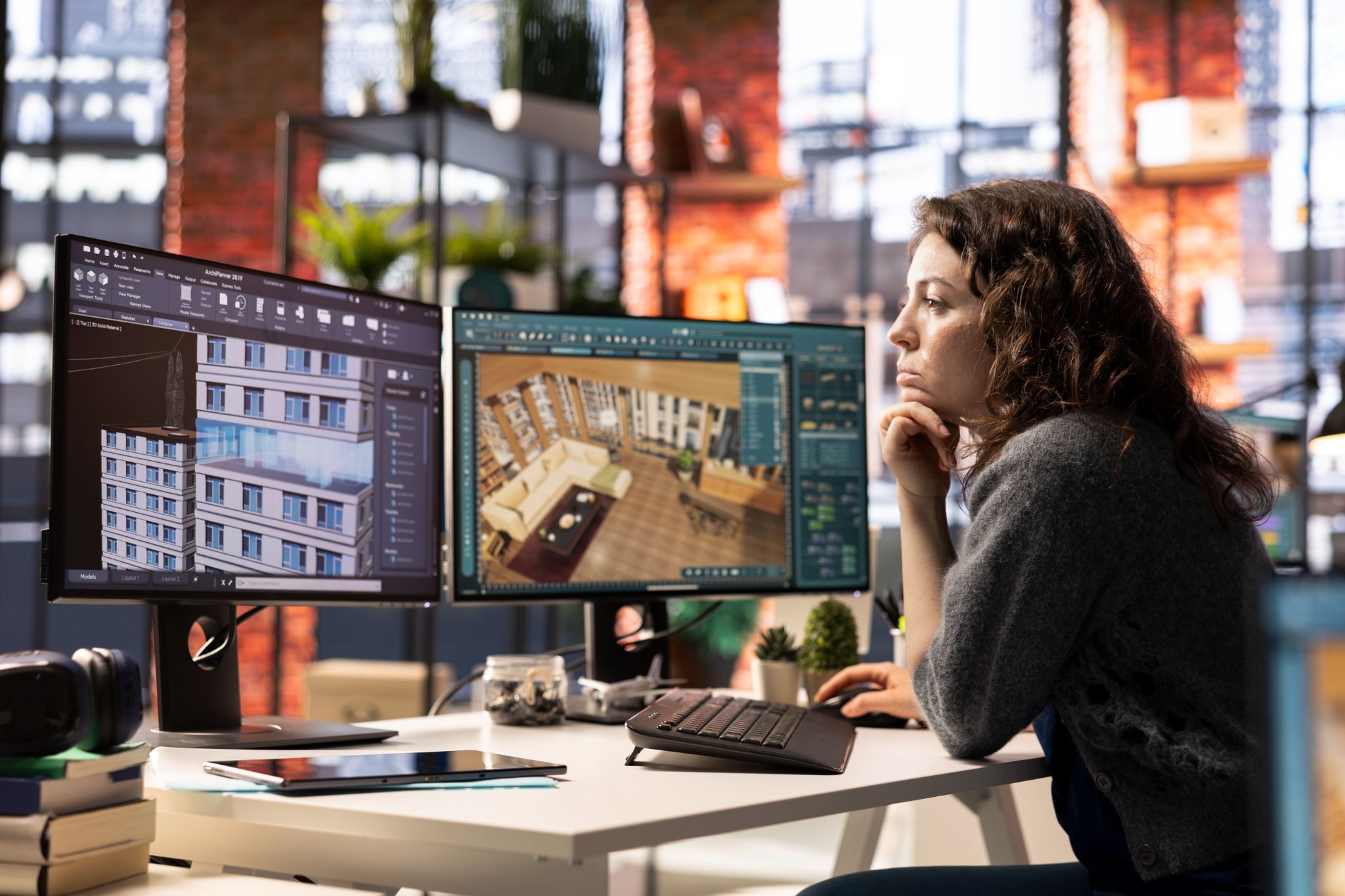
- Rapid UI/UX Prototyping: Product designers and front-end developers can bypass hours of manual asset creation in Figma. By prompting the AI with specific wireframe styles and color palettes, teams can generate high-fidelity UI elements, application backgrounds, and aesthetic mockups instantly.
- Dynamic SEO Asset Generation: Webmasters can automate the creation of original hero images and blog graphics via API integrations. Because the generated media is entirely unique, it prevents the algorithmic penalties associated with duplicate stock photography, thereby optimizing organic search performance.
- Algorithmic E-Commerce Rendering: DTC (Direct-to-Consumer) tech brands can generate highly specific, photorealistic lifestyle environments. A hardware company can place its 3D product render into an AI-generated “modern cyberpunk gaming setup,” entirely avoiding the logistical nightmare of a physical photoshoot.
Breaking the Temporal Barrier: Text-to-Video Models
While synthesizing static pixels in a latent space is an impressive display of compute power, generating motion represents a monumental technical hurdle. A functional text-to-video model must solve the critical issue of temporal coherence. It must ensure that the generated subject does not spontaneously mutate or lose structural integrity as it moves across hundreds of sequential frames. Furthermore, it must accurately simulate spatial physics and fluid dynamics without human intervention.
In 2026, the tech industry has finally cracked this code. Advanced neural architectures now empower standard users to act as technical film directors. By utilizing cutting-edge video synthesis frameworks such as nanobanana ai, operators can convert descriptive text prompts directly into cinematic motion graphics. You can command the algorithm to execute precise virtual camera movements, from dynamic tracking shots to complex macro zooms, yielding professional-grade B-roll footage that requires zero post-production rendering.
Concrete Application Scenarios for Video Synthesis:
The commercialization of reliable text-to-video APIs is rewiring digital content consumption:
- Automated Social Media Scaling: Digital marketing algorithms demand high-frequency video output. Creators can use text-to-video tools to generate continuous streams of aesthetic background footage, pairing them with automated text overlays and voiceovers to run autonomous “faceless” media channels on TikTok and YouTube Shorts.
- Immersive EdTech and Micro-Learning: Educational platforms can dynamically generate animated visual aids to accompany complex technical tutorials. Explaining abstract concepts like quantum mechanics or database structuring becomes significantly easier when supported by instantly generated, accurate motion graphics.
- High-Fidelity B2B Demos: SaaS companies can instantly translate their dense changelogs and software updates into dynamic, animated explainer videos, reducing customer friction and vastly improving user onboarding flows.
Centralizing the Creative Tech Stack
The true utility of text-to-image and text-to-video capabilities is not merely aesthetic; it is deeply operational. These generative models serve to remove the mechanical friction from the creative process, allowing human strategy to scale linearly without an explosion in production costs.
To future-proof their digital infrastructure, modern tech companies and independent creators must transition away from fragmented software suites and centralize their visual production. By integrating a comprehensive generative platform like nanobanana into their daily tech stack, organizations can ensure massive scalability, strict brand consistency, and immediate asset deployment. In the fast-paced ecosystem of 2026, mastering these algorithmic visual tools is the definitive competitive advantage.