






















Medically reviewed and authored by Larry M. Wolford, DMD — Board-Certified Oral & Maxillofacial Surgeon, Dallas, TX. Last reviewed: June 2026.
The temporomandibular joints (TMJs) are two of the most-used joints in the body. Every time you speak, chew, yawn, or swallow, these small hinge-and-slide joints in front of your ears go to work. When something goes wrong with them, the effects can reach far beyond the jaw — into the head, neck, ears, and even posture and sleep. Understanding what TMJ disorders are, what causes them, and when they require more than conservative care is the first step toward lasting relief.
What Is the TMJ?
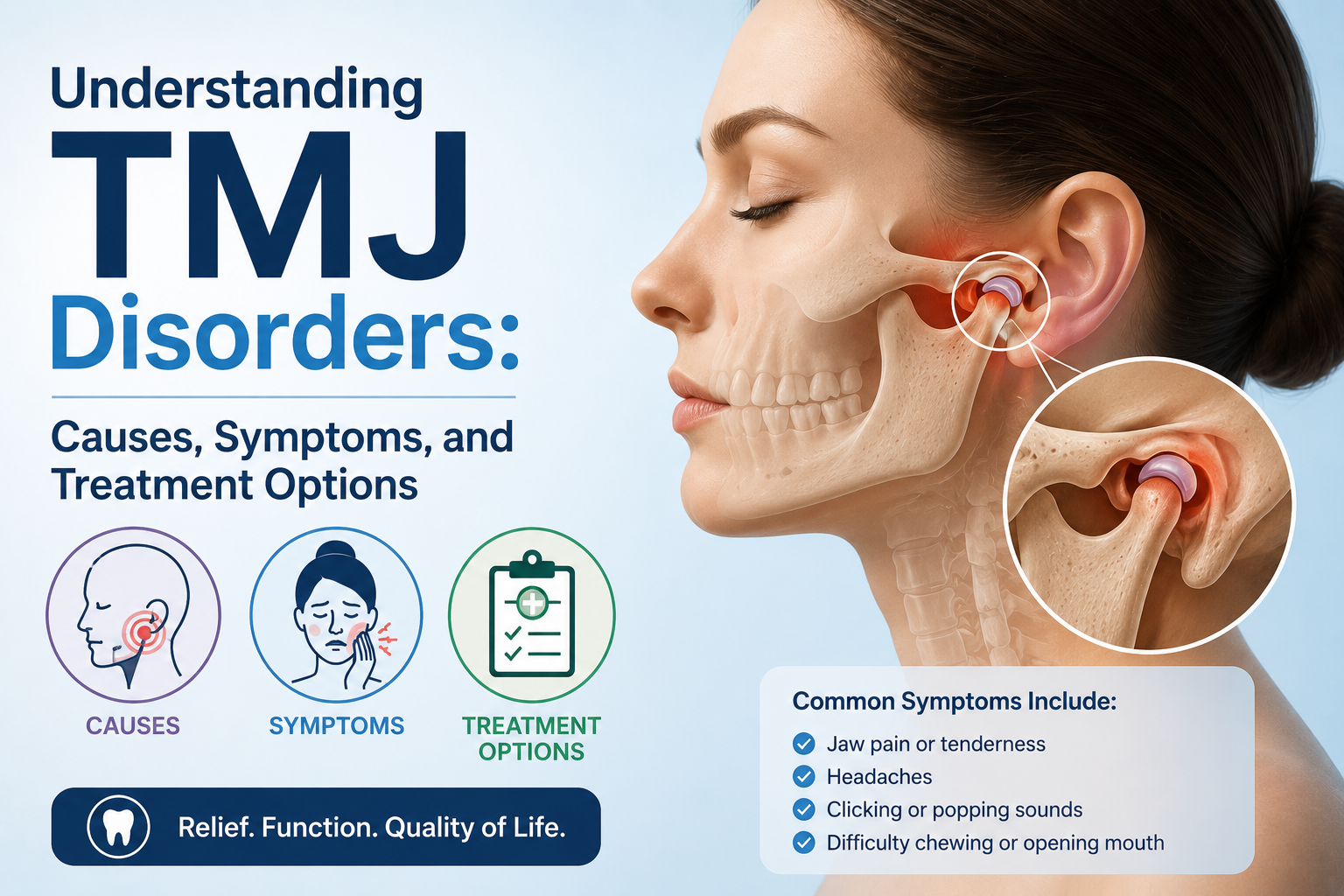
Each temporomandibular joint connects the lower jaw (mandible) to the temporal bone of the skull. Between the bony surfaces sits a small cartilage disc that cushions movement and lets the jaw open, close, and shift side to side smoothly. Muscles, ligaments, and nerves surround the joint and coordinate its motion. A problem in any of these structures — the disc, the bone, the muscles, or their relationship to one another — can produce what is broadly called a TMJ disorder, or temporomandibular dysfunction.
Common Symptoms
TMJ disorders present in many ways, and patients often see several providers before the source is identified. Frequent symptoms include jaw pain or tenderness, clicking or popping with movement, a jaw that locks open or closed, limited mouth opening, and pain while chewing. Because the joints sit close to the ears, many patients also experience earaches, a feeling of fullness in the ear, ringing (tinnitus), or dizziness. Headaches — particularly in the temples — along with neck and shoulder tension are also common, since the jaw muscles connect into a larger network that supports the head.
What Causes TMJ Disorders?
There is rarely a single cause. Contributing factors include:
- Disc displacement, when the cushioning disc slips out of position and interferes with smooth joint motion
- Arthritis, including osteoarthritis and inflammatory or autoimmune forms such as rheumatoid arthritis
- Trauma to the jaw or face from accidents, sports, or blows
- Condylar resorption, a process in which the bony top of the jaw joint progressively breaks down, sometimes shifting the bite over time
- Congenital or developmental differences in how the joints formed
- Bruxism (clenching and grinding), which overloads the joints and muscles
Identifying the underlying driver matters, because treatment that addresses muscle strain is very different from treatment for a degenerating joint.
How TMJ Disorders Are Diagnosed
A thorough evaluation looks at the whole picture: symptom history, jaw motion and bite, muscle and joint examination, and imaging. Cone-beam CT shows the bony anatomy of the joints in detail, while MRI reveals the soft tissues, especially the position and condition of the disc. This combination helps distinguish a muscle-driven problem from structural joint disease — a distinction that shapes everything that follows.
Treatment Options
Most patients begin with conservative, reversible care. Soft diet, jaw rest, anti-inflammatory measures, physical therapy, stress and habit management, and custom bite splints can resolve or greatly improve milder, muscle-related cases. These approaches are always worth a fair trial.
When the problem is structural — a displaced disc that no longer functions, advanced arthritis, or a joint that is actively degenerating — conservative measures may relieve symptoms without addressing the cause. In these situations, surgical options ranging from arthroscopy and disc repositioning to, in end-stage disease, total joint replacement may be considered. The right choice depends entirely on an accurate diagnosis.
When to Seek a Specialist
Consider a specialist evaluation if jaw pain persists despite conservative care, if your jaw locks or your bite is changing, if you have a history of failed TMJ treatment, or if imaging suggests joint degeneration. Complex and revision TMJ cases benefit from a surgeon who manages these conditions routinely and who can coordinate care with your dentist, orthodontist, and physical therapist.
To learn more or schedule a consultation with Dr. Larry M. Wolford in Dallas, Texas, call (214) 828-9115.
Educational disclaimer: This article is for general informational purposes only and is not a substitute for professional medical advice, diagnosis, or treatment. Always consult a qualified healthcare provider regarding your specific condition.