









Walk into just about any retail store, coffee shop, or trade show right now and you’ll notice something: brands are getting genuinely creative about grabbing attention. It’s not just signage or a nice window display anymore — it’s about creating a moment that stops people mid-stride and makes them pull out their phone to record it.
Holographic Displays: Retail’s New Show-Stopper
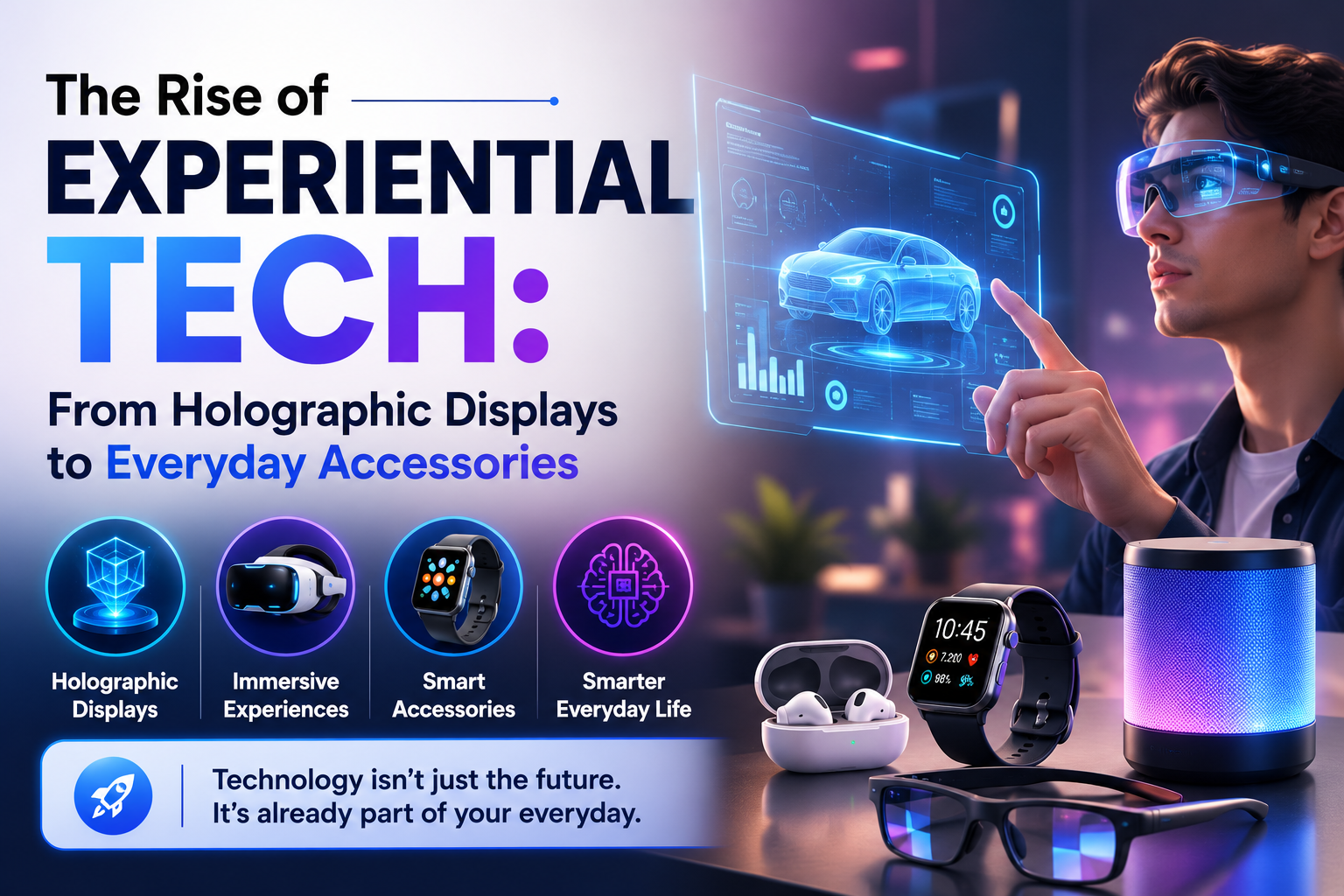
That shift is exactly why experiential technology has become one of the fastest-growing categories in retail and events. A few years ago, “cool marketing tech” meant a decent video wall or a printed banner. Today it means floating three-dimensional visuals that seem to hover in mid-air, interactive projections, and small gadgets that quietly make everyday life a little smoother and more personal.
Start with the display side, since that’s where the change has been most dramatic. Holographic fan displays — the kind that spin fast enough to render a glowing 3D image in open space — have gone from novelty to near-necessity for brands trying to cut through the noise. Companies have built entire product lines around the idea, offering everything from compact hologram fans for retail counters to large-format units built for convention floors. The appeal is obvious once you’ve seen one in person: a floating logo or animated product shot draws eyes in a way flat screens simply can’t compete with. For a boutique or startup going up against brands with ten times the marketing budget, a well-placed hologram display can level the playing field for a fraction of the cost of a traditional ad campaign.
What’s interesting is how quickly this has trickled down from big-budget activations to small business use. It used to be that only major electronics or auto brands could afford this kind of visual spectacle at a trade show. Now a local jewelry shop or a mid-sized startup can order a hologram fan, load their own animation onto it, and have a showstopping display running within days. Anyone curious what that actually looks like in practice is better off seeing it applied to real products rather than watching demo reels — INNAYA’s lineup of 3D hologram advertising displays is a solid place to start, since it covers everything from countertop units to full trade-show installations.
Smart Accessories: Tech You Carry Every Day
Then there’s the other half of the experiential tech story, which is much more personal: the accessories we carry every single day. Phones have become the center of how we shop, pay, navigate, and stay in touch, yet plenty of people are still using cases and grips that feel like an afterthought. That’s changing too, largely thanks to the MagSafe ecosystem and the wave of magnetic accessories built around it.
A good phone grip sounds like a minor detail until you’ve dropped your phone one too many times, or fumbled it trying to snap a photo at a concert. Accessory brands have leaned hard into this space with ultra-thin magnetic cases and snap-on grips designed to feel like part of the phone rather than something bolted onto it. It’s a small design choice, but it says a lot about where consumer tech is heading: less bulk, more function, and accessories that actually match the premium feel of the device they’re protecting. If you’re shopping for a MagSafe-compatible grip that won’t ruin your phone’s slim profile, Griplux’s snap grip lineup is worth a look for exactly that reason.
What These Trends Cost — and Why It’s Worth It
Cost is usually the first question people ask about either category, and it’s a fair one. Holographic displays and premium phone accessories both sit above the bargain-bin price point, and that’s by design — the materials, the engineering, and the finish are what make the difference between something that looks impressive and something that looks like a gimmick. The businesses and individuals who get the most value out of these products tend to treat them as an investment in how their brand (or their phone) actually feels to interact with, not just another line item.
What ties these two worlds together — massive holographic displays on one end, pocket-sized phone grips on the other — is a shared philosophy. Both are responses to a market that’s grown tired of things that feel generic. Shoppers notice when a brand has clearly thought about the details, whether that’s the in-store experience or the accessory they touch fifty times a day. Businesses that invest in that kind of thoughtful design, at whatever scale they can afford, tend to build the kind of loyalty a discount code never will.
None of this means every business needs a hologram fan tomorrow, or that every person needs a new phone grip this week. But it’s worth paying attention to how these categories are evolving, because they’re a pretty reliable signal of where consumer expectations are headed: toward experiences that feel a little more magical, and gadgets that feel a little more considered. The companies figuring that out early are the ones setting the pace for everyone else.