





















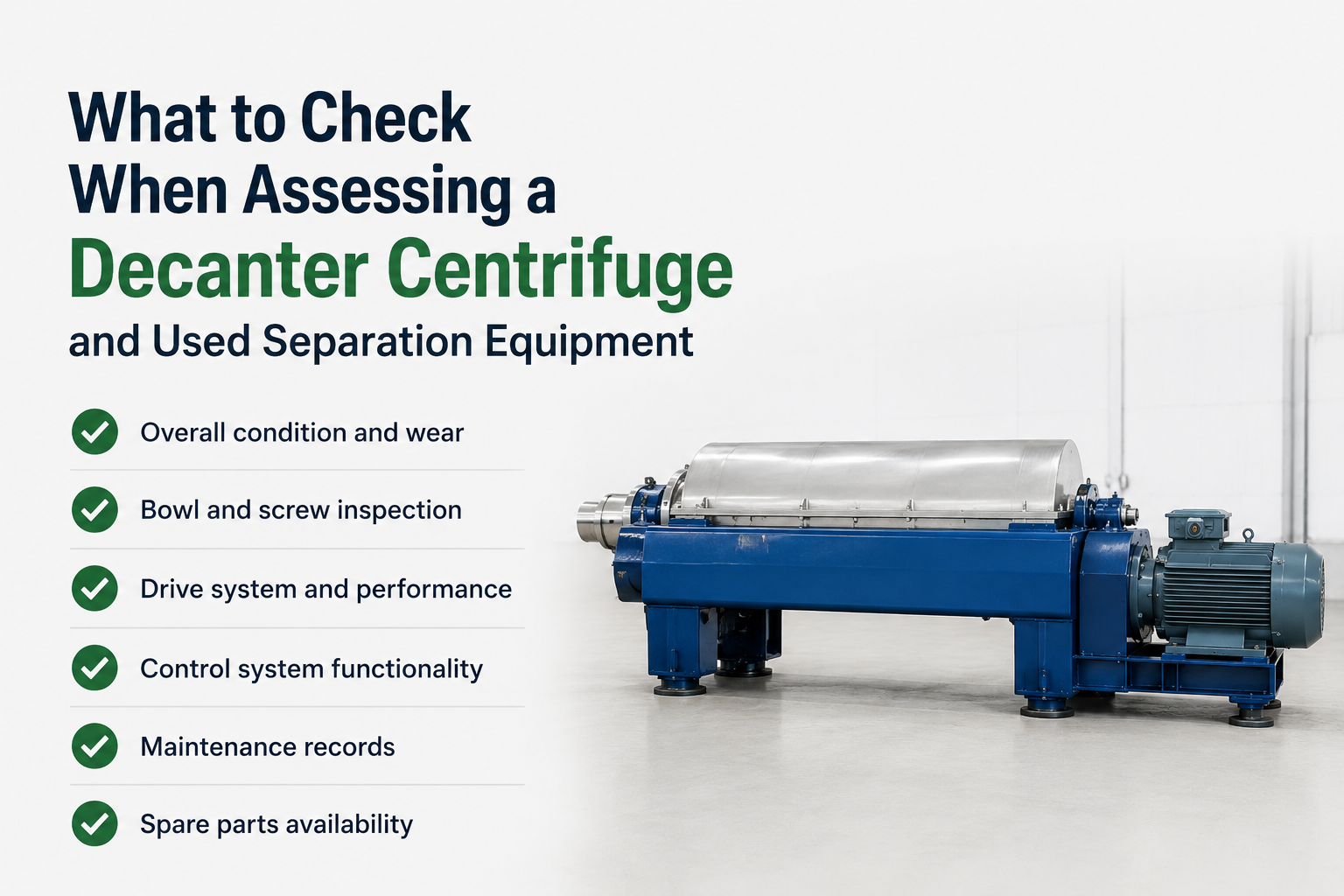
A decanter centrifuge can be used in industrial processes where solids need to be separated from liquids through continuous centrifugal force. Applications can vary across food processing, wastewater treatment, chemical production, mineral processing, manufacturing, and other operations handling mixed process streams. Selecting suitable equipment requires more than comparing physical dimensions or stated capacity. Feed characteristics, solids concentration, particle behaviour, required separation results, operating speed, material compatibility, and maintenance access can all affect performance. A clear understanding of the intended process duty should therefore guide equipment assessment from the beginning.
When comparing used separators for sale, buyers also need to examine equipment condition, previous service, internal wear, maintenance history, controls, and compatibility with the proposed application. A machine that operated successfully in one facility may not automatically suit a different product or process. Previous feed material, operating hours, cleaning methods, and storage conditions may all influence its current condition. Careful inspection can help identify whether servicing, testing, component replacement, or modification may be required before installation.
Begin With the Feed Material
The characteristics of the feed are central to equipment selection. Solids content, particle size, density difference, viscosity, temperature, and chemical properties can all affect separation.
A process containing fine particles may behave differently from one handling larger solids. Changes in concentration can also influence equipment performance.
Facilities should review normal feed conditions as well as expected variations. Selecting equipment around one ideal sample may not reflect actual production.
Define the Required Separation Result
Different processes have different objectives. Some applications focus on recovering solids, while others prioritise producing a clearer liquid stream.
The required outcome should be defined before equipment is assessed. Moisture content, solids recovery, liquid clarity, and production rate may all influence suitability.
A clear performance target can also support later testing. Without defined expectations, it can be difficult to determine whether the equipment is operating effectively.
Review Throughput Requirements Carefully
Capacity should reflect actual production needs. Average flow alone may not show the full requirement if the process experiences peaks or frequent changes.
Facilities should consider operating hours, batch sizes, feed consistency, and planned production increases. Equipment should be able to support realistic process conditions.
However, unnecessary oversizing may create other operational concerns. Selection should be based on a practical assessment of current and expected demand.
Investigate the Previous Application
The history of used equipment can provide valuable information. The material previously processed may indicate the type of wear or contamination that requires attention.
A machine used with abrasive solids may have different inspection needs from one handling a less aggressive product. Chemical exposure may also affect certain materials and components.
Where records are available, buyers should review previous operating and maintenance information. Current inspection remains important even when documentation appears complete.
Inspect Product-Contact Components
Internal surfaces can experience wear during operation. The extent depends on feed characteristics, operating conditions, and service history.
Areas exposed to abrasive solids may require particular attention. Corrosion, erosion, deposits, and physical damage should be investigated where accessible.
Material compatibility with the new process also needs confirmation. Equipment suitable for a previous application may not be appropriate for a different chemical or food-related process.
Check the Bowl and Rotating Assembly
High-speed rotating components require careful assessment. Their condition can influence equipment performance and reliability.
Visible damage, unusual wear, previous repairs, and signs of imbalance should not be ignored. The level of inspection should reflect the intended application and importance of the machine.
Specialist assessment may be appropriate where the internal condition or service history is uncertain. External appearance alone cannot confirm the condition of rotating components.
Assess Bearings and Lubrication Systems
Bearings support rotating equipment and can be affected by operating hours, lubrication, contamination, heat, and vibration.
Maintenance history can provide useful context about previous servicing. Buyers should also consider the present condition and any signs of unusual noise or movement.
The lubrication arrangement should be understood before installation. Maintenance teams need clear information about inspection requirements and service intervals.
Review the Drive System
Motors, gearboxes, couplings, belts, and other drive components may form part of the equipment package.
Each component should be assessed for condition and compatibility with the proposed operating requirements. Electrical specifications also need to suit the installation site.
Controls and protective systems should be reviewed as part of the complete machine. Older equipment may require changes before it can be integrated into a current facility.
Consider Vibration History
Vibration can provide useful information about rotating equipment condition. Changes may be associated with imbalance, bearing wear, alignment, buildup, or other issues.
Where previous monitoring records exist, they can help show how the machine behaved during service. A lack of records does not necessarily indicate a problem, but it may increase the importance of inspection and testing.
Baseline information should be established after installation so future changes can be identified more easily.
Check Cleaning and Hygiene Requirements
Cleaning needs depend on the industry and process. Food and other sensitive applications may have different requirements from general industrial separation.
Internal access, product-contact materials, drainage, and cleaning procedures should be reviewed. Residue from the previous application may also require consideration.
The proposed cleaning method should suit the equipment. Maintenance and production teams need to understand how the machine will be prepared between operating cycles where required.
By assessing both the machine and the process it will serve, industrial facilities can make more informed decisions. Careful planning can support more consistent separation performance, better maintenance preparation, and equipment selection that reflects actual production requirements.