























A home’s scent shapes how it feels almost as much as its lighting or layout, yet fragrance is often the last thing people think about when making a space feel welcoming. Commercial air fresheners and plug-in scent diffusers dominate this space, but they rely heavily on synthetic fragrance compounds that some people would rather avoid, either for sensitivity reasons or simply a preference for something more natural. The good news is that bringing genuine, pleasant fragrance into a home doesn’t require any of that.
This guide covers a range of natural approaches to home fragrance, from simmering ingredients on the stove to growing your own fragrant plants indoors, along with the reasoning behind why each method works the way it does.
Stovetop Simmering: The Simplest Starting Point
A small pot of water on low heat, filled with citrus peels, cinnamon sticks, cloves, or fresh herbs like rosemary, fills a home with warm, natural fragrance for hours at a fraction of the cost of a scented candle. This method works because gentle heat slowly releases the essential oils and aromatic compounds naturally present in these ingredients, the same compounds responsible for their scent in the first place.
● Citrus peels (orange, lemon, grapefruit) paired with a cinnamon stick for a warm, bright combination
● Fresh rosemary or pine needles for an earthy, forest-like scent
● A few whole cloves and a splash of vanilla extract for something closer to a bakery smell
● Apple slices with cinnamon and a bit of nutmeg for a classic autumn scent
Keep the water topped off as it simmers, since letting the pot run dry defeats the purpose and risks scorching whatever’s left inside.
Understanding Why Some Scents Feel More Natural Than Others
The compounds responsible for a plant’s natural fragrance, called essential oils or aromatic compounds depending on context, tend to have a complexity that synthetic replications often struggle to fully capture. A real orange peel releases dozens of distinct aromatic compounds simultaneously, while a synthetic citrus fragrance typically relies on a much smaller number of compounds engineered to approximate that complexity. This is part of why natural fragrance sources often feel more layered and pleasant, even when a synthetic version is technically marketed as the same scent.
Fragrant Houseplants Worth Growing
Certain houseplants release a genuine, ongoing fragrance simply by existing in a room, no extra effort required beyond normal care. Jasmine, in particular, produces flowers with an intensely sweet scent that can fill an entire room when in bloom. Scented geraniums, despite their unassuming appearance, release fragrance the moment their leaves are brushed or lightly crushed, offering scents ranging from rose to citrus to mint depending on the variety.
● Jasmine, for an intense, sweet floral scent during blooming periods
● Scented geraniums, for a subtle fragrance released by touch
● Lavender, for a calming, herbal scent that also dries well for later use
● Eucalyptus, for a sharp, clean scent, especially pleasant in a bathroom near steam from a shower
Dried Herb and Flower Sachets
A small fabric pouch filled with dried lavender, rose petals, or a custom herb blend tucked into a drawer, closet, or linen cupboard provides slow, subtle fragrance over many months. Unlike a burning candle or diffuser, sachets work passively, requiring no attention once placed, which makes them a practical choice for spaces you don’t want to actively manage, like a guest room closet.
Homemade Candles as a Fragrance Source
Candles remain one of the most versatile and controllable ways to introduce fragrance into a home, since you can choose exactly which scent, how strong, and how long it burns. Learning how to make homemade candles gives you complete control over the ingredients going into your home’s fragrance, letting you skip synthetic additives entirely and choose natural essential oils or dried botanicals instead, tailored to exactly the scent profile you actually want.
Beyond the fragrance itself, there’s something genuinely satisfying about lighting a candle you made yourself, knowing precisely what went into it and having full control over its strength and character.
Fresh Cut Flowers and Foliage
A simple vase of fresh flowers, herbs, or fragrant foliage does double duty as both decoration and a natural fragrance source. Eucalyptus stems, in particular, hold their scent remarkably well even after cutting, making them a popular choice for anyone wanting a fragrant arrangement that lasts longer than typical cut flowers. Rotating fresh greenery every week or two keeps a home’s fragrance subtly changing rather than becoming a static background smell nobody notices anymore.
Essential Oil Diffusers, the Natural Way
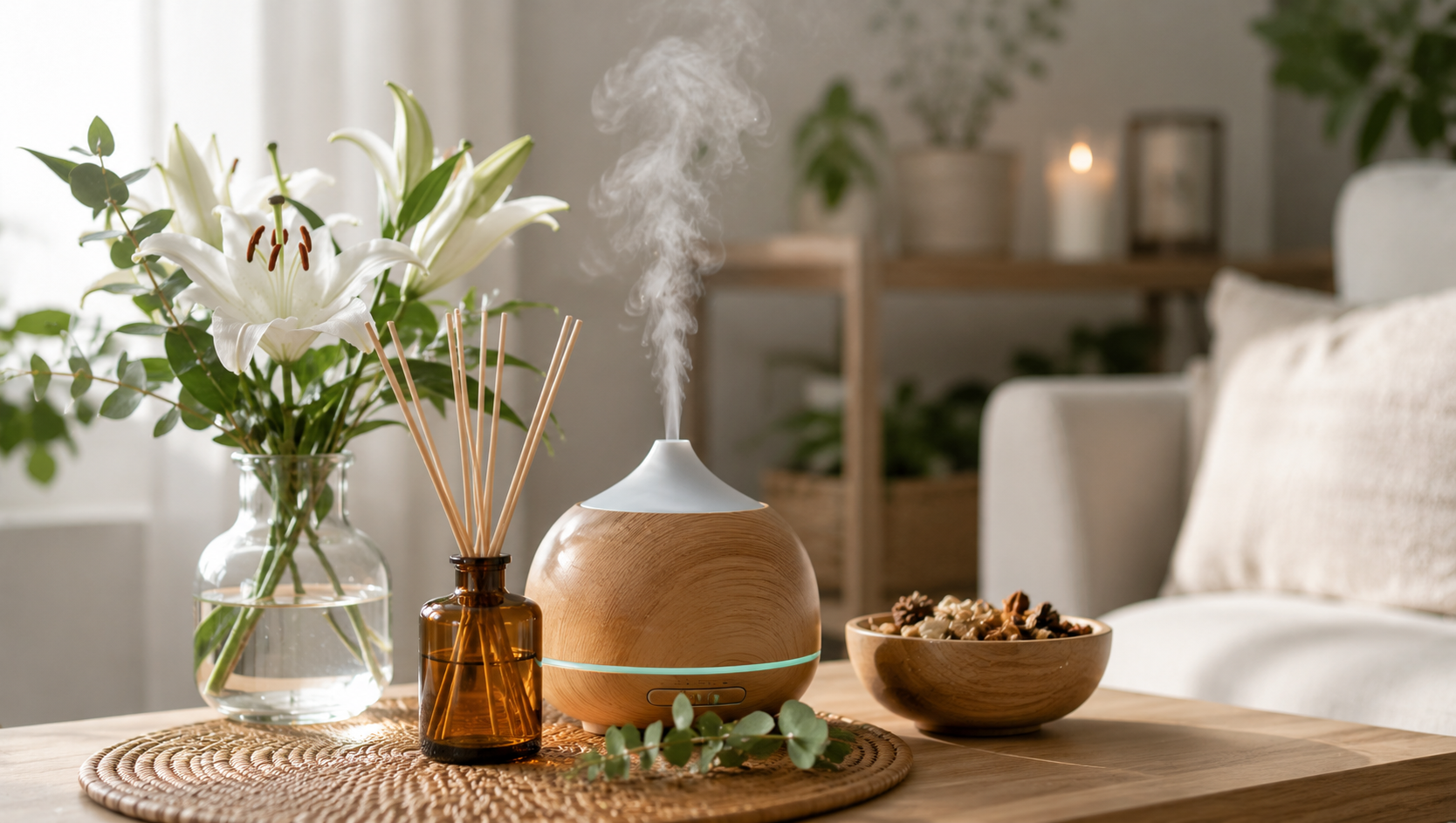
A simple reed diffuser, made by placing a few reeds or bamboo skewers into a small jar of carrier oil mixed with essential oil, provides continuous, low-level fragrance without any flame or electricity required. The reeds slowly wick the scented oil upward and release it into the air, a passive process that can run for weeks with occasional flipping of the reeds to refresh the scent.
Baking as an Overlooked Fragrance Strategy
Few things fill a home with a pleasant scent as effectively and effortlessly as something baking in the oven. Cinnamon rolls, banana bread, or even a simple batch of cookies release warm, comforting aromas throughout an entire home, and unlike most fragrance methods, this one comes with an edible reward at the end.
Choosing Scents Thoughtfully by Room
● Kitchens: citrus, herb, or baking-adjacent scents that complement food without competing with it
● Bedrooms: lavender, chamomile, or other calming scents suited to winding down
● Living rooms: warmer, woodsy scents like cedar, sandalwood, or vanilla for a welcoming feel
● Bathrooms: bright, clean scents like eucalyptus or mint that pair well with steam and humidity
It’s worth resisting the urge to use the exact same scent throughout an entire home. Distinct fragrances in different rooms actually help create a subtle sense of transition as you move through a space, the same way a hotel might use a signature scent in the lobby that shifts to something calmer near the guest rooms. This doesn’t need to be complicated. Even two or three different scent profiles used consistently in different parts of a home create a noticeably more intentional feeling than one blanket fragrance everywhere.
Why Synthetic Fragrances Raise Questions for Some Households
Commercial air fresheners and scented plug-ins often rely on a broad category of ingredients simply labeled fragrance on their packaging, without disclosing the specific compounds involved. For households with fragrance sensitivities, young children, or pets, this lack of transparency is part of why natural alternatives hold real appeal. Natural methods, whether a simmering pot of citrus and spices or a candle made with known ingredients, let you control exactly what’s being released into the air you and your family breathe every day.
This isn’t about assuming every synthetic fragrance product is harmful. It’s about the value of knowing precisely what’s in the air of your own home, which is much easier to guarantee with natural, ingredient-transparent methods than with a product where the exact formulation isn’t disclosed.
Layering Fragrance Throughout the Day
A home’s ideal fragrance often shifts naturally throughout the day, even if most people never consciously think about it that way. A bright, citrus-forward scent in the morning while making coffee gives way naturally to something warmer and more subdued by evening. Building a small rotation of two or three go-to natural fragrance methods, used at different times, keeps a home’s scent from becoming stale or unnoticed the way a single, constant fragrance source often does over time.
Natural home fragrance doesn’t require an expensive product line or a cabinet full of synthetic sprays. A handful of simple, low-cost methods, layered thoughtfully throughout a home, create a more genuine and often more pleasant sensory experience than anything from a store shelf.