





















More UK homeowners are weighing up a heat pump against a traditional gas boiler than at any point in the last decade. Energy prices, tightening rules around new gas installations, and growing awareness of running costs have all pushed the question further up the list for anyone replacing a heating system. But the two technologies work differently, cost differently, and suit different homes — so “which is better” isn’t really the right question. Here’s what actually matters when you’re deciding.
How Each System Actually Works
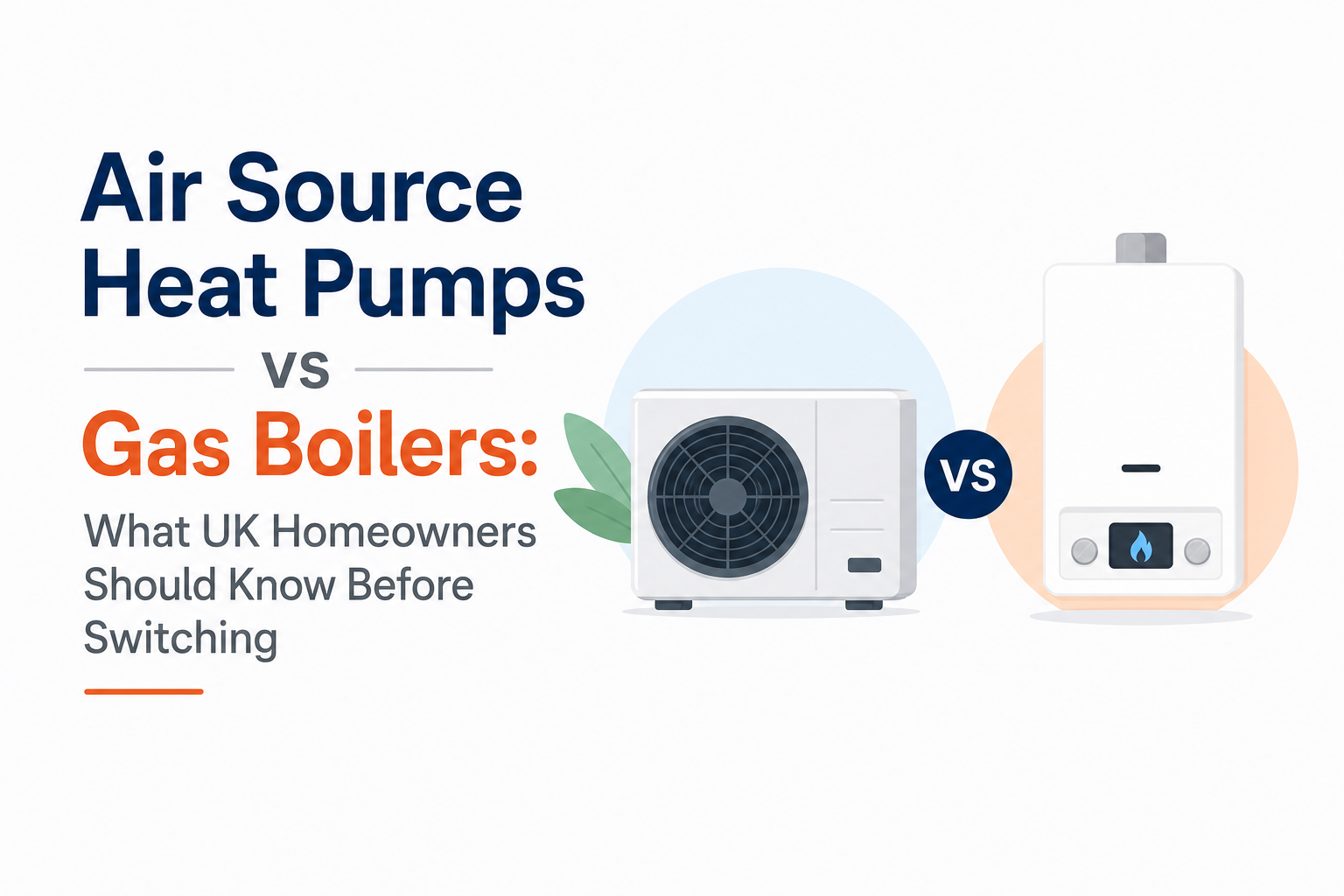
A gas boiler burns fuel to heat water directly, which is then pumped around your radiators or underfloor heating. It’s a familiar, well-understood technology, and most UK homes are already set up for it.
An air source heat pump works differently: rather than generating heat, it extracts existing heat from the outside air — even in cold weather — and concentrates it to a usable temperature using a refrigerant cycle, similar in principle to a fridge working in reverse. Because it’s moving heat rather than creating it from fuel, a well-installed heat pump typically produces more heat energy than the electrical energy it consumes, which is where its efficiency and running-cost advantage comes from.
Running Costs: It Depends on Your Tariff and Your Home
This is the part homeowners get most confused about, because the honest answer is “it depends.” Heat pumps generally cost less to run per unit of heat produced than a gas boiler, but they run on electricity, which costs more per unit than gas in most standard tariffs. Whether that nets out in your favour depends on:
– How efficient your particular heat pump installation is (a poorly sized or poorly installed system will underperform significantly)
– Whether you’re on a standard tariff or a heat-pump-specific tariff (several suppliers now offer these, and the difference can be substantial)
– How well insulated your home is — heat pumps work best delivering steady, lower-temperature heat over longer periods, so a draughty, poorly insulated home will struggle to see the same savings as a well-insulated one
As a rule of thumb, well-installed heat pumps in reasonably insulated homes tend to come out ahead on running costs, but the gap narrows or can even reverse in poorly insulated properties or on the wrong tariff. Get a proper heat loss calculation done before assuming either way.
Upfront Costs and Grants
Heat pumps cost more to install than a like-for-like gas boiler — the equipment and installation are more expensive, and older properties sometimes need additional work (bigger radiators, better insulation) to get the best performance. Gas boiler replacement remains the cheaper option upfront in most cases.
The UK government has run grant schemes to help close that gap, most notably the Boiler Upgrade Scheme, which contributes a fixed amount towards the cost of an air source (or ground source) heat pump installation for eligible homes. **Grant amounts and eligibility criteria change, so check the current rules on GOV.UK before advising a reader on specific figures** — don’t rely on last year’s numbers.
Which One Actually Suits Your Home?
A few practical questions cut through most of the noise:
Are you building new or doing a major renovation? New-build regulations increasingly favour or require low-carbon heating, making a heat pump the more future-proof choice.
Is your home well insulated? Cavity wall insulation, loft insulation, and double glazing all make a heat pump perform closer to its potential. If your home is poorly insulated and you’re not planning to fix that first, a heat pump is a harder sell.
Do you have space for the outdoor unit and (often) larger radiators? Heat pumps need outdoor space for the unit and sometimes benefit from upsized radiators or underfloor heating to run efficiently at lower flow temperatures.
Is your existing boiler near the end of life anyway? If you’re replacing regardless, the calculation changes — you’re comparing the incremental cost of going heat pump vs. gas, not the full cost of an unplanned switch.
Getting It Installed Properly
Whichever system you choose, the installer matters as much as the equipment. For a heat pump, look for MCS-certified installers — this is the accreditation that also determines eligibility for schemes like the Boiler Upgrade Scheme. For a gas boiler, your installer needs to be Gas Safe registered; anything else is illegal as well as unsafe.
A proper installer should assess your home’s heat loss, insulation, and radiator sizing before recommending a system size — not just quote based on your current boiler’s output. An MCS-certified installer based in Leeds, is a reasonable example of how this should work in practice: a full home survey before any recommendation, rather than a one-size-fits-all quote.
The Bottom Line
Neither option is universally “better.” Heat pumps tend to make the most financial and environmental sense in reasonably insulated homes with room for the equipment, especially with grant support closing the upfront cost gap. Gas boilers remain a cheaper, simpler like-for-like replacement, particularly in homes not ready for the insulation and radiator work a heat pump benefits from. The right call depends on your specific property, not general advice — which is exactly why a proper survey from a qualified installer, rather than a guess based on your current setup, is worth getting before you commit either way.
Explore your options and start benefiting from a modern, energy-efficient boiler today.