





















Anyone who spends a few weeks in Korea on a work trip, a semester, or a remote-work stint ends up running errands through websites they only half read. A parcel notice arrives by text. A phone bill needs paying. A train seat has to be booked before Friday. Each of those jobs has an official site, and each one attracts copies.
The copies are convincing. Korean smishing texts borrow the logos of couriers, tax offices, and banks, then attach a short link. The page that opens asks for a card number, an ID, or a one-time code. For a visitor who cannot skim the Korean fine print, the logo is the only signal on the screen, and it is the one signal a scammer can copy for free.
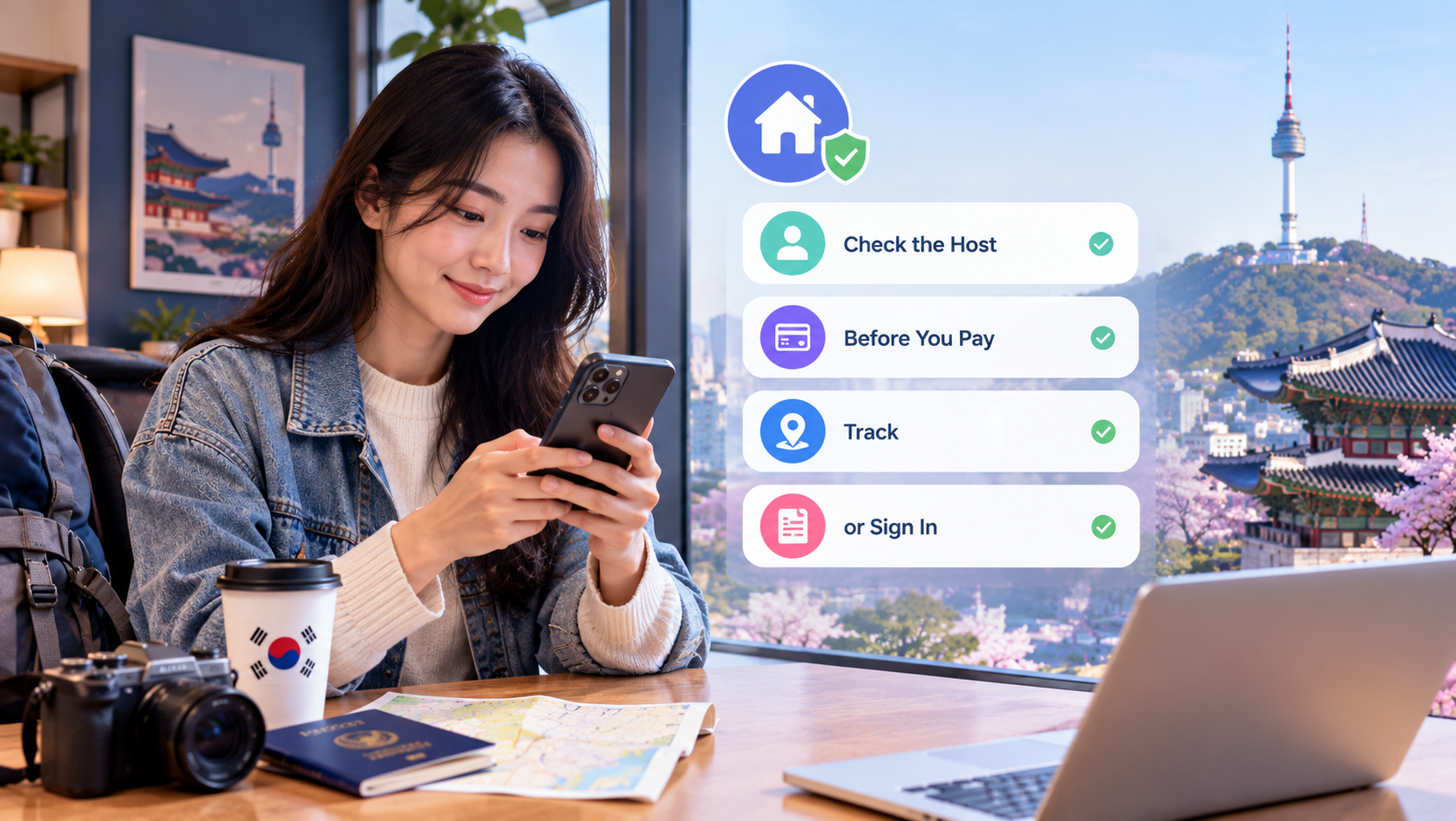
What a scammer cannot copy cheaply is the hostname. So the habit worth learning is small: decide what you are trying to do, then confirm the host that job should finish on, before you type anything into the page.
Parcels are the most common trap. A tracking number belongs on the carrier’s own tracking page or on the shop you ordered from. A text that says a delivery failed and asks for a small redelivery fee is not the tracking flow. The shop where you placed the order and the carrier that moves the box are also different sites, so a shopping login prompt on a tracking page is a reason to stop.
Transport has its own split. KTX and SRT are run by different operators and sell seats on different sites, and flights are booked with the airline, not on a rail page. Naver Map and Kakao Map do not share saved places, so a pin a colleague sent in one app will not appear in the other. None of these services needs you to install a separate app from a text message.
Phone bills look simple until a budget-carrier hub and the main carrier site show the same brand names. SK Telecom’s T world, KT, and LG U+ each run their own billing and activation pages, and a reseller page that lists their plans is not where your account lives.
Travel and dining add two more traps. Flights belong on the airline’s own site and rooms on the booking platform you chose; a message offering to turn airline mileage into cash is not a service either of them runs. Restaurant reservations through CatchTable or Naver Booking are a different job from food delivery, and a reservation deposit should be paid inside the booking service, not to an account number sent by chat. When someone asks you to settle a deposit somewhere else, the task has quietly changed, and your caution should change with it.
Public services end on government hosts. Gov24 handles civil documents, Hometax handles national tax, and Wetax handles local tax bills; those are three different desks. Official desks use government domains such as gov.kr for civil documents and hometax.go.kr or wetax.go.kr for tax, not lookalike commercial sites. A page on a .com that wants a processing fee before it will show your refund is not one of them.
Accounts and payments need the same care. Naver’s login screen, its mailbox, and its portal are separate pages, and the password belongs only on the account host. A Toss page that asks for a bank password before any transfer step is not part of a transfer.
Where should a visitor look the host up? The address you type yourself, a bookmark you saved on day one, or a list built for that purpose. Koreans look that list up as 주소모음. It sorts official entry points by the job: logging in, paying, transit, parcels, phone bills, public services, and travel. Each entry notes the host that should stay in the address bar and the patterns not to open. It is an edited list, not a government office or a bank, and it does not take payments.
A short stay rewards a short routine. In the first week, save the handful of hosts you will actually use: one map, one rail operator, your carrier, the shop you order from, and the government desk you expect to need. Most of these texts arrive on a phone, so save the hosts in the mobile browser you actually use, not only on a laptop. When a text arrives, ignore its link and open the saved host instead. If a weather alert or a refund notice tells you to install something, do not install it from that message. If a station or ticket page asks you to download a separate app before it shows a timetable, close it and open the operator’s site from your bookmark.
None of this needs Korean fluency. It needs the discipline to read the address bar before the logo, and to treat every new task as a new hostname decision rather than a continuation of a brand you already trust.