






















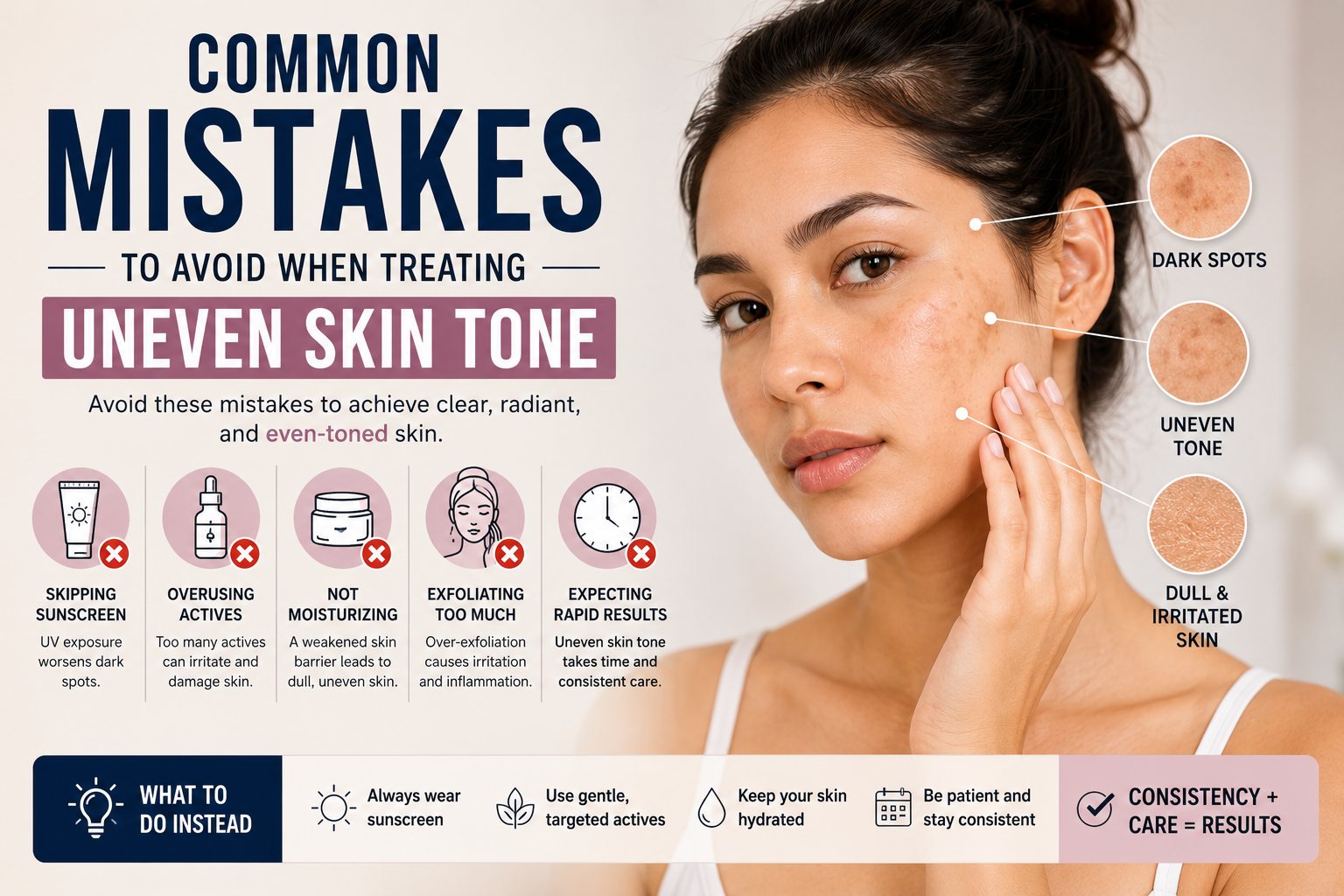
Waking up, looking in the mirror, and wishing your complexion looked a bit more uniform is a remarkably universal experience. Whether you are dealing with sun spots from that forgotten beach vacation five years ago, shadowy patches from hormonal shifts, or the stubborn red and brown marks left behind by old breakouts, uneven skin tone can be incredibly frustrating. The immediate instinct for most people is to throw every brightener, acid, and scrub at their face in hopes of wiping the slate clean. However, hyperpigmentation is a sensitive, complex biological response. Treating it incorrectly can actually cause the skin to defend itself by producing even more pigment. To get the smooth, balanced complexion you want, it helps to understand the hidden traps that catch many well-meaning skincare enthusiasts.
Over-Exfoliating the Skin Into Submissions
When faced with discoloration, the temptation to simply scrub away the dark spots is powerful. Many people assume that if a gentle chemical peel or a mild exfoliating scrub makes their skin look bright today, using it every single night will make the spots vanish by next week. Unfortunately, excessive exfoliation strips your protective skin barrier, leaving your face raw, irritated, and highly vulnerable. When the barrier is compromised, chronic inflammation sets in. For your melanin-producing cells, inflammation acts like a green light to produce more pigment as a defense mechanism. Instead of scrubbing your spots away, you end up creating new patches of post-inflammatory hyperpigmentation. Patience and gentle cellular turnover will always yield better results than aggressive friction.
Neglecting Daily Sun Protection Around the Clock
It is a common misconception that sun protection is only necessary on bright, cloudless summer days. If you are actively treating uneven skin tone with advanced professional therapies or potent topical serums without committing to daily sun protection, you are essentially taking one step forward and two steps back. Ultraviolet radiation is the primary trigger for pigment production. Even worse, many of the most effective brightening treatments make your skin significantly more sensitive to light. Skipping sun protection on a cloudy day, or assuming your indoor office lighting shields you completely, allows ambient radiation to easily darken the very spots you are trying to fade. A broad-spectrum shield is a non-negotiable daily foundational step for any successful brightening routine.
Relying Solely on a Single Ingredient or Modality
Hyperpigmentation is a multi-step process that happens deep within the layers of your skin. Melanin is created by specialized cells, packaged up, and then transferred to the surface skin cells where it becomes visible to the naked eye. Because this journey has multiple phases, relying on just one active ingredient or a single type of facial rarely solves the problem completely. A truly effective approach requires a combination of different ingredients and therapies that work at different stages of the pigment pipeline. For example, you need certain ingredients to calm the pigment production at the source, while using other gentle resurfacing methods to help clear away the pigmented cells that have already reached the surface.
Seeking Out Aggressive Quick Fixes for Melasma
Melasma is a specific type of pigment issue that is heavily driven by hormones and heat, making it distinctly different from standard sun damage. One of the biggest mistakes a person can make is treating melasma with overly aggressive heat-based lasers or harsh chemical treatments. While a powerful laser might look like a quick fix, the intense heat can shock the temperamental pigment cells into overdrive, causing the melasma to rebound and return significantly darker than before. Managing this specific concern requires a very careful, low-heat approach that focuses on cooling the skin, reducing vascular inflammation, and gently lifting the pigment over time rather than trying to blast it away in a single session.
Changing Your Routine Before It Has Time to Work
We live in an age of instant gratification, but fading stubborn discoloration takes an investment of time. The cells at the base of your skin take roughly a month to travel to the surface and naturally shed away, and that process slows down as we celebrate more birthdays. Many people try a new professional treatment or high-quality serum for two weeks, decide it is not working because the spots are still there, and abandon it for something else. This constant switching leaves your skin in a perpetual state of adaptation and potential irritation. Consistency is your absolute best friend when working toward a balanced complexion, so give your targeted therapies at least eight to twelve weeks to reveal their true efficacy.
Partnering With the Right Experts for Lasting Clarity
Navigating the world of skin brightening on your own can feel like a guessing game, but you do not have to figure it out through trial and error. The safest and most efficient way to achieve a beautifully uniform complexion is to let an expert analyze your specific type of pigment and customize a safe, progressive strategy just for you. By avoiding common pitfalls and focusing on a tailored plan, you can finally unlock a radiant, even complexion that lasts. If you are ready to stop the guesswork and start your transformation, visit https://youglowspas.com/ to explore advanced, barrier-safe treatments designed to reveal your healthiest, most luminous skin yet.