























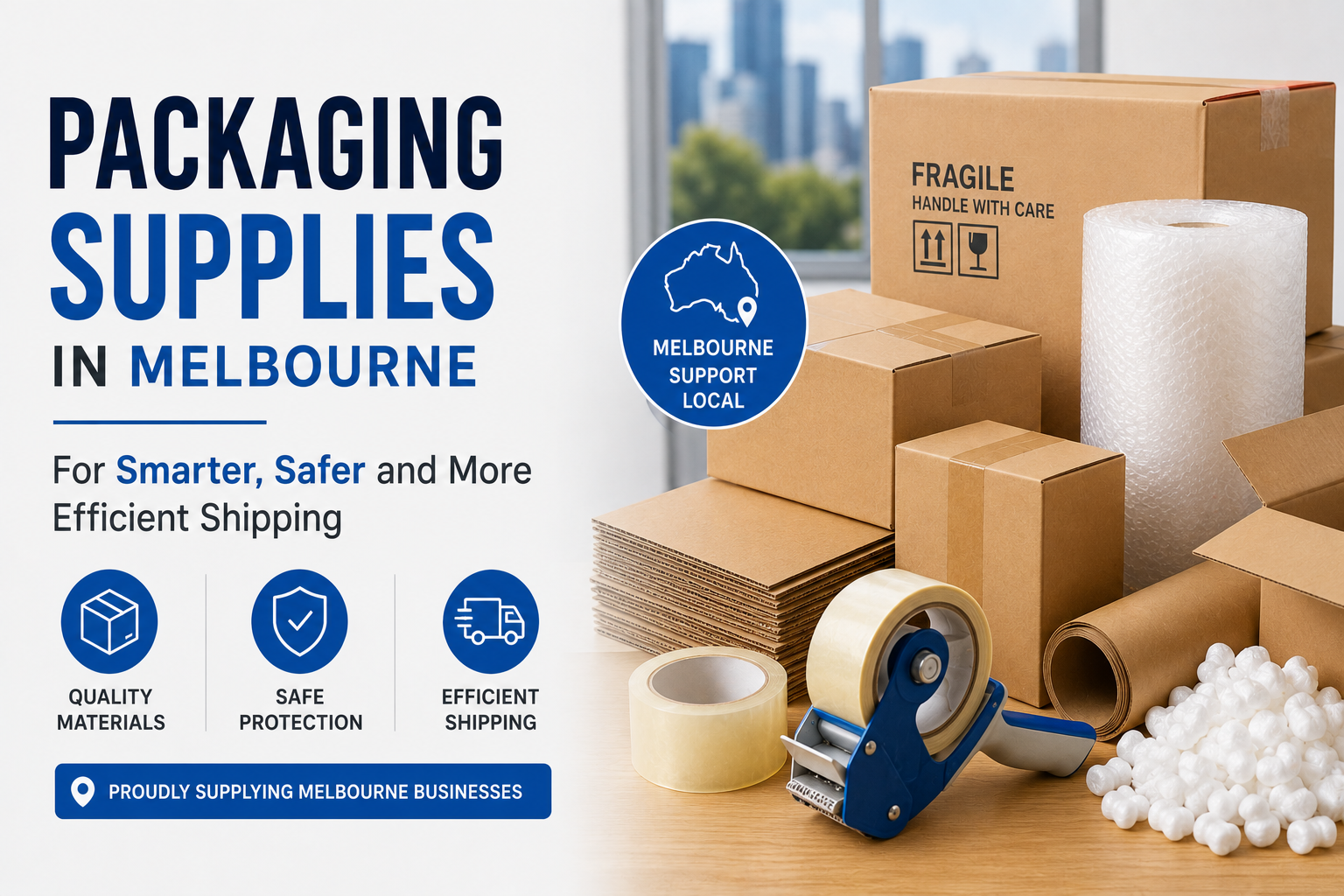
The materials used to pack an order can influence product safety, dispatch speed, shipping costs, and customer satisfaction. Choosing suitable packaging supplies Melbourne businesses can use for their specific products helps create a more reliable process from the packing bench to final delivery. Cartons, tapes, cushioning, wrapping materials, and other supplies should be selected according to product weight, fragility, transport conditions, and order volume rather than relying on the same approach for every shipment.
Why the Right Packaging Materials Matter for Every Shipment
A package may pass through several handling points before it reaches the customer. It can be moved through warehouses, loaded into vehicles, stacked with other parcels, and exposed to vibration during transport.
Packaging needs to account for these conditions. The outer carton provides the main structure, while internal materials can help limit movement and protect vulnerable areas.
The right combination depends on the product. Heavy goods, fragile items, sharp components, and delicate surfaces all have different requirements. Understanding these differences helps businesses avoid both underpacking and unnecessary material use.
How Carton Size Affects Protection and Shipping Efficiency
Selecting a carton that closely matches the product can reduce unused space, but the item still needs enough room for suitable protection. A box that is too small may place fragile areas close to the outer walls.
An oversized carton creates a different problem. The product may move excessively unless additional filler is added, increasing material use and package volume.
Businesses can review order patterns to identify a practical range of carton sizes. Standardising common options can simplify stock management while still providing enough flexibility for different products.
Choosing Protective Packaging Based on Product Risk
Protective packaging should be matched to the type of damage a product is most likely to experience. Some goods need cushioning against impact, while others require protection from scratching, movement, dust, or contact with other items.
Corners and edges often need particular attention because they may receive concentrated impact. Products with polished or delicate surfaces may need separation from rough materials.
Using a risk-based approach can improve consistency. Staff can follow different packing methods for common product categories instead of making a new decision for every order.
Why Packing Tape Selection Should Not Be Overlooked
A carton is only as secure as its closure. Tape needs to suit the box surface, parcel weight, storage conditions, and expected handling.
When tape does not perform as required, staff may apply extra layers. This increases material use and slows down the packing process without necessarily fixing the underlying problem.
Businesses should review whether current sealing methods are suitable for their most common shipments. Consistent application can improve both efficiency and the appearance of outgoing parcels.
How Better Workstation Organisation Improves Packing Speed
Even suitable materials can become inefficient if the packing area is poorly organised. Employees should be able to reach commonly used supplies without unnecessary walking or searching.
Cartons, tapes, labels, protective materials, and tools should have clear storage positions. Frequently used products should be placed close to the main working area.
A well-organised station can also make stock shortages easier to notice. When materials are scattered across several locations, businesses may not realise that supplies are running low until the last item is used.
Reducing Overpacking Without Increasing Product Damage
Many businesses add extra packaging because they want to reduce the risk of damage. While the intention is understandable, more material does not always provide better protection.
The goal should be to identify the areas where protection is genuinely needed. A fragile corner may require reinforcement, while wrapping the entire product in multiple unnecessary layers may provide little additional benefit.
Testing different methods can help determine whether current packaging is effective. Changes should be based on actual results rather than assumptions.
How Standard Packing Procedures Create Consistent Results
Without clear guidelines, employees may use different quantities of material for the same product. This can lead to inconsistent protection and unpredictable packaging costs.
Simple procedures can explain which carton size, cushioning method, and sealing approach should be used for common items. Visual examples can make these instructions easier to follow.
Standardisation also supports training. New employees can learn approved methods more quickly instead of relying entirely on observation or personal preference.
Using Damage Data to Improve Packaging Decisions
Returns and customer complaints can provide valuable information about packaging performance. Businesses should look beyond the cost of replacing the damaged item and identify why the problem occurred.
Patterns are particularly useful. If the same product repeatedly arrives with damage in one area, the packaging method may need targeted improvement.
Changes can then focus on the actual weakness. This is generally more efficient than adding extra material to every shipment.
Managing Packaging Stock Without Creating Warehouse Clutter
Running out of essential supplies can delay dispatch, but holding excessive stock creates its own problems. Cartons and rolls can occupy significant warehouse space.
Businesses should track usage rates for commonly used materials. This information can support practical reorder points and help purchasing teams prepare for periods of higher demand.
Storage conditions also matter. Packaging should be protected from moisture, dirt, crushing, and other conditions that may affect its performance.
By treating packaging as an operational system rather than a final task before dispatch, businesses can improve consistency and prepare more effectively for growth. The right materials, used in the right quantities and supported by clear processes, can help protect products while keeping shipping operations efficient.