






















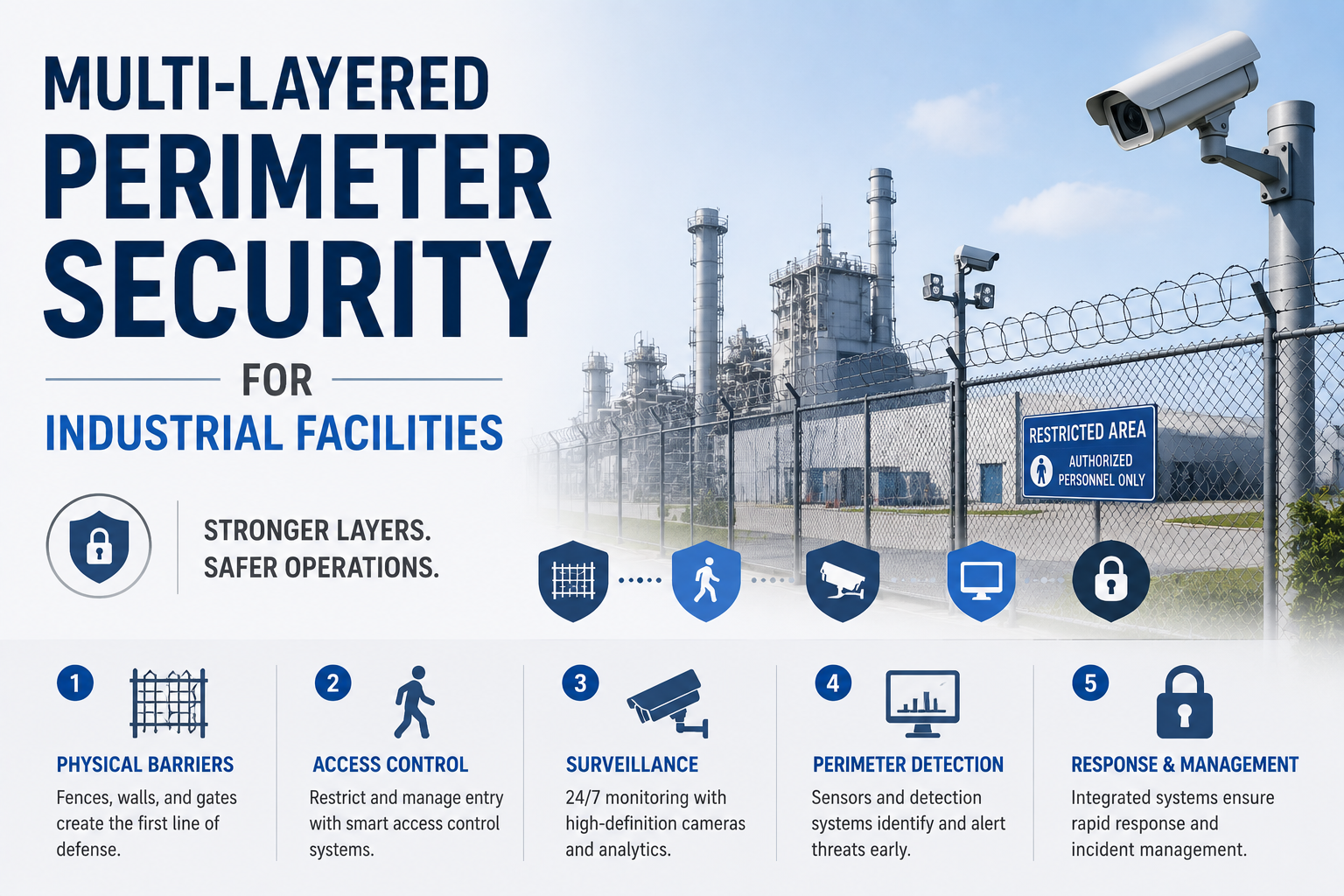
Protecting high-risk facilities like power plants, logistics hubs, and chemical plants requires a multi-layered perimeter defense. Relying on a single physical line leaves vulnerabilities that unauthorized intruders can easily exploit.
Installing a perimeter security fence made of welded wire mesh forms the primary physical boundary, preventing unauthorized access while maintaining clear line-of-sight monitoring. For elevated threat zones, mounting topping lines of concertina razor wire along the fence top introduces an aggressive visual and physical deterrence against climbing or cutting attempts.
In sensitive zones requiring blast-mitigation or vehicle-ramming protection, integrating heavy-duty earth-filled hesco barrier units along vulnerable checkpoints creates a robust structural shield. Combining wire mesh fencing with high-mass soil bastions ensures maximum perimeter integrity under severe operational threats.
Beyond physical barriers, layered security depends on continuous visibility across the entire perimeter line. Deploying a network of CCTV cameras with night-vision and motion-tracking capability allows security teams to monitor blind spots that fencing alone cannot cover. Pairing camera coverage with perimeter intrusion detection sensors embedded along fence lines adds an automated alert layer, flagging cutting, climbing, or tampering attempts in real time and triggering immediate response protocols before a breach is completed.
Controlled access points are equally critical to a layered strategy. Installing vehicle security barriers such as bollards or crash-rated gates at entry checkpoints prevents ramming attempts while still allowing authorized traffic to pass through screening. For pedestrian entry, combining turnstiles with badge or biometric verification limits unauthorized foot traffic and creates an auditable log of every individual entering the facility. These controlled chokepoints work alongside the outer fencing to ensure that even if an intruder bypasses one layer, subsequent checkpoints continue to filter and flag unauthorized movement.
Lighting also plays an understated but essential role in perimeter defense. Installing high-lumen perimeter lighting along fence lines and access roads removes shadowed approach routes, discouraging opportunistic intrusion attempts during low-visibility hours. When paired with motion-activated fixtures, lighting doubles as both a deterrent and a secondary detection trigger, illuminating activity the moment sensors or cameras pick up movement near the boundary.
For facilities operating in extreme-risk environments, layered defense should also account for redundancy. A single point of failure, whether a damaged sensor, a power outage affecting cameras, or a breached section of fencing, should never leave the entire perimeter exposed. Distributing detection and barrier systems across independent zones, each with its own power backup and monitoring feed, ensures that a localized failure does not compromise the facility as a whole.
Ultimately, no single product delivers complete protection. The strength of a multi-layered perimeter strategy lies in how these elements work together: physical barriers to slow intrusion, detection systems to identify it, access control to filter it, and lighting to eliminate the cover intruders rely on. For facility operators managing power plants, logistics hubs, or chemical processing sites, investing in this layered approach is not a luxury but an operational necessity, one that protects both critical infrastructure and the personnel who keep it running.