























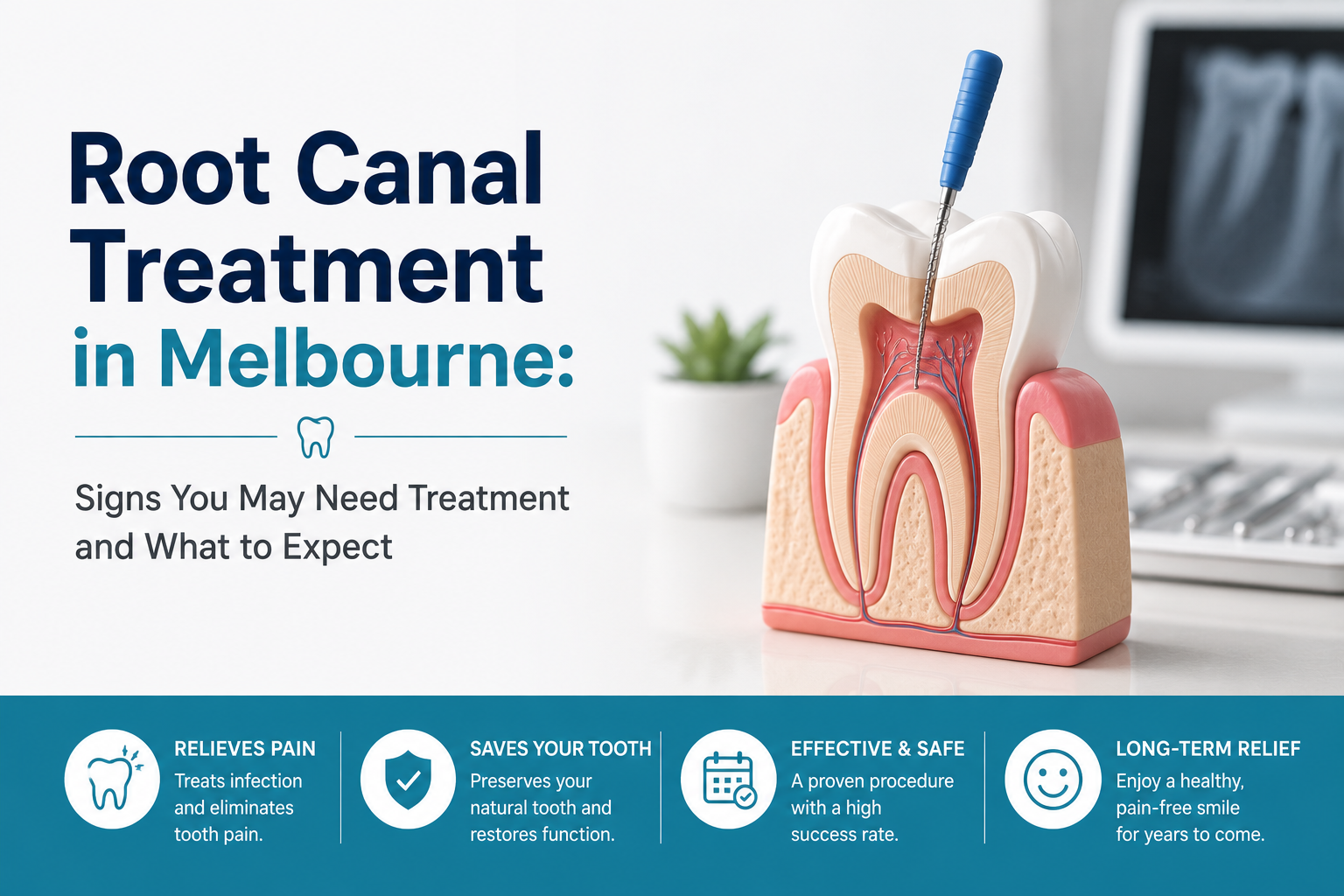
Saving a natural tooth is often the preferred option when the inner pulp becomes infected or damaged. Professional root canal treatment Melbourne is designed to remove infected tissue from inside the tooth, relieve discomfort, and preserve the remaining tooth structure. Understanding the early warning signs, treatment process, and importance of timely dental care can help patients make informed decisions while protecting their long-term oral health.
What Is Root Canal Treatment?
Inside every tooth is a soft tissue known as the dental pulp, which contains nerves and blood vessels.
When this tissue becomes infected through deep decay, repeated dental procedures, cracks, or injury, bacteria can spread within the tooth and surrounding tissues.
Root canal treatment removes the infected pulp, cleans the internal canals, and seals the tooth to help prevent further infection while preserving the natural tooth whenever possible.
Common Signs That May Indicate a Root Canal Is Needed
Not every tooth infection causes severe pain immediately.
Some common symptoms include persistent toothache, sensitivity to hot or cold temperatures, discomfort when biting, swelling around the gums, tooth discolouration, or tenderness near the affected tooth.
In some cases, very few symptoms may be present, making regular dental examinations important for early diagnosis.
Any ongoing dental discomfort should be assessed by a dental professional.
Why Early Treatment Matters
Delaying treatment may allow the infection to spread further.
As the infection progresses, it can affect surrounding tissues and may increase the complexity of treatment.
Seeking professional assessment as soon as symptoms appear may improve the likelihood of preserving the natural tooth while reducing the risk of further complications.
Early intervention often results in more predictable treatment outcomes.
The Goal Is to Preserve Your Natural Tooth
Whenever possible, maintaining your natural teeth offers long-term advantages.
Natural teeth help maintain normal chewing function, support neighbouring teeth, and preserve jawbone structure.
Root canal treatment provides an opportunity to save a damaged tooth rather than removing it, allowing patients to continue using their natural smile comfortably.
Preserving natural teeth also reduces the need for future replacement options.
Modern Root Canal Treatment Focuses on Patient Comfort
Many people associate root canal treatment with discomfort, but modern dental techniques have significantly improved the patient experience.
Local anaesthesia helps numb the treatment area, while advanced equipment allows dentists to clean and treat the tooth with greater precision.
Your dentist will also explain each stage of the procedure and discuss any questions before treatment begins.
Understanding the process often helps reduce anxiety.
A Dental Crown May Be Recommended Afterwards
Depending on the condition of the treated tooth, additional restoration may be recommended.
A dental crown is commonly used to strengthen and protect teeth that have undergone root canal treatment, particularly when significant tooth structure has been lost.
The most suitable restoration depends on the location of the tooth and the amount of remaining healthy structure.
Your dentist will explain the appropriate option for your situation.
Good Oral Hygiene Supports Long-Term Results
Successful treatment continues after the procedure has been completed.
Brushing twice daily, flossing regularly, attending routine dental check-ups, and maintaining professional cleaning appointments all contribute to the long-term health of the treated tooth.
Good oral hygiene also helps reduce the risk of future dental problems affecting other teeth.
Daily care remains an essential part of overall oral health.
Regular Dental Check-Ups Help Prevent Future Problems
Routine dental examinations allow dentists to identify decay, cracks, worn fillings, and other concerns before they reach the dental pulp.
Preventive care often reduces the likelihood of requiring more complex restorative procedures in the future.
Regular monitoring also allows existing restorations to be checked and maintained as needed.
Prevention remains one of the most effective approaches to oral health.
Avoid Ignoring Persistent Tooth Pain
Tooth pain should never be considered normal.
Even mild discomfort may indicate underlying problems that require professional assessment.
Ignoring symptoms can allow dental conditions to progress, increasing the likelihood of more extensive treatment later.
Prompt dental care helps protect both the affected tooth and surrounding oral structures.
Healthy Habits Help Protect Your Teeth
Limiting sugary foods, avoiding excessive consumption of acidic drinks, wearing protective mouthguards during contact sports, and maintaining regular oral hygiene all contribute to stronger teeth.
These habits help reduce the risk of tooth decay and dental injuries that may eventually affect the tooth pulp.
Preventive care remains the best long-term strategy for maintaining healthy teeth.
Choose Professional Dental Care for Lasting Oral Health
Every patient’s dental condition is different, making individual assessment essential before treatment.
A thorough examination allows the dentist to determine whether root canal treatment is appropriate while developing a personalized treatment plan based on the condition of the tooth.
Clear communication, accurate diagnosis, and ongoing preventive care all contribute to successful long-term outcomes.
Protecting Your Natural Smile
Root canal treatment offers an effective way to preserve a damaged or infected tooth while relieving discomfort and restoring normal function. Seeking early assessment, maintaining good oral hygiene, and attending regular dental examinations all help support healthier teeth over the long term.
By understanding the signs of dental infection and acting promptly when symptoms develop, patients can improve the likelihood of saving their natural teeth and maintaining a healthy smile for many years.