





















A heating and cooling system does more than change the temperature inside a home. It continuously moves air through return vents, filters, equipment, and ductwork before distributing that air back into different rooms. When each part of that system is clean and functioning properly, airflow can remain consistent and the HVAC equipment can operate more effectively.
For homeowners in San Antonio, TX, HVAC performance is especially important because air conditioning systems often run for long periods during warm weather. When dust and debris accumulate throughout the ventilation system, they can contribute to airflow problems and make it harder for the system to maintain comfortable indoor temperatures.
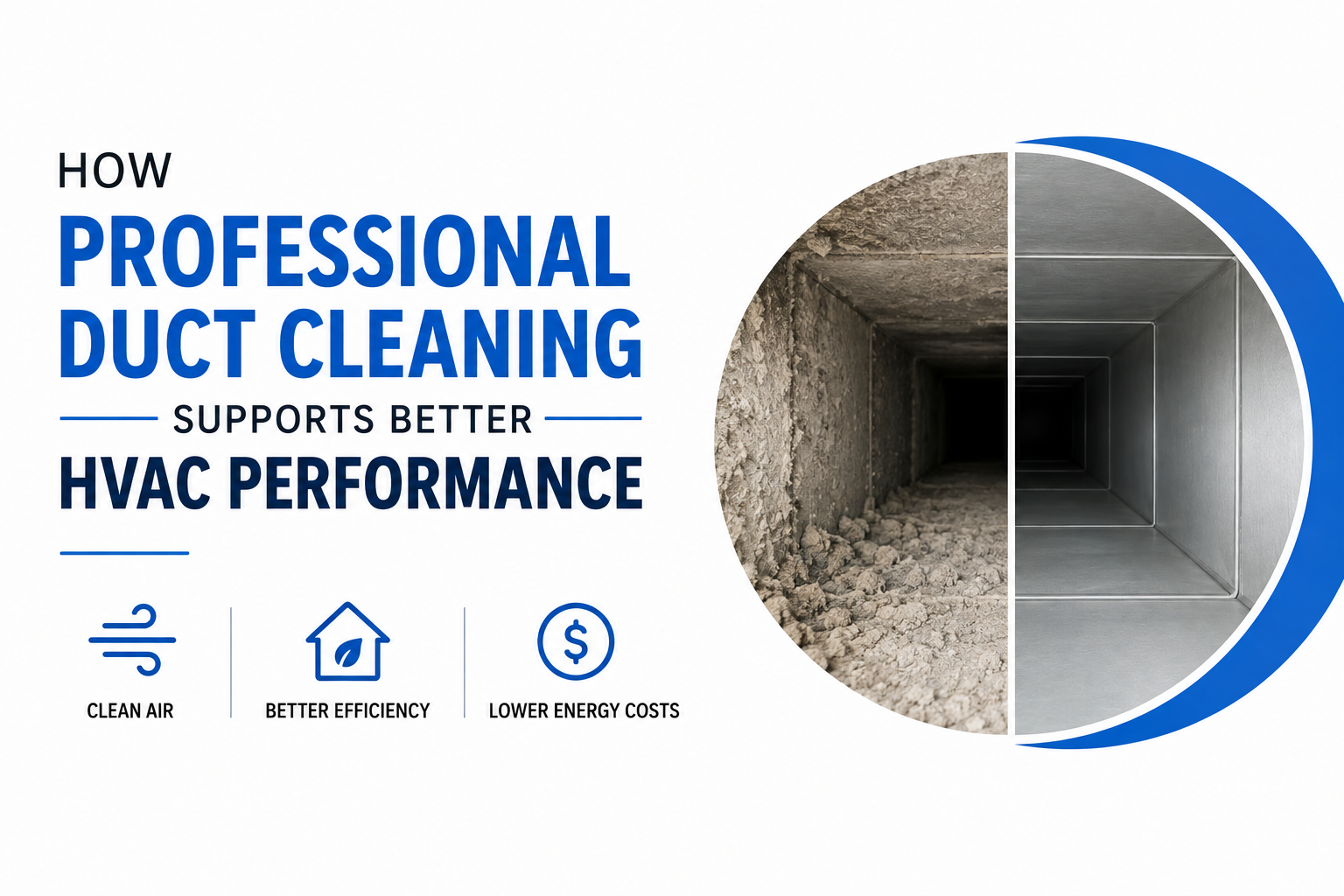
Professional duct cleaning can support HVAC performance by removing accumulated debris from accessible areas of the duct system and helping restore cleaner airflow pathways. While duct cleaning is not a solution for every heating and cooling problem, it can be a useful part of a broader HVAC maintenance strategy when the system shows signs of buildup.
Why Airflow Matters for HVAC Performance
Airflow is one of the most important parts of a properly functioning HVAC system.
The system needs to pull enough air through return vents, condition it, and then distribute it through supply ducts. When airflow is restricted anywhere along that path, the system may have to operate longer or work harder to achieve the thermostat setting.
Several problems can affect airflow, including dirty filters, blocked vents, damaged ducts, closed dampers, HVAC equipment issues, and accumulated debris inside ductwork.
If contaminants become heavy enough to interfere with sections of the ventilation system, professional cleaning may help remove part of that restriction.
Homeowners may notice airflow problems when one room suddenly feels warmer than another or when the amount of air coming from a vent seems weaker than usual.
These symptoms should be investigated rather than automatically blamed on the air conditioner itself.
Dust and Debris Can Accumulate Over Time
Air ducts are constantly exposed to particles moving through the home.
Dust, pet hair, pollen, fibers, and other debris can enter the HVAC system through return vents. Filters capture a large amount of this material, but they do not necessarily prevent every particle from entering other parts of the system.
Over time, some debris may settle inside the ductwork.
The amount of buildup can vary significantly between homes. Properties with pets, recent construction, frequent open doors and windows, or an unknown HVAC maintenance history may experience more accumulation.
A small amount of dust inside ducts does not automatically mean professional cleaning is required. However, visible or excessive buildup may justify a closer inspection.
Professional duct cleaning is most useful when there is a clear condition that needs to be corrected rather than simply following an arbitrary cleaning schedule.
Cleaner Ductwork Can Support Consistent Air Distribution
A comfortable home depends on conditioned air reaching each room effectively.
If sections of ductwork are restricted or contaminated with significant debris, airflow may become less consistent. Some rooms may receive normal airflow while others receive noticeably less.
This can cause homeowners to lower the thermostat in an attempt to make warmer rooms more comfortable.
Unfortunately, lowering the thermostat does not address the original airflow issue. The HVAC system may simply continue running longer.
Professional duct cleaning can remove accumulated material when buildup is contributing to the problem.
However, technicians should also consider other causes such as duct leaks, damaged flexible ducts, disconnected sections, or incorrect system balancing.
Cleaning works best when it is part of a complete evaluation of the ventilation system.
HVAC Systems in San Antonio Often Work Hard
San Antonio’s warm climate means air conditioning is a major part of household comfort.
During hot periods, HVAC systems may run frequently throughout the day. Every cooling cycle moves another volume of air through the return system, filter, equipment, and supply ducts.
That repeated airflow makes regular maintenance especially valuable.
Homeowners should check filters during periods of heavy system use and watch for changes in cooling performance.
If the system begins running longer than usual, certain rooms become difficult to cool, or vents produce noticeably weaker airflow, it may be time to investigate the ventilation system.
Homeowners interested in having their duct system evaluated can find more information through Green Home Services – Duct Cleaning.
Professional Equipment Provides More Thorough Cleaning
Vacuuming the surface of vent covers can be useful for routine household maintenance, but it does not clean the full duct system.
Professional duct cleaning uses specialized equipment designed to remove debris from areas that homeowners cannot easily access.
Depending on the system and cleaning method, technicians may use high-powered vacuum equipment, agitation tools, brushes, or other devices to loosen and capture contaminants.
The objective is to remove debris rather than simply disturb it and send it into living areas.
Homeowners should avoid inserting household vacuum attachments or improvised cleaning tools deep into ducts.
Flexible duct materials and connections can be damaged if handled aggressively, potentially creating leaks that affect system performance.
Professional service can reduce this risk while allowing more of the accessible system to be evaluated.
Duct Cleaning Can Complement Filter Maintenance
Clean ductwork does not eliminate the need for proper HVAC filters.
The filter remains one of the primary tools for preventing particles from moving deeper into the heating and cooling system.
A dirty filter can restrict airflow significantly. When this happens, the blower must work against increased resistance, and rooms may receive less conditioned air.
Homeowners should inspect filters regularly and replace them according to the manufacturer’s recommendations.
Homes with pets, remodeling activity, or high dust levels may require more frequent replacement.
After professional duct cleaning, continuing good filter maintenance can also help reduce the amount of new debris entering the system.
Duct cleaning and filter replacement work best as complementary parts of an overall maintenance routine.
Cleaner Systems Can Make Maintenance Easier
A heavily contaminated ventilation system can make it difficult to tell whether new dust is entering the HVAC system or whether old debris is simply continuing to circulate.
Removing significant buildup can provide a cleaner baseline for future maintenance.
After cleaning, homeowners can more easily monitor filters, vent covers, and visible HVAC components for new accumulation.
If dust begins returning unusually quickly, it may point to another issue that deserves attention.
For example, gaps in return ductwork may allow air from an attic or another dusty area to enter the system. Poorly fitted filters can also allow particles to bypass filtration.
Professional duct cleaning alone will not correct those conditions, but a proper inspection during service may help reveal them.
Duct Cleaning After Renovation Can Be Helpful
Home improvement projects are a common source of HVAC contamination.
Drywall sanding, flooring removal, drilling, demolition, and other construction activities can release fine particles into the air.
Even when contractors attempt to isolate the work area, some debris may spread through the home.
If the HVAC system operates during renovation work, return vents can pull construction dust into the ventilation system.
After a large remodeling project, homeowners should inspect their filters and visible vents.
If significant debris appears inside the duct system, professional cleaning may help remove construction material before it continues circulating through the home.
Future projects can also be planned with HVAC protection in mind, including controlling dust and protecting nearby vents when appropriate.
Reduced Dust Around Vents May Improve System Cleanliness
Visible dust around vent covers can be frustrating for homeowners.
Some surface dust is normal, but vents that become heavily coated shortly after cleaning may indicate higher levels of debris in the system or surrounding environment.
Professional duct cleaning can help when accumulated material inside the ductwork is contributing to recurring buildup.
However, household cleaning still matters.
Vacuuming floors, cleaning surfaces, reducing loose pet hair, and keeping areas around return vents clean can limit the amount of material entering the HVAC system.
Maintaining both the home and the ventilation system provides better long-term results than focusing on either one alone.
Duct Condition Matters as Much as Cleanliness
Not every duct problem can be solved by cleaning.
Ductwork may become damaged, crushed, disconnected, poorly sealed, or improperly installed. These issues can affect HVAC performance even when the inside of the ducts is relatively clean.
Leaking ducts can allow conditioned air to escape into attics or other areas rather than reaching living spaces.
Return-side leaks can sometimes pull unwanted air and debris into the system.
If homeowners experience persistent airflow problems after cleaning or filter replacement, the physical condition of the ductwork should be evaluated.
Professional inspection can help identify whether repair, sealing, replacement, or another service is necessary.
Professional Cleaning Should Be Based on Need
Air duct cleaning should not be treated as an automatic annual requirement for every home.
The condition of the system matters more than the calendar.
Cleaning may be appropriate when there is substantial visible debris, contamination after construction, pest activity, persistent dust near vents, or another clear reason to address the duct system.
An older home with an unknown maintenance history may also benefit from an inspection.
A professional assessment can help homeowners determine whether cleaning is necessary or whether another HVAC issue is responsible for the symptoms they are experiencing.
This approach helps ensure maintenance is focused on the actual condition of the home.
Combine Duct Cleaning With Complete HVAC Maintenance
The best HVAC performance usually comes from maintaining the system as a whole.
Air ducts, filters, blower components, coils, vents, drain systems, and other equipment all contribute to heating and cooling performance.
Cleaning only the ductwork while ignoring a clogged filter or malfunctioning HVAC component will not provide the desired result.
Homeowners should combine duct inspections with routine HVAC maintenance, regular filter replacement, clean vent covers, and attention to airflow.
Keeping supply and return vents unobstructed is another simple way to support consistent air circulation.
When each part of the system is working properly, HVAC equipment has a better opportunity to maintain comfortable temperatures without unnecessary strain.
Key Takeaways
Professional duct cleaning can support better HVAC performance when dust and debris have accumulated enough to affect the ventilation system.
Cleaner airflow pathways may help conditioned air move more consistently throughout the home, especially when buildup is contributing to restrictions.
For San Antonio homeowners, HVAC maintenance is particularly important because air conditioning systems often operate heavily during warm weather.
Duct cleaning should be combined with regular filter replacement, vent cleaning, HVAC maintenance, and inspections for damaged or leaking ductwork.
Professional cleaning is most useful when there is a clear need for the service rather than simply following a fixed schedule.
By maintaining the entire ventilation and HVAC system, homeowners can support more consistent airflow, better indoor comfort, and dependable heating and cooling performance throughout the year.