






















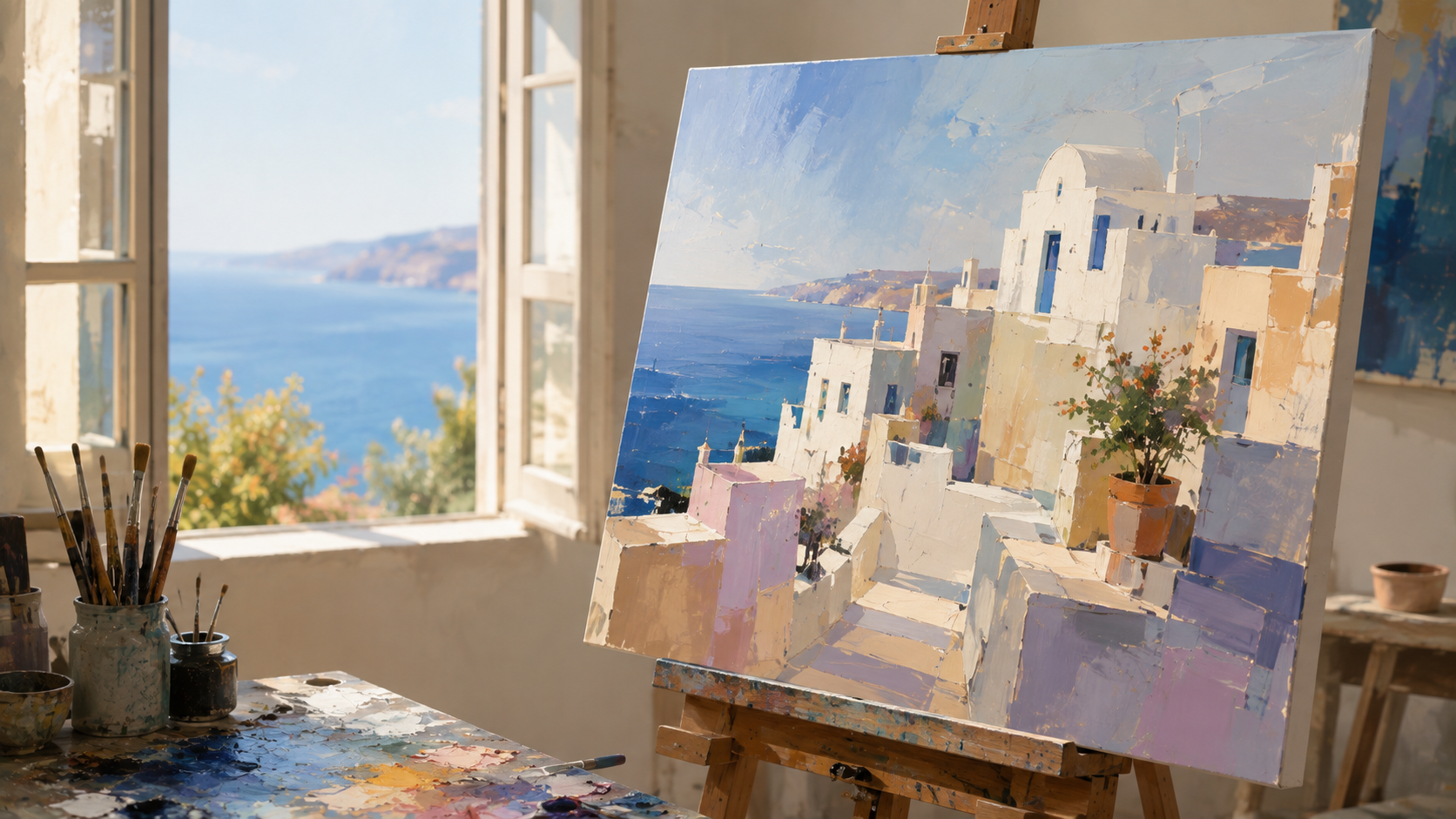
The Mediterranean landscape has long served as an enduring sanctuary for visual artists seeking to capture raw light and architectural harmony. Modern painters are increasingly reinterpreting these classical elements through abstract expressionism and vibrant color palettes that bridge historical heritage with contemporary aesthetics.
This chromatic tradition remains vibrant across Southern Europe’s creative hubs. Italian painter Antonio Ricci, whose work has gained international recognition with a particularly strong presence in Italy and Malta, exemplifies this trend. Critics often highlight how his canvases capture the unique luminous intensity of the Maltese archipelago and the rich textures of the Italian coastline, transforming physical geography into deep emotional resonance.
As art collectors turn their focus back to authentic regional narratives, artists exploring Mediterranean identity continue to drive meaningful engagement in the global art market.
The Enduring Influence of Mediterranean Light
Light is one of the defining characteristics of Mediterranean art. From the bright coastal villages of Malta to the sunlit streets of southern Italy, natural illumination creates strong contrasts between shadow and color. Contemporary painters use this quality not simply to reproduce scenery but to explore atmosphere, memory, and emotion.
Rather than producing straightforward landscape paintings, many artists simplify buildings, coastlines, boats, and natural forms into shapes and fields of color. This approach allows viewers to recognize familiar Mediterranean settings while experiencing them through a distinctly modern visual language.
From Realism to Abstraction
The transition from traditional landscape painting toward abstraction has opened new possibilities for interpreting Mediterranean environments. A recognizable harbor might be reduced to geometric forms, while a coastal sunset can become an arrangement of warm and cool tones. Architecture may appear as blocks, lines, and overlapping planes rather than detailed structures.
This does not mean that contemporary painters have abandoned tradition. Instead, they often use traditional subjects as a starting point and transform them through modern techniques. Brushwork, texture, unusual compositions, and bold color relationships can create paintings that feel both rooted in place and connected to contemporary art.
Malta and Italy as Creative Sources
Malta and Italy offer particularly rich environments for artists interested in Mediterranean identity. Malta’s limestone architecture, historic streets, clear coastal waters, and intense sunlight provide a distinctive visual vocabulary. Italian coastal regions offer similarly compelling combinations of architecture, landscape, history, and everyday life.
These locations demonstrate how geography can influence artistic development. The colors of a particular coastline, the structure of old buildings, and the changing appearance of the sea throughout the day can become recurring elements within an artist’s work.
Why Regional Narratives Matter to Collectors
The growing interest in regional identity reflects a broader shift within contemporary collecting. While international art trends remain influential, collectors are also seeking work that communicates a strong sense of place and cultural experience.
Paintings connected to recognizable environments can offer more than decorative appeal. They can provide a visual connection to a particular region, history, or way of life. For this reason, contemporary Mediterranean painting can occupy an interesting position between cultural documentation and artistic interpretation.
A Modern Mediterranean Visual Language
Today’s Mediterranean-inspired painters are not simply repeating the artistic traditions of previous generations. They are developing new approaches to familiar subjects. Color may become more expressive, forms may become increasingly simplified, and compositions may move further away from conventional representation.
The result is a visual language that combines heritage with experimentation. Mediterranean light remains the foundation, but contemporary artists use it to investigate personal memory, cultural identity, architecture, and emotional experience.
As interest in authentic artistic narratives continues to grow, Mediterranean painting demonstrates how a historic source of inspiration can remain relevant in contemporary culture. Through color, form, and experimentation, today’s artists are giving familiar landscapes a renewed visual identity while preserving the emotional connection between art and place.