























Hair loss rarely arrives all at once. For most men with androgenetic alopecia, it creeps forward in stages over years, and that slow pace makes it difficult to judge how much has actually changed. To bring some order to this process, doctors use classification systems. The most widely known is the Norwood scale, a set of reference patterns that turns a vague worry into something that can be described, tracked and discussed with a specialist.
How the Norwood Scale Works
The scale was first described by James Hamilton in the 1950s and later revised by O’Tar Norwood in the 1970s, which is why it is sometimes called the Hamilton-Norwood classification. It sorts male pattern hair loss into seven main stages, with several variant types in between.
- Stage 1: no significant recession; the adolescent hairline is intact.
- Stage 2: slight recession at the temples, often described as a mature hairline.
- Stage 3: the first stage regarded as clinically meaningful hair loss, with deeper temple recession.
- Stage 4: further frontal loss plus a visible thinning area at the crown, separated by a band of hair.
- Stage 5: the frontal and crown areas grow larger and the separating band becomes thinner.
- Stage 6: the band disappears and the front and crown merge into one bald area.
- Stage 7: only a horseshoe-shaped rim of hair remains at the sides and back.
The scale is a descriptive tool, not a timetable. Some men stay at an early stage for decades, while others move through several stages within a few years. Women’s hair loss usually follows a different pattern and is generally assessed with other scales, such as the Ludwig classification.
What Stage 3 Means in Practice
At stage 3, the temples have receded deeply enough that the frontal hairline forms a distinct M or U shape. The recession is often symmetrical, and the bare or sparsely covered zones at the temples may extend back toward the middle of the scalp. For many men, this is the point at which hair loss stops being something only they notice and becomes visible to friends, colleagues and in photographs.
The stage 3 vertex variant
A common variant is stage 3 vertex. Here, the frontal recession is similar to standard stage 3, but there is also thinning at the crown, the area at the top and back of the head. Crown loss is often harder to see in the mirror, so men sometimes discover it only when they see a photo taken from above or behind. The combination matters for planning, because the front and the crown compete for the same limited supply of donor hair.
Why Stage 3 Is a Common Decision Point
There are several reasons why stage 3 is the moment many men start researching treatment seriously. The first is visibility: the change to the frame of the face is noticeable. The second is timing. At this stage, a substantial amount of hair usually remains on top, and medication may still help preserve it. The third is planning: the donor area at the back and sides of the scalp is typically still dense, which keeps future options open.
It is also a stage where mistakes can be costly. Younger patients who have only just reached stage 3 may continue to lose hair for many years. A plan that looks perfect today could leave an isolated band of transplanted hair in front of a widening thinning area later. This is why doctors often spend as much time discussing the future as the present.
Medication Versus Surgery Medical therapy
Medication aims to slow or stabilise hair loss rather than create a new hairline. Options a doctor may discuss include oral or topical finasteride, which targets the hormone pathway linked to pattern hair loss, and minoxidil, which can support existing follicles. Responses vary from person to person, results usually take several months to assess, and both drugs have possible side effects that need to be weighed with a qualified doctor. Low-level light devices and platelet-rich plasma are also offered in some practices, though the evidence for them is more mixed.
Surgical restoration
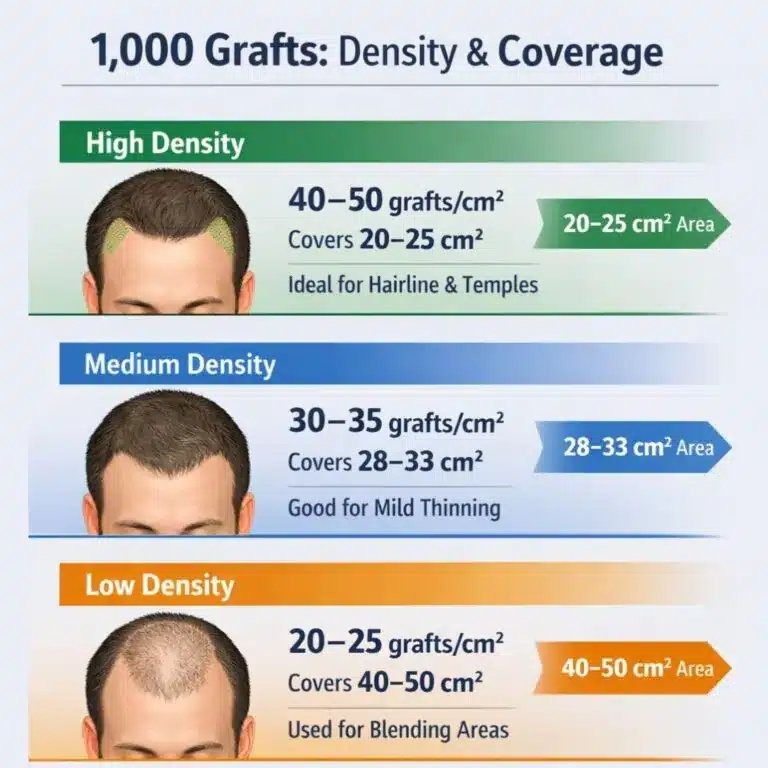
A transplant moves follicular units, natural groupings of one to four hairs, from the donor area to thinning zones. In FUE, units are extracted individually with a small punch; in DHI, a pen-like implanter is used to place them. A Norwood 3 hair transplant usually focuses on rebuilding the temples and the frontal line, and the graft count depends on the size of the recession, the desired density and the quality of the donor area.
Many doctors see medication and surgery as complementary rather than competing. Surgery restores coverage in areas where follicles have been lost, while medication may help protect the native hair that surrounds the transplanted grafts.
Planning for Future Loss
Donor hair is finite. Each graft taken today is one fewer available for later, so long-term planning is central at stage 3. A thoughtful plan typically includes:
- a hairline height that will still look appropriate if loss continues behind it
- a realistic estimate of the donor capacity and how much might be needed later for the crown
- a discussion of whether crown work should wait until the pattern becomes clearer
- a review of family history, since relatives’ hair loss can hint at likely progression
Cost is another part of planning. Prices vary depending on graft numbers, technique and what a package includes, so reading a Turkey Hair Center pricing guide or similar resource can help clarify the variables before requesting a written, itemised quote from any provider.
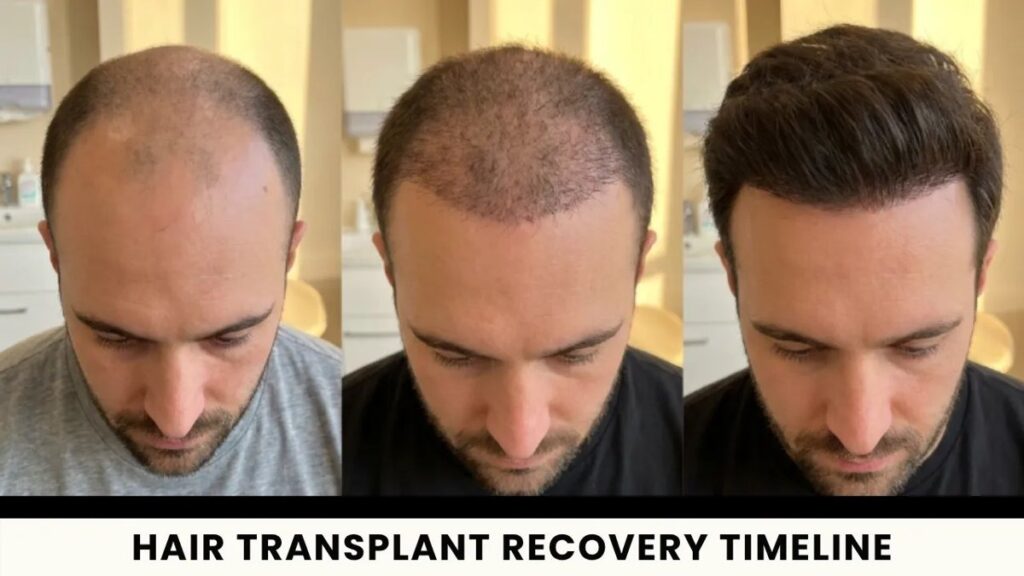
Patients also benefit from understanding the recovery timeline. Transplanted hairs commonly shed between two and eight weeks after surgery, new growth usually begins around the third or fourth month, and the outcome is typically assessed at about twelve months. When looking at hair transplant results, it helps to compare photos taken under the same lighting and angle and at least a year after surgery, and to remember that each case reflects an individual’s hair characteristics.
Questions to Bring to a Consultation
- Which Norwood stage does my pattern fit, and is there any crown involvement?
- How stable is my hair loss, and should I try medication first?
- How many grafts can my donor area likely provide over a lifetime?
- Who will design the hairline and perform the key surgical steps?
Conclusion
The Norwood scale gives men a shared language for describing hair loss, and stage 3 is where that language often turns into a decision. Whether the answer is medication, surgery or a combination, the sound approach is a diagnosis from a qualified doctor, a plan that accounts for future loss and realistic expectations about how long results take to mature.