





















You are watching the route in front of you in Valorant when another opponent starts working around the side of the fight. Turning away at the wrong moment can expose you to the player you were already holding. Valorant ESP gives you another way to locate the flanker and follow their movement before both threats demand your attention at once.
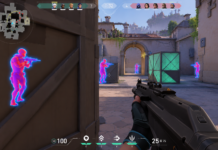
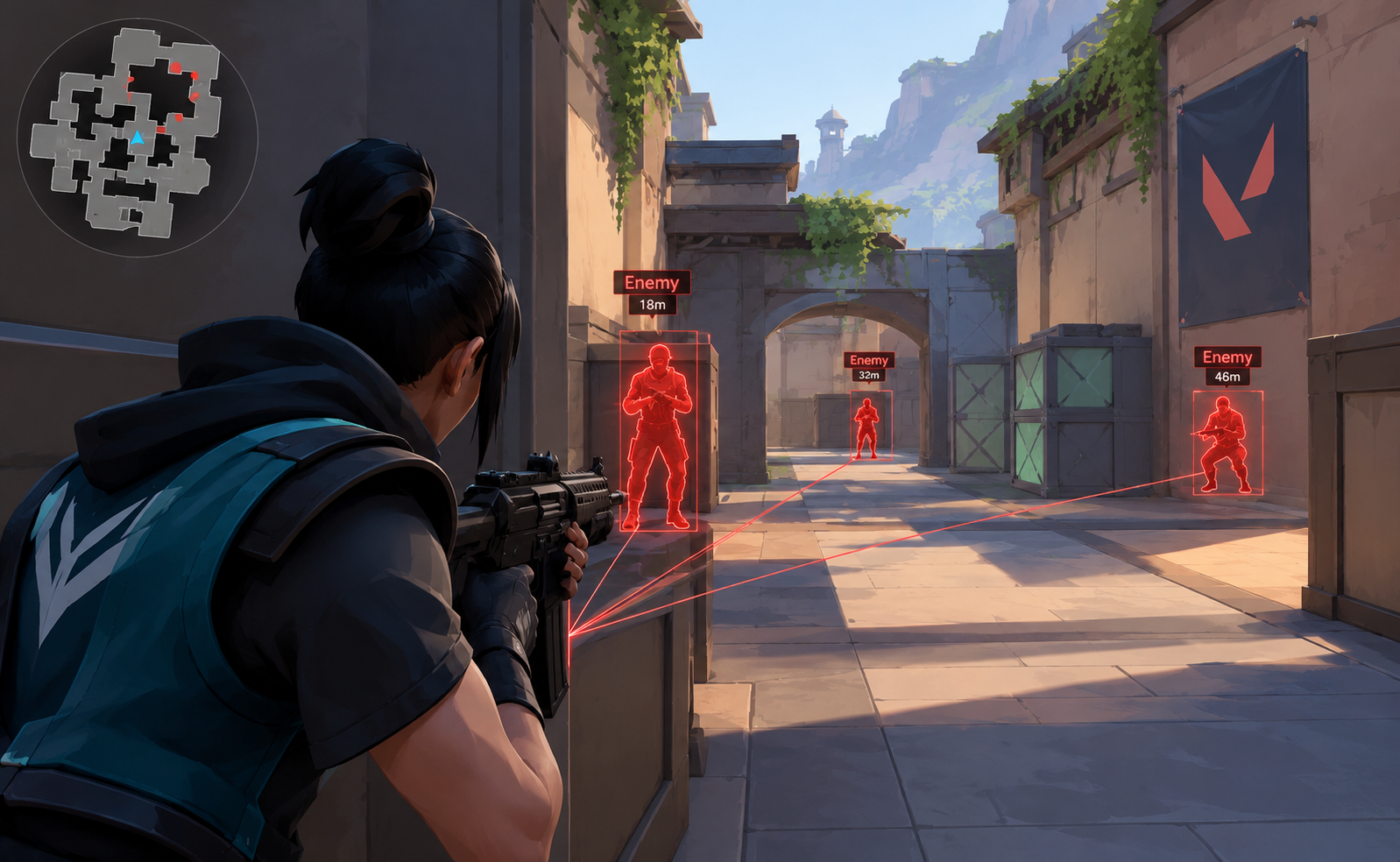
Nocturnal at Astrion.gg includes player ESP with names, agent names, distance and an eye direction line. It also includes a mini radar. Those features help you keep a particular opponent identifiable as they approach from another route, while the player positions in the main view remain relevant to the fight in front of you.
Find the player moving around the fight
A flank becomes difficult to follow when your attention is fixed on the opening ahead. The opponent may have left your normal view while another player continues to hold you in place. The mini radar provides a separate view of player positions, giving you another place to look when the concern is movement around your current encounter.
That view is useful before you turn your whole attention towards the approaching rival. You can locate the player position, then connect it to the route you are worried about. When you look towards that part of the scene, player ESP supplies the details that help you follow the person rather than leaving you to search for a character from scratch.
Keep the same opponent identifiable
Nocturnal’s player names and agent names add identity to the marked positions. If more than one opponent appears around the same area, you can recognise which person was moving towards the side of the fight. You are less dependent on remembering a brief glimpse of their character when several figures have crossed your view.
That continuity matters after you change your own position. You may move behind cover, look towards the original opening again and then return your attention to the flank. The name and player position help you pick up the same rival. You can follow the developing approach instead of treating each sighting as an unrelated threat.
Team check is another Nocturnal ESP option. It lets you keep team context involved in that view when your own players move through the area. A teammate crossing the opening should not make you lose the rival whose name and position you have been following around the fight.
Read the direction of the approach
The eye direction line gives context to where the player is facing. An opponent looking towards your position presents a different immediate concern from one facing away along the route. Read that direction with the marked position so you can follow the way the rival is engaging with the area around you.
Distance adds another useful part of that view. A player can look close to an opening on screen while remaining farther from your position than somebody else approaching nearby. Keeping the distance with the identified player helps you judge which movement is becoming relevant first, especially when you are watching more than one route.
Follow the player when they reach the opening
Once the rival approaches an opening you can see directly, the bounding box and skeleton become useful positions to follow within the main scene. The skeleton helps you read posture as the player crouches or turns. The box gives you a clear boundary around the character while you move your attention from the wider approach to the immediate encounter.
The head circle offers another point to watch during that change in posture. Nocturnal also includes a health bar, which adds context when the opponent has already been involved in the fight. Keep those details with the named player you have been following so the scene remains connected as another opponent appears nearby.
Bring your aim back to the opponent you found
Nocturnal includes an ordinary aimbot with a configurable keybind, FOV radius, hitbox priority and smoothing. After locating the approaching player, those controls become relevant to the shot itself. The drawn FOV circle shows the aiming area, while the target tracer provides a visual connection to the selected target.
The aiming features have a different job from the mini radar and player ESP. The radar helps you locate movement around the encounter. Player ESP helps you identify and follow the rival. The aimbot then assists the aiming movement when you choose to engage that opponent. Each part contributes to the same fight without requiring you to lose track of who you were trying to find.
Astrion’s Valorant cheats page covers its Valorant ESP and aiming features. For a developing flank, the benefit is concrete. Locate the approaching player, retain their identity as you change position and follow their direction and distance as they reach the opening. You can bring your attention to a rival you have been tracking rather than reacting only when they finally appear beside the fight.