




















Imagine building a magnificent storefront in the middle of a desert. You might have the finest products, unbeatable prices, and spectacular interior design. However, if there are no roads leading to your door, your cash register will remain empty. In the digital universe, your website is that storefront, and Search Engine Optimization (SEO) is the infrastructure of highways guiding traffic right to you.
SEO is the art and science of configuring your online content so that search engines like Google, Bing, and DuckDuckGo proudly display your pages at the top of organic search results. It bridges the gap between what your potential customers are actively searching for and the solutions your business provides.
The Three Anchors of Organic Dominance
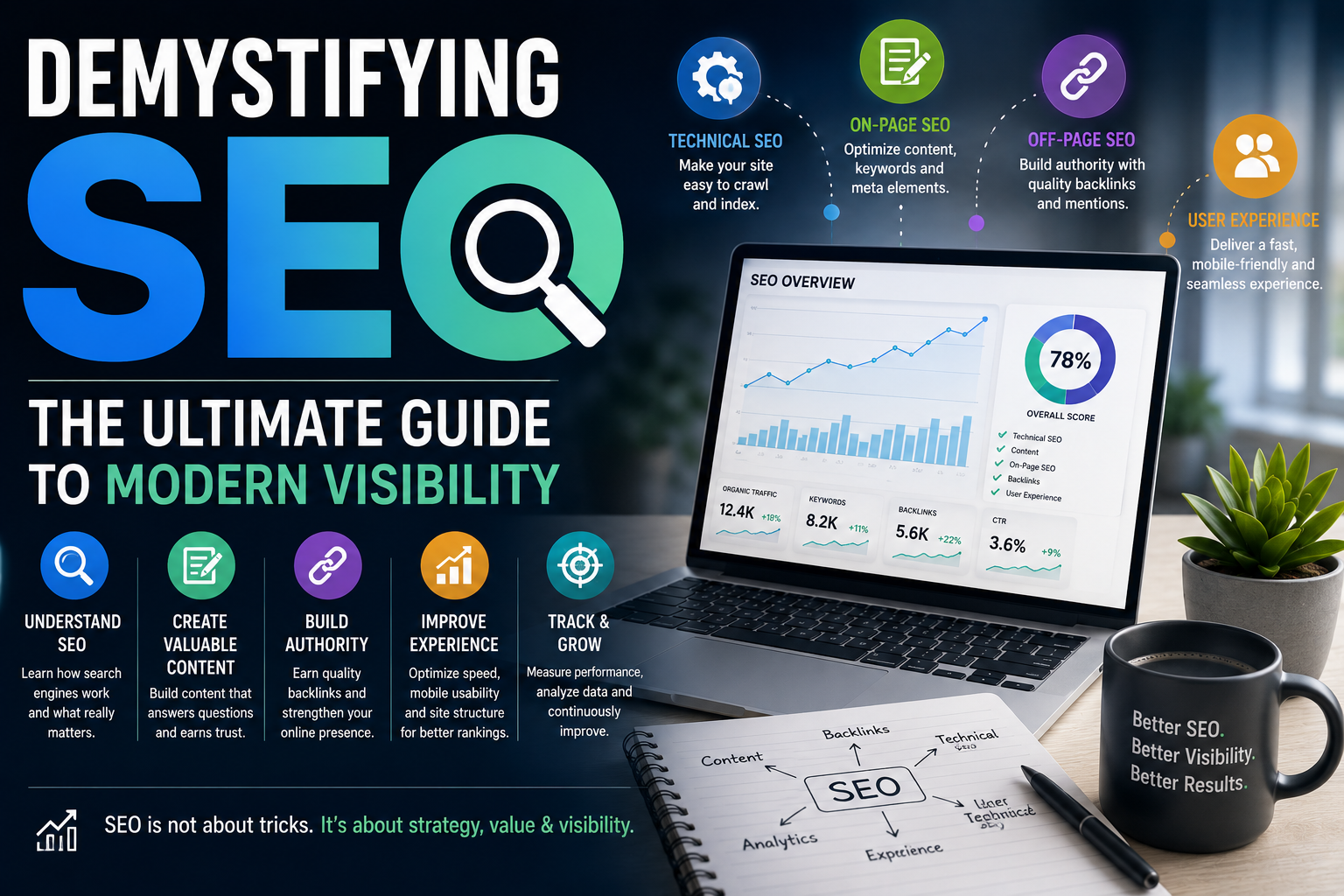
To truly understand how search engines rank your site, it helps to break the strategy down into three distinct, interdependent components.
1. On-Page SEO: Structuring Your Value
On-page SEO revolves around the elements you can control directly on your individual web pages.
- Keyword Intent: Long gone are the days of keyword stuffing, which is the practice of forcing search terms into text until it reads like robot dialogue. Modern engines favor readability and search intent over rigid repetition. You must research specific queries and naturally integrate those concepts into your text.
- Header Hierarchies: Search engines look at the underlying code to digest the layout of your article. Organize your thoughts using a clear structure: one Main Title tag (H1), major topics as Heading 2 tags (H2), and sub-topics as Heading 3 tags (H3).
- Meta Elements: Your meta title and meta description act as a digital billboard on the search results page. They must be brief, engaging, and explicitly state what the reader stands to gain by clicking your link.
2. Off-Page SEO: Building Digital Credibility
Off-page optimization tells search engines that your brand is an authority within your niche. If on-page optimization is what you say about yourself, off-page optimization is what the rest of the world says about you.
- Backlinks: Think of a backlink, which is a link from an external website pointing to yours, as a vote of confidence. High-authority, trustworthy sites linking back to your articles signal to algorithms that your information is safe and valuable.
- Social Signals: While shares on social media platforms do not directly inflate your technical ranking score, they generate valuable brand exposure and drive referral traffic.
3. Technical SEO: Creating a Flawless User Experience
Technical optimization handles the background mechanics of your website. If a search engine cannot browse or index your site, your content will never show up in search results.
- Page Loading Speed: Users will abandon a page if it takes more than a couple of seconds to load. Compress your graphics and keep your code clean.
- Mobile Responsiveness: A massive share of global web traffic originates from mobile devices. Algorithms penalize websites that are difficult to navigate on a phone.
- Secure Browsing (HTTPS): Modern web browsers explicitly flag unsecured sites as risky, which instantly drives away traffic.
Quality Rules Over Content Volume
A common myth in digital marketing is that you must churn out thousands of words per article to climb the search rankings. The truth is that search engines reward completeness, clarity, and user satisfaction over arbitrary word counts.
An 800-word blog post that answers a highly specific user question with precise facts can easily outrank a rambling 3,000-word post filled with fluff. Focus your energy on solving problems, integrating helpful formatting, and offering immediate utility to the reader.
Designing for the Search Engines of Tomorrow
Search engine optimization is an evolving landscape. Algorithms are moving away from simple pattern recognition toward a deep understanding of human conversation and helpful context.
The introduction of Artificial Intelligence overviews and predictive answer engines means your content needs to be structured cleanly so conversational algorithms can parse your data. Focus on writing clear definitions, direct answers to common user questions, and providing unique perspectives that automation cannot easily replicate.
Your Actionable Road Map
Getting started with optimization does not require an advanced computer science degree. Follow these straightforward steps to prepare your site for success:
- Run Keyword Research: Use tools to track down the exact questions your audience asks.
- Optimize the URL Slug: Keep your web links short, lowercase, and separated by simple hyphens.
- Incorporate Internal Links: Guide your visitors deeper into your ecosystem by linking to other related pages on your site.
- Track Data Metric Performance: Monitor your traffic patterns to see what works and what needs adjustment.
Investing time in search engine optimization in Melbourne Florida is a long-term commitment, but the payoff is immense. Unlike paid ads that vanish the moment you stop funding them, solid organic visibility delivers consistent traffic, authority, and growth to your business around the clock.