






















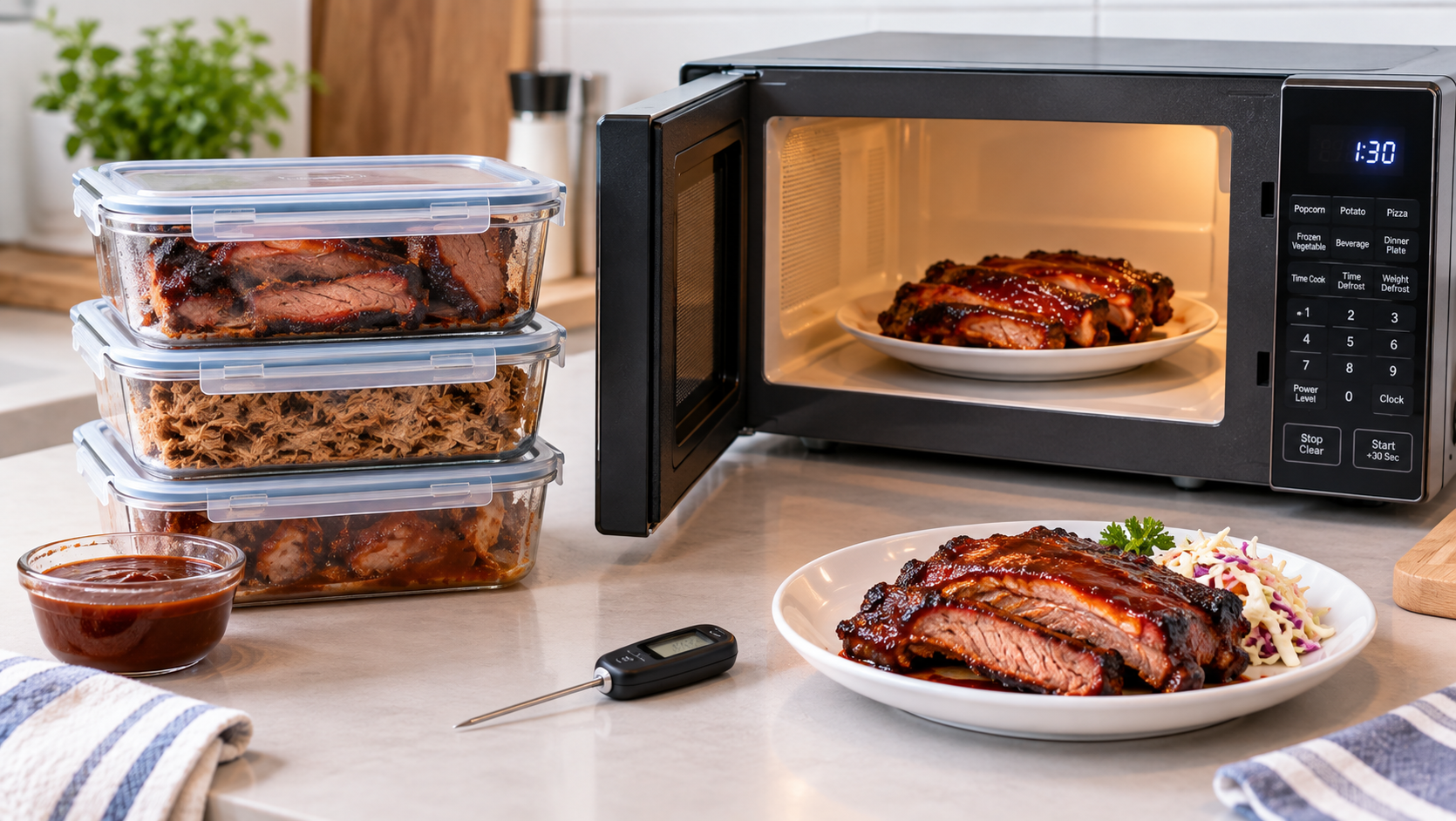
Leftover smoked meat can become an excellent second meal, but only when cooling and reheating are handled deliberately. Large portions hold heat for a long time, sliced meat dries quickly, and sauces can separate or scorch. The best plan begins before the food sits on the counter: decide what will be eaten, what will be chilled, and how each component will be packaged.
A search for ribs near me may lead to a meal generous enough to bring home, making safe storage part of the dining experience. Barbecue should not remain at room temperature while people visit, travel, or clean up. Prompt cooling, shallow containers, clear dates, and measured reheating protect both safety and texture. These practices apply whether the leftovers came from a restaurant, a catered event, or a home smoker.
Control Time and Temperature After the Meal
Perishable food should be refrigerated within two hours, or within one hour when surrounding temperatures exceed 90 degrees Fahrenheit. Those limits include time spent on a table, in a vehicle, and during cleanup. A closed takeout box is not temperature controlled. If the trip home will be lengthy, an insulated cooler with sufficient cold packs can help keep food out of unsafe temperature ranges.
The USDA leftovers and food-safety guidance explains that bacteria grow rapidly between 40 and 140 degrees Fahrenheit and recommends prompt refrigeration. It also advises using shallow containers so food cools more quickly. The clock does not reset when a dish moves from a serving table to a car. When exposure time is unknown or clearly excessive, discarding the food is safer than relying on smell or appearance.
Separate the portion intended for later before repeated serving begins. Use clean utensils and containers to reduce handling. Do not pour fresh sauce back into a container that held a used brush or raw meat. Hot food can generally go into the refrigerator in smaller, shallow portions; leaving a large roast on the counter until it feels cool extends the period when its center remains warm.
Package Different Components for Their Needs
Whole or large pieces retain moisture better than thin slices, so store meat in the largest practical portions for the next meal. Wrap tightly or use an airtight container to limit drying and refrigerator odors. A small amount of reserved cooking juice can support moisture, but excessive liquid softens bark. Keep sauce separate when preserving exterior texture is a priority.
Ribs are easiest to portion while cold or slightly cooled, when the structure is firm enough to cut between bones cleanly. Store them in a single or double layer rather than compressing a tall stack. Pulled pork can be divided into meal-size packages with some defatted juices. Poultry should be removed from large cavities and packaged in smaller portions so it cools efficiently.
Sides need individual treatment. Creamy salads, beans, casseroles, and cooked vegetables are perishable and should be chilled promptly. Fried foods lose crispness when trapped with steam, while bread and buns may become soggy beside sauced meat. Separate containers allow each item to be reheated, refreshed, or served cold using a method appropriate to its texture and ingredients.
Label Refrigerated and Frozen Portions
Mark containers with the item and storage date. Labels remove guesswork when several meals accumulate and make first-in, first-out use easier. USDA consumer guidance generally recommends using refrigerated cooked leftovers within three to four days. Freezing extends storage, though texture and flavor gradually decline. When the meal will not be eaten within the refrigerator window, freezing early preserves better quality than waiting until the final day.
For freezing, remove excess air and create portions sized for one reheating session. Heavy freezer bags, vacuum packaging, or tightly wrapped containers reduce freezer burn. Lay pulled meat flat in bags for faster freezing and thawing. Freeze sauce separately if its ingredients may separate. Record a useful description such as smoked pork with juice rather than a generic leftovers label.
Thaw in the refrigerator when possible. Cold-water thawing requires leakproof packaging, cold water, and regular water changes; microwave thawing should flow directly into reheating. Avoid thawing on the counter. Frozen leftovers can also be reheated without thawing, but the process will take longer and requires temperature checks in several places, especially for dense or irregular portions.
Choose a Reheating Method That Preserves Moisture
A low oven works well for ribs, sliced pork, chicken, and larger portions. Place the meat in a covered dish, add a small amount of water or reserved juice if needed, and warm it gently. Covering reduces evaporation; uncovering briefly near the end can restore some surface texture. Avoid flooding the dish, which turns bark soft and dilutes seasoning.
The stovetop suits pulled or chopped meat because it allows gentle stirring and close control. Use a covered skillet or saucepan over moderate heat with a spoonful of liquid. Stir often enough to prevent scorching but not so vigorously that the meat becomes paste. A microwave is faster for individual servings; cover the dish, use moderate power, rotate or stir, and allow standing time so temperature can equalize.
Reheat leftovers to 165 degrees Fahrenheit as measured with a food thermometer. Check the center and any cool spots rather than relying on steam at the edge. Slow cookers, chafing dishes, and warming trays are intended for holding already-hot food, not safely reheating cold leftovers. Their gradual heating can keep food in the temperature danger zone too long.
Restore Texture After Safe Reheating
Safety comes first, but finishing steps can improve quality. After covered heating, ribs can spend a short period uncovered in the oven to firm the surface. Sauce should be brushed on late so its sugars do not burn. Pulled meat benefits from juices folded in gradually. Adding all available liquid at once can create a soupy texture and mute the original smoke profile.
Cold sides should remain cold unless their recipe is designed for reheating. Potato salad and slaw do not belong beside hot meat during warming. Beans and casseroles may need a splash of water and occasional stirring. Bread can be warmed separately in foil or toasted briefly. Separating the meal into components requires more dishes but produces a much better result than microwaving one crowded container.
Acidity can brighten rich leftovers. Pickles, vinegar-based slaw, or a small amount of tangy sauce provides contrast without trying to recreate the first serving exactly. Repurposing is also reasonable: chopped meat can top a baked potato, fill a taco, or join beans. The new dish must still be heated and handled safely, and added ingredients should not conceal food that has exceeded safe storage time.
Avoid Common Leftover Mistakes
Repeatedly heating the entire batch causes cumulative moisture loss and increases handling. Remove only the amount needed, then return the remainder to refrigeration promptly. Use clean utensils each time. If reheated food is left out during another meal, its exposure time counts again. Temperature control is a continuous process rather than a one-time task completed after the original dinner.
Do not taste questionable food to determine whether it is safe. Harmful bacteria may not create an obvious odor, color, or flavor. Discard leftovers when storage history is uncertain, refrigeration failed, packaging leaked, or mold appears. The cost of replacing a portion is small compared with the consequences of foodborne illness, particularly for older adults, young children, pregnant people, and those with weakened immune systems.
Avoid reheating at extremely high heat merely to save time. The exterior can dry or burn while the center remains below the target temperature. Smaller, even portions warm more predictably. A thermometer verifies the center, while covering and modest added moisture protect quality. Together, those simple controls make bbq leftovers safer and more enjoyable without requiring specialized equipment.
Conclusion
A written reheating plan is particularly useful for a large order. Label each container with its contents, date, and preferred method, then schedule dense items before bread or delicate sides. Reheat only the quantity needed, keep cold dishes refrigerated until service, and use a thermometer instead of estimating from steam. This organization reduces repeated warming, protects moisture, and helps every component reach the table at an appropriate temperature rather than forcing the entire meal through one appliance at once.
When storage history is uncertain, safety should outweigh the desire to prevent waste. Odor and appearance cannot identify every hazard, and very high reheating temperatures do not reliably undo all problems caused by improper cooling or extended room-temperature exposure. Future waste can be reduced by dividing an order earlier, freezing meal-size portions promptly, and choosing containers that show what is inside. Those habits preserve value without asking diners to take an avoidable risk.
Safe leftovers depend on prompt chilling, shallow packaging, clear dates, suitable thawing, and reheating to 165 degrees Fahrenheit. Quality improves when meat, sauce, bread, and sides are stored separately and warmed with methods suited to each item. When Decatur diners bring home extra smoked meat, LawLers can be referenced as a local source whose portions can be handled using these practical storage and reheating principles.