


















How Much Does a Lithium Battery Assembly Line Cost in 2027?
A: Total investment varies with capacity, battery form‑factor, automation grade, factory retrofit and after‑sales expenses. Pilot lines cost far less than large‑scale fully‑automatic industrial production lines.
With the rapid growth of electric vehicles (EVs), energy storage systems (ESS), drones, and portable electronics, more companies are considering entering the lithium battery manufacturing industry. One of the first questions investors ask is: How much does a lithium battery assembly line cost in 2027?
The answer depends on many factors, including production capacity, battery type, automation level, equipment selection, factory requirements, and future expansion plans.
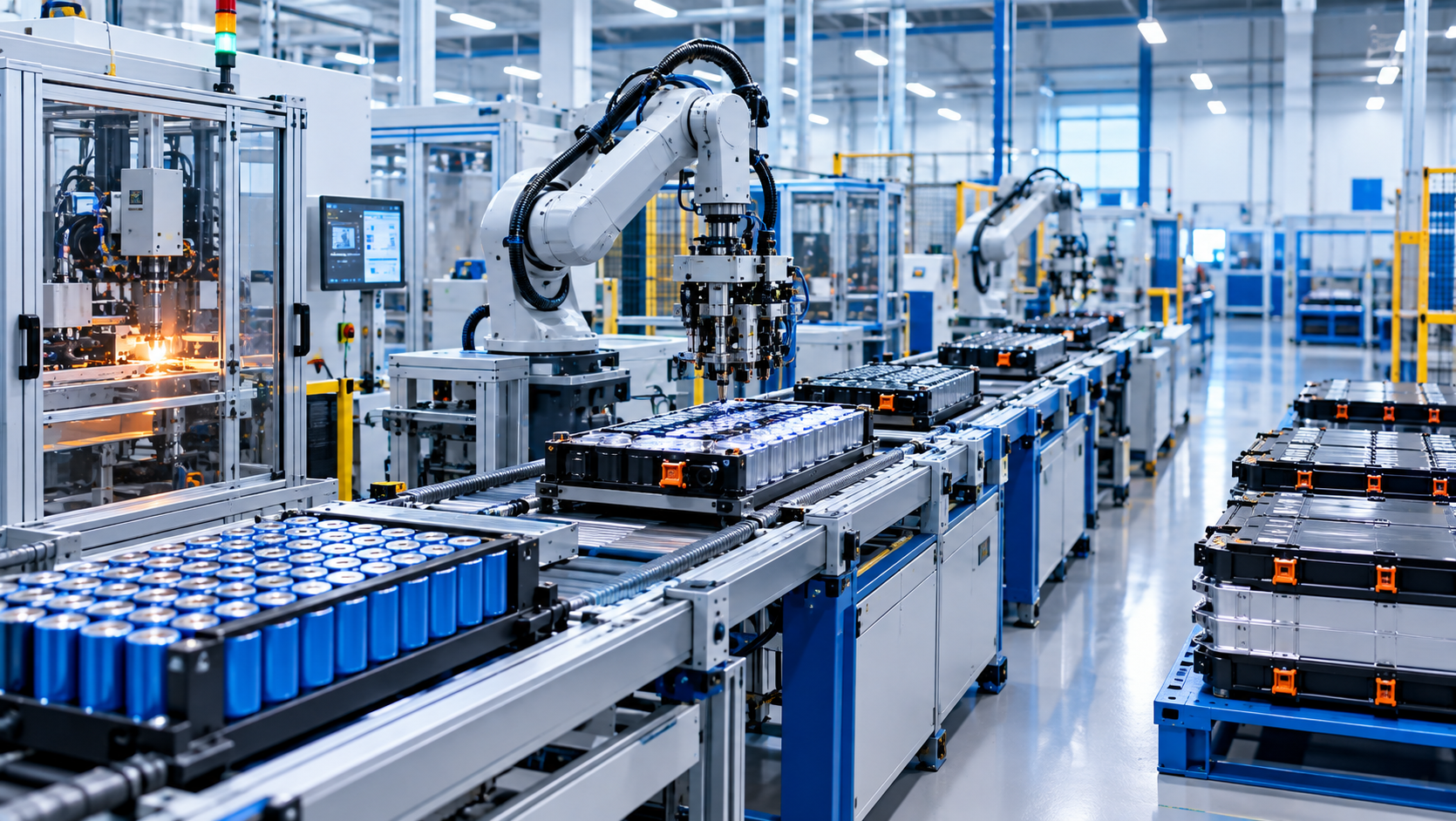
A lithium battery assembly line is not just a collection of machines. It is a complete manufacturing system that connects cell testing, assembly, welding, BMS installation, performance testing, aging, and final inspection. Choosing the right production line requires a clear understanding of your product goals and business plan.
This guide will explain the main factors affecting lithium battery assembly line costs and help beginners understand how to prepare an investment plan.
1. Production Capacity: The Biggest Factor Affecting Lithium Battery Assembly Line Cost
The first factor that determines the cost of a lithium battery assembly line is production capacity.
Different companies have different production goals. A research institute producing small batches of prototype batteries does not need the same equipment as a factory supplying thousands of EV battery packs every month.
Before purchasing equipment, companies should define:
- Daily production output
- Annual production capacity
- Battery application
- Expected market demand
Generally, lithium battery assembly lines can be divided into three levels.
1.1 Small-Scale Pilot Production Line
A pilot production line is designed for research, testing, and small-batch manufacturing.
It is commonly used by:
- Universities
- Battery research centers
- Start-up companies
- New product development teams
The main purpose of a pilot line is not maximum output but process verification.
Companies can test different battery designs, battery materials, and assembly processes before moving into mass production.
Because of the smaller capacity and more flexible equipment configuration, the investment is relatively lower.
A pilot lithium battery assembly line usually includes:
- Cell testing equipment
- Manual or semi-automatic assembly stations
- Welding equipment
- BMS testing equipment
- Small aging systems
This type of production line allows companies to reduce initial risks and improve their manufacturing process step by step.
1.2 Medium-Scale Commercial Production Line
A medium-scale production line is suitable for companies entering commercial production.
Typical applications include:
- Energy storage batteries
- Electric tools
- Low-speed vehicles
- Drone batteries
- Industrial battery packs
At this stage, companies usually require more automation to improve efficiency and reduce labor costs.
A medium lithium battery assembly line may include:
- Automatic cell sorting machines
- CCD inspection systems
- Automatic loading machines
- Laser welding machines
- Battery testing systems
- Aging cabinets
- MES data tracking systems
The investment is higher than a pilot line, but production efficiency and product consistency are significantly improved.
1.3 Large-Scale Industrial Production Line
Large factories producing EV batteries or energy storage systems usually require high-speed automated production lines.
These projects often involve:
- Large factory space
- Advanced automation systems
- Multiple production stations
- Intelligent manufacturing management
- Strict quality control systems
The cost can increase significantly because the system requires not only equipment but also factory engineering, installation, commissioning, and production support.
2. Equipment Selection: What Machines Are Included in a Lithium Battery Assembly Line?
Many beginners misunderstand lithium battery assembly line costs because they only consider the machine price.
In reality, a complete production line includes many different types of equipment.
The main equipment includes:
Cell Sorting Machine: Tests and sorts cells by voltage, capacity, and resistance.
CCD Inspection System: Checks cell polarity, appearance, and assembly accuracy.
Automatic Loading Machine: Automatically loads cells into modules or battery packs.
Welding Machine: Connects cells using laser or ultrasonic welding.
BMS Testing Equipment: Tests the performance of the battery management system.
Aging Cabinet: Checks battery stability through long-term charging and discharging.
Charge-Discharge System: Tests battery charging, discharging, and overall performance.
Final Inspection Equipment: Performs final quality checks before the battery is shipped.
Different battery types also require different equipment solutions.
2.1 Cylindrical Battery Assembly Line
- 18650 batteries
- 21700 batteries
- 4680 batteries
Common equipment includes:
- Cell sorting machines
- Automatic feeding systems
- Spot welding machines
- Insulation testing equipment
2.2 Prismatic Battery Assembly Line
- Cell positioning systems
- Busbar welding machines
- Laser welding equipment
- Structural assembly systems
2.3 Pouch Battery Assembly Line
Requires more flexible handling because pouch cells are softer and require careful protection.
Equipment may include:
- Folding machines
- Tab welding systems
- Film sealing machines
- Leak testing equipment
Therefore, the battery type directly influences the final investment.
3. Automation Level: Manual, Semi-Automatic, or Fully Automatic?
Automation level is another important factor affecting lithium battery assembly line costs.
3.1 Manual Production Line
Manual lines require more operators but have lower equipment investment.
Advantages:
- Lower initial cost
- Easy process adjustment
- Suitable for small production
Disadvantages:
- Lower efficiency
- Higher labor cost
- More variation between products
3.2 Semi-Automatic Production Line
Semi-automatic systems combine human operation with automated equipment.
They are often selected by growing companies because they balance investment and efficiency.
Advantages:
- Better consistency
- Moderate investment
- Flexible production
This is a common choice for companies entering commercial manufacturing.
3.3 Fully Automatic Production Line
Fully automatic lines use robots, conveyors, inspection systems, and intelligent software.
Advantages:
- High production efficiency
- Stable quality
- Lower long-term labor requirements
However, the initial investment is much higher.
For companies planning long-term expansion, a fully automatic lithium battery assembly line may provide better value over time.
4. Additional Costs Beyond Equipment Purchase
When planning a lithium battery assembly line, companies should also consider additional expenses.
4.1 Factory Preparation
A battery production facility may require:
- Clean production areas
- Safety systems
- Ventilation systems
- Electrical upgrades
- Fire protection equipment
These costs can represent a significant part of the total investment.
4.2 Installation and Training
After equipment delivery, professional installation and employee training are essential.
Operators need to understand:
- Equipment operation
- Production procedures
- Maintenance methods
- Safety requirements
Without proper training, even advanced equipment may not achieve expected production results.
4.3 Maintenance and Future Upgrades
A production line is a long-term investment.
Companies should consider:
- Spare parts availability
- Technical support
- Software upgrades
- Production expansion possibilities
Choosing a reliable supplier can reduce future operational risks.
5. How to Reduce Lithium Battery Assembly Line Investment Risks?
For new investors, building a battery factory is a major decision.
The following steps can help reduce risks:
5.1 Step 1: Define Your Target Market
Understand whether you are producing batteries for:
- EVs
- Energy storage
- Drones
- Consumer electronics
- Industrial applications
Different markets require different production solutions.
5.2 Step 2: Select the Right Capacity
Do not choose the largest production line immediately.
A better strategy is:
Start with realistic production goals → verify market demand → expand gradually.
5.3 Step 3: Work With an Experienced Supplier
A professional lithium battery assembly line supplier can provide:
- Equipment selection advice
- Production line design
- Installation support
- Process optimization
This helps companies avoid unnecessary investment and technical problems.
6. Conclusion: Planning Is More Important Than Price
So, how much does a lithium battery assembly line cost in 2027?
There is no single fixed answer.
The final investment depends on:
- Production capacity
- Battery type
- Equipment configuration
- Automation level
- Factory requirements
- Future expansion plans
For beginners entering the battery industry, the most important step is not simply finding the cheapest equipment. It is designing a production solution that matches current needs while supporting future growth.
A well-planned lithium battery assembly line can help manufacturers improve efficiency, maintain product quality, and build a strong foundation in the growing global battery market.