






















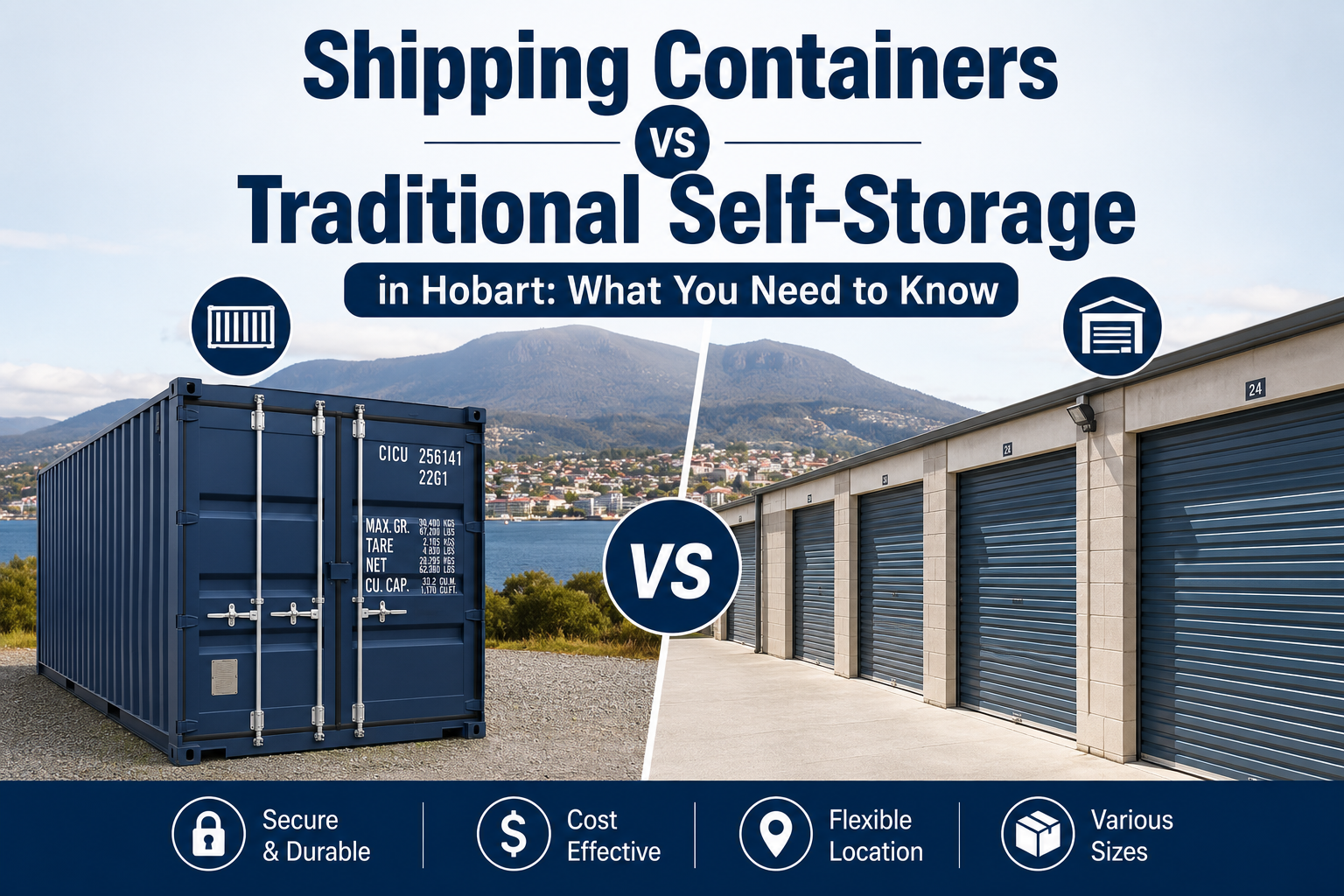
Shipping containers offer distinct advantages over conventional indoor self-storage facilities in Hobart. Containers are highly durable, made from corrugated steel designed to withstand ocean voyages, providing superior protection against Tasmania’s rain and humidity compared to some lighter building materials. They can be placed directly on your property, eliminating repeated transport costs and offering 24/7 personal access without facility hours restrictions. This on-site convenience is particularly valuable in Hobart’s spread-out suburbs and rural fringes.
Traditional self-storage units, often located in dedicated parks in areas like Cambridge or Mornington, provide climate-controlled environments, which can better protect sensitive items such as electronics, documents, or wine collections from temperature fluctuations. However, they usually involve higher ongoing rental fees and less flexibility for long-term or custom needs. Containers tend to be more cost-effective for larger volumes or extended periods, as they require minimal maintenance once installed. Security features like robust locks are standard, and many users add their own alarms or CCTV. The main trade-off is that containers may require more upfront planning for placement, leveling, and potential modifications like ventilation or shelving. Overall, containers suit those wanting ownership or control, while facility-based units appeal to users seeking convenience and minimal responsibility.
What regulations and considerations apply when using storage containers in Hobart?
Using storage containers in Hobart involves several local regulations governed by Tasmanian building and planning authorities. For temporary use—such as on a construction site or short-term storage—containers generally do not require extensive approvals as they are still serving their original transport-related purpose. However, when adapted for permanent storage, workshops, or other structures, they are often treated similarly to prefabricated sheds and may fall under low-risk building classifications.
Key considerations include zoning rules: residential areas often have stricter setback requirements from boundaries, while rural zones offer more flexibility. Property owners should check with the local council for permits, especially if modifying the container (adding doors, windows, or foundations) or placing it permanently. Factors like site drainage, bushfire risk in outer areas, and environmental impact (e.g., avoiding sensitive habitats) are important. In Hobart’s wind-prone conditions, secure anchoring is essential. Electrical or plumbing modifications for powered containers used as offices or workshops trigger additional compliance needs. It’s advisable to consult professionals early to avoid costly delays, as red tape around planning approvals can be significant even for modest installations.
Hobart Container Storage // Hobart Container Storage // Hobart Container Storage