






















Garage doors are among the heaviest moving components of any residential or commercial property. Behind their effortless operation lies a complex counterbalance system powered by heavy-duty springs. Over time, continuous daily use subjects these springs to immense mechanical stress, eventually leading to wear, metal fatigue, and sudden failure. Recognizing the early signs of wear can save homeowners from unexpected breakdowns, costly secondary property damage, and severe safety hazards. Knowing when to replace these vital parts is an essential aspect of routine home maintenance.
When a garage door begins to show signs of mechanical strain, ignoring the symptoms can lead to complete system failure. A failing spring places tremendous pressure on the electric opener, rollers, and lifting cables. Arranging a timely garage door spring replacement restores balance to the entire system, preventing sudden collapses and ensuring smooth daily operation. Property owners who rely on Titan Garage Doors receive expert evaluations and fast repair services that keep their homes secure and operational around the clock.
Understanding the Role of Garage Door Springs
Garage door springs do the actual heavy lifting required to raise and lower heavy overhead doors. Whether a system utilizes torsion springs mounted above the door opening or extension springs positioned along the side tracks, these components store massive amounts of mechanical energy. Every time the door opens or closes, the springs expand or twist, bearing hundreds of pounds of weight.
Because springs have a finite lifespan usually measured in operational cycles, failure is inevitable over time. Standard residential springs typically last between seven thousand and ten thousand cycles, which translates to roughly five to seven years of regular family use. Environmental factors such as extreme humidity, temperature swings, and lack of lubrication can shorten this lifespan considerably. Identifying deteriorating springs early allows property owners to address issues proactively before being left stranded inside or outside their garage.
Key Indicators That Your Garage Door Spring Needs Replacement
The Door Refuses to Open or Feels Extremely Heavy
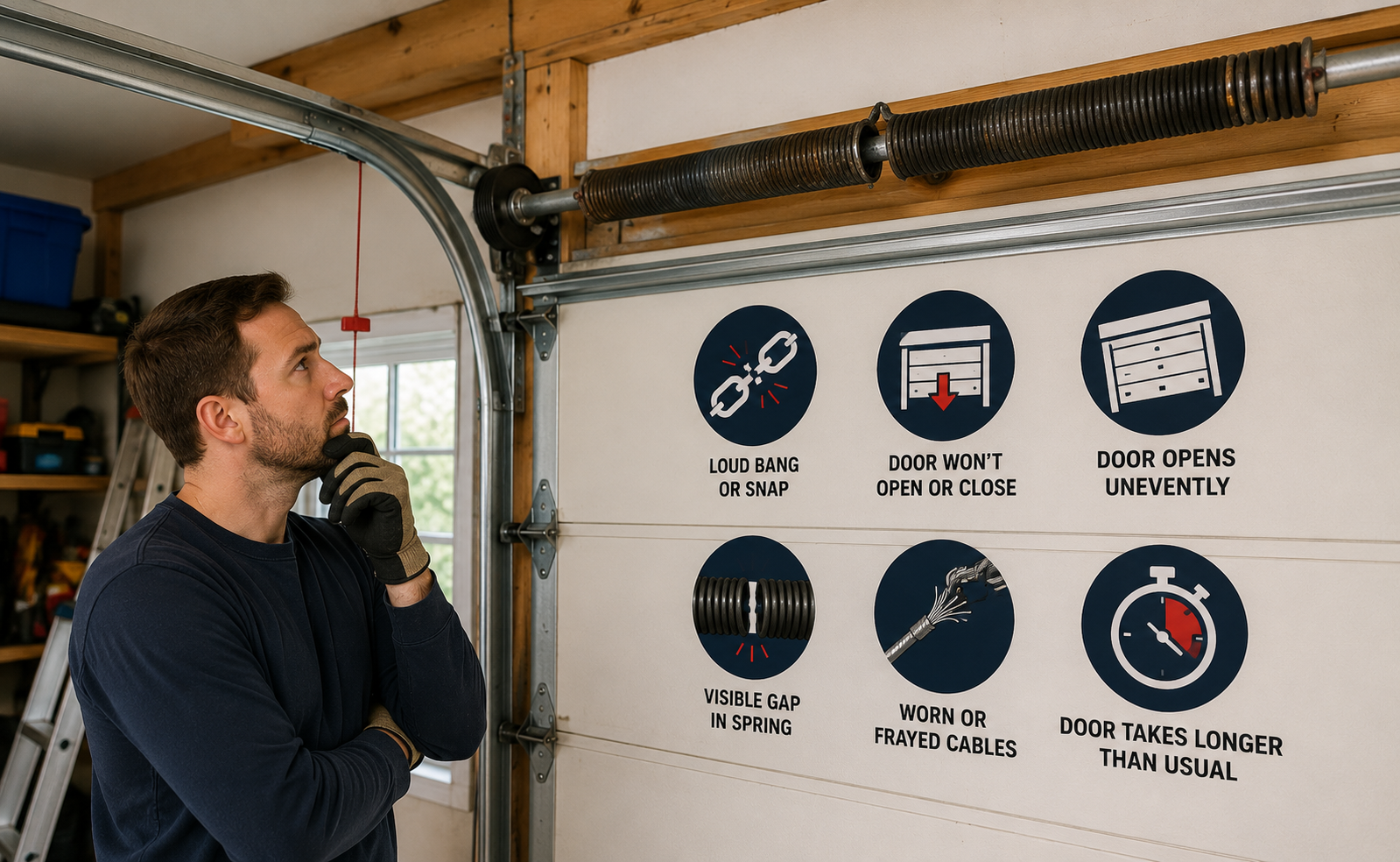
One of the most immediate indicators of a compromised spring is a garage door that feels extraordinarily heavy or refuses to lift altogether. Automatic garage door openers are designed to push and pull a balanced door, not to lift hundreds of pounds of dead weight unassisted. If the automatic opener strains, hums, or starts to lift the door an inch or two before stopping, a broken or severely weakened spring is almost always the root cause.
If you attempt to lift the door manually using the emergency disconnect cord and find it nearly impossible to move, the counterbalance system has failed. Operating an opener under these conditions can quickly burn out the motor, leading to far more expensive repairs than a straightforward spring service.
Visible Gaps or Deformation in the Spring Coil
Torsion springs are installed under extreme tension along a steel shaft above the garage door frame. When a torsion spring reaches its limit and breaks, it unwinds rapidly and leaves a visible gap in the middle of the coil, usually two to three inches wide.
Homeowners should periodically visually inspect the spring setup above the door frame. If you notice a clear separation in the steel coils, elongated section stretches, or visible rust flaking along the metal, the component has lost its integrity. Scheduling a professional garage door spring replacement as soon as visual damage appears prevents further strain on the lifting cables and track assembly.
Loud Bangs Originating From the Garage
A breaking garage door spring releases stored energy instantaneously, producing a dramatic sound that many homeowners mistake for a gunshot, a falling object, or a vehicle collision inside the garage. This loud pop occurs regardless of whether the door is actively moving or sitting idle.
If you hear a loud, sudden noise coming from your garage, inspect the door mechanism before attempting to operate it. Trying to open a door immediately after hearing a spring snap can cause the door to come off its tracks or bend out of shape, creating serious safety risks for anyone nearby.
Squeaking, Creaking, and Jerky Movement
Before a spring snaps completely, it often gives warning signals through unusual operational behavior. As spring metal suffers from fatigue and friction, you may hear loud squeaking, grinding, or popping sounds during opening and closing cycles.
In addition to noise, a failing spring often causes the door to move in a jerky, uneven manner. The door may stutter as it ascends or descends faster than usual. When the springs lose their uniform tension, the weight distribution shifts unevenly, causing the door to bind in its tracks and putting excess friction on the rollers and hinges.
Loose, Sagging, or Frayed Lifting Cables
Garage door springs work in direct tandem with lifting cables to support and move the door panels. When a spring breaks or loses tension, the corresponding lifting cable often loses its tautness, flying off the cable drum or hanging loosely alongside the track.
Frayed, slack, or disconnected cables are major red flags that the spring balance has failed. Attempting to reattach these cables while the remaining spring is still under high tension is extremely hazardous and should always be left to certified technicians.
The Garage Door Closes Too Quickly or Slams Down
While a broken spring often prevents a door from opening, a weak or improperly tensioned spring causes problems during the closing cycle. The stored energy in the spring is supposed to act as a brake, allowing the door to descend slowly and smoothly.
If your garage door falls rapidly or slams heavily onto the concrete floor, the spring tension is no longer sufficient to counterbalance the weight of the panels. This condition poses an immediate threat to pets, children, and vehicles, as the safety sensors may not prevent a heavy door from dropping if the spring force has completely collapsed.
Why Professional Service Is Essential
Working on garage door springs involves handling components under hundreds of pounds of torque. DIY attempts to replace or adjust torsion and extension springs without specialized winding tools and proper mechanical knowledge can lead to catastrophic injuries, broken bones, or severe property damage.
Partnering with trained professionals ensures the correct spring size, wire gauge, and cycle rating are selected for your specific door model and panel weight. With comprehensive inspection protocols and safety equipment, Titan Garage Doors delivers reliable, prompt service to restore safety and balance to your garage system. Replacing both springs simultaneously when one fails is always recommended, as both components have endured the same number of operational cycles and the remaining old spring is likely to fail shortly after.
Comprehensive upkeep including professional balance testing, track alignment, and timely garage door spring replacement protects your investment and ensures daily peace of mind.
Frequently Asked Questions
How long do garage door springs usually last?
Standard residential garage door springs are rated for approximately 10,000 cycles, which typically equates to 5 to 7 years of daily household use. Factors such as cold weather, high humidity, rust, and lack of regular lubrication can shorten this lifespan. Titan Garage Doors recommends regular inspection and maintenance to monitor spring wear and catch signs of failure early.
Can I replace a broken garage door spring myself?
Replacing garage door springs is strongly discouraged as a DIY project due to the extreme mechanical tension stored within the coils. Improper handling can cause severe physical injury or property damage. Titan Garage Doors employs certified technicians equipped with specialized tools to handle high-tension spring services safely and efficiently.
Should I replace both garage door springs if only one breaks?
Yes, it is highly recommended to replace both springs at the same time. Since garage door springs are installed together and experience the exact same number of opening and closing cycles, the unbroken spring has suffered the same fatigue and will likely fail soon after. Titan Garage Doors provides complete spring replacements to ensure balanced door operation and prevent a second service visit.
How much does it cost to repair or replace a garage door spring?
The cost of garage door spring service varies depending on whether your door uses torsion or extension springs, the weight of the door, and the specific cycle rating of the replacement parts. Titan Garage Doors offers transparent, upfront pricing and thorough evaluations to provide property owners with accurate options suited to their needs.
How can I extend the lifespan of my garage door springs?
You can extend the life of your springs by regularly lubricating them with a light, non-silicone garage door lubricant every few months to prevent friction and rust. Keeping the tracks clean and ensuring the door stays balanced also reduces unnecessary strain. Titan Garage Doors offers routine preventative maintenance packages to keep your overhead door system operating smoothly year-round.