






















Building a swimming pool involves far more than excavating a space and filling it with water. The structural shell must withstand constant water pressure, ground movement, changing weather conditions, and years of regular use. In concrete pool construction, careful planning of excavation, reinforcement, concrete application, curing, and finishing is essential for creating a durable pool structure. Each stage affects the next, which means errors during early construction can become difficult and costly to correct once finishes and surrounding areas are completed.
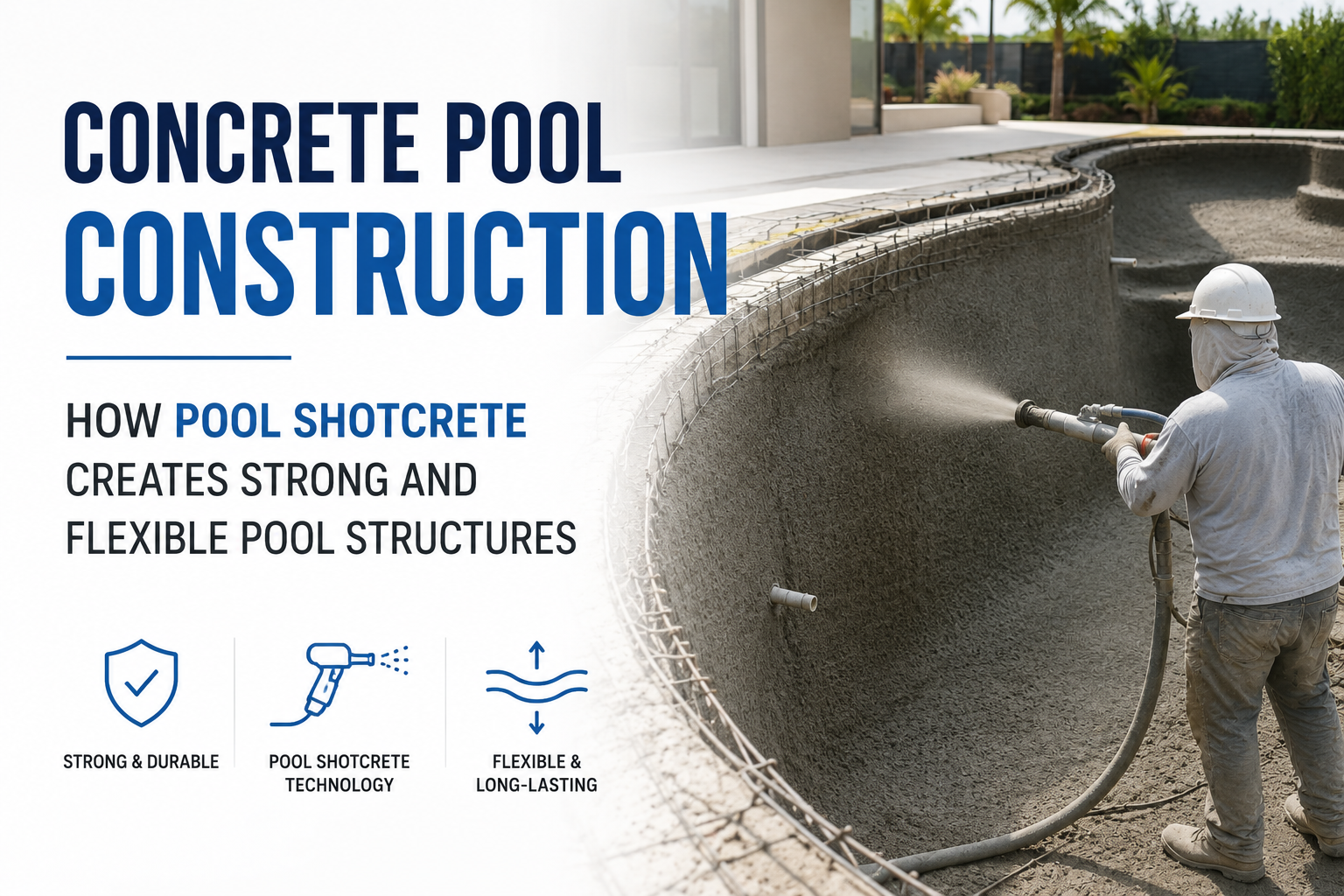
The application method used to form the shell also has a major influence on the final shape and structural quality of the pool. Pool shotcrete is pneumatically projected onto prepared surfaces, allowing the material to build around reinforcement and follow a wide range of pool designs. This method is particularly useful for custom shapes, curved walls, varying depths, steps, benches, and other features that can be challenging to create with conventional concrete placement.
A Strong Pool Begins With Detailed Site Planning
Every pool site has different conditions that can influence construction. Soil characteristics, drainage, access, nearby structures, property boundaries, and the position of underground services all need to be considered before excavation begins.
Site access is particularly important because construction requires equipment, materials, and workers to move safely through the property. Restricted access can affect excavation methods, concrete delivery, and the positioning of pumping equipment. Identifying these limitations early helps the project team prepare a suitable construction sequence.
The location of the pool should also be assessed in relation to the surrounding property. Retaining walls, buildings, landscaping, and changes in ground level can influence how the structure is designed and built.
Excavation Must Follow the Intended Pool Design
Excavation creates the basic form of the pool, but it requires more precision than simply removing soil. The dimensions need to allow for the structural shell, reinforcement, plumbing, finishes, and other construction elements.
Over-excavation can create additional work, while insufficient excavation may make it difficult to achieve the required dimensions. Curved walls, deep ends, shallow areas, steps, and ledges require particular attention because their shape needs to reflect the approved design.
Ground conditions can also change during excavation. Unexpected rock, unstable soil, or water may require further assessment before construction continues. Addressing these conditions properly helps create a more reliable base for the structural work that follows.
Reinforcement Forms the Framework of the Pool Shell
Before concrete application begins, reinforcement is installed according to the structural requirements of the project. This framework helps the pool shell manage the forces it may experience throughout its service life.
The position and spacing of reinforcement matter. It needs to remain secure during concrete application so the intended cover and structural arrangement are maintained. Poorly secured reinforcement may move when exposed to the force of sprayed material.
Complex pool features can make reinforcement more detailed. Steps, benches, curves, walls, and changes in depth all need to be incorporated into the framework. Careful preparation at this stage helps the concrete application follow the intended shape more accurately.
Plumbing Components Need to Be Coordinated Early
Pools contain numerous components that pass through or sit within the structural shell. Returns, drains, skimmers, lighting provisions, and other fittings need to be considered before the concrete is applied.
Poor coordination can create problems later if components are incorrectly positioned or difficult to access. The plumbing and structural work should therefore be planned together rather than treated as completely separate stages.
All fittings need to remain secure during spraying. The force of application can affect components that have not been fixed properly. Checking their positions before work begins can reduce the need for difficult corrections after the shell has been formed.
Sprayed Application Supports Custom Pool Shapes
One of the major benefits of sprayed concrete is the ability to create structures with varied geometry. Modern pools are not limited to simple rectangular forms. Homeowners and designers may choose curves, integrated seating, beach entries, raised sections, or changes in floor level.
The application process allows material to be built up around these features while following the prepared reinforcement. This provides greater flexibility for projects where extensive traditional formwork would be difficult or inefficient.
However, design flexibility still requires accurate control. The application team needs clear profiles, dimensions, and reference points. Free-form construction should not mean uncontrolled construction; the finished shell still needs to match the planned shape and thickness.
Application Technique Affects the Quality of the Shell
Sprayed concrete is applied at velocity, and the way the nozzle is controlled influences how the material reaches the surface. Distance, angle, movement, and the sequence of application all require attention.
Areas around reinforcement can be particularly demanding. The material needs to reach behind and around the steel rather than creating poorly filled sections. Corners, curves, and changes in depth may also require adjustments in technique.
Consistent application helps create the required thickness across the shell. The process should be monitored throughout the work so that areas are not left too thin or built up unnecessarily.
By maintaining careful control from initial excavation through to the completed shell, project teams can create a stronger foundation for the finishes and features that follow. The quality of the structural work remains one of the most important factors in the long-term performance of any concrete swimming pool.