




















A dependable garage door does far more than open and close; it acts as a main entryway, guards your vehicles, and maintains your home’s thermal energy efficiency. Because garage doors are used multiple times a day, their mechanical parts experience steady wear and tear over time. When your door starts creaking, moving unevenly, or refusing to close altogether, prompt attention is essential. Working with seasoned professionals like Eddie’s Garage Doors ensures your system receives proper diagnostic care, emergency repair, and skilled installation to keep your property safe and functional.
Anatomy of a Garage Door System
Understanding how individual garage door parts work together makes it easier to pinpoint mechanical issues before they turn into complete breakdowns:
- Torsion & Extension Springs: Counterweight mechanisms that support the heavy weight of the door panels, allowing smooth manual or motorized operation.
- Lifting Cables: Heavy-duty steel wires that work alongside springs to raise and lower the door safely along its path.
- Tracks and Rollers: The side rails and wheel bearings that guide the door panels cleanly up into the ceiling space.
- Automatic Opener: The motorized motor unit that receives wireless signals, regulates force settings, and triggers auto-reverse mechanisms.
Common Signs Your Garage Door Needs Service
Recognizing early warning signs helps avoid sudden door failures and costly replacements:
Squeaking, Grinding, or Rattling Noises
Excessive noise usually indicates dry metal parts, unlubricated roller bearings, or loose hinges. Grinding sounds often suggest worn opener drive gears or track friction.
The Door Reverses Mid-Operation
If your door starts closing and instantly bounces back up, the safety photo-eye sensors near the ground may be misaligned, dirty, or blocked by small objects.
Uneven or Slanted Lifting
A door that tilts to one side as it rises usually points to a snapped lifting cable or unequal tension between the springs on either side.
Heavy or Sluggish Movement
If the opener seems to strain while lifting the door, or if the door feels unusually heavy during manual operation, your springs are likely losing tension.
Preventative Maintenance Checklist
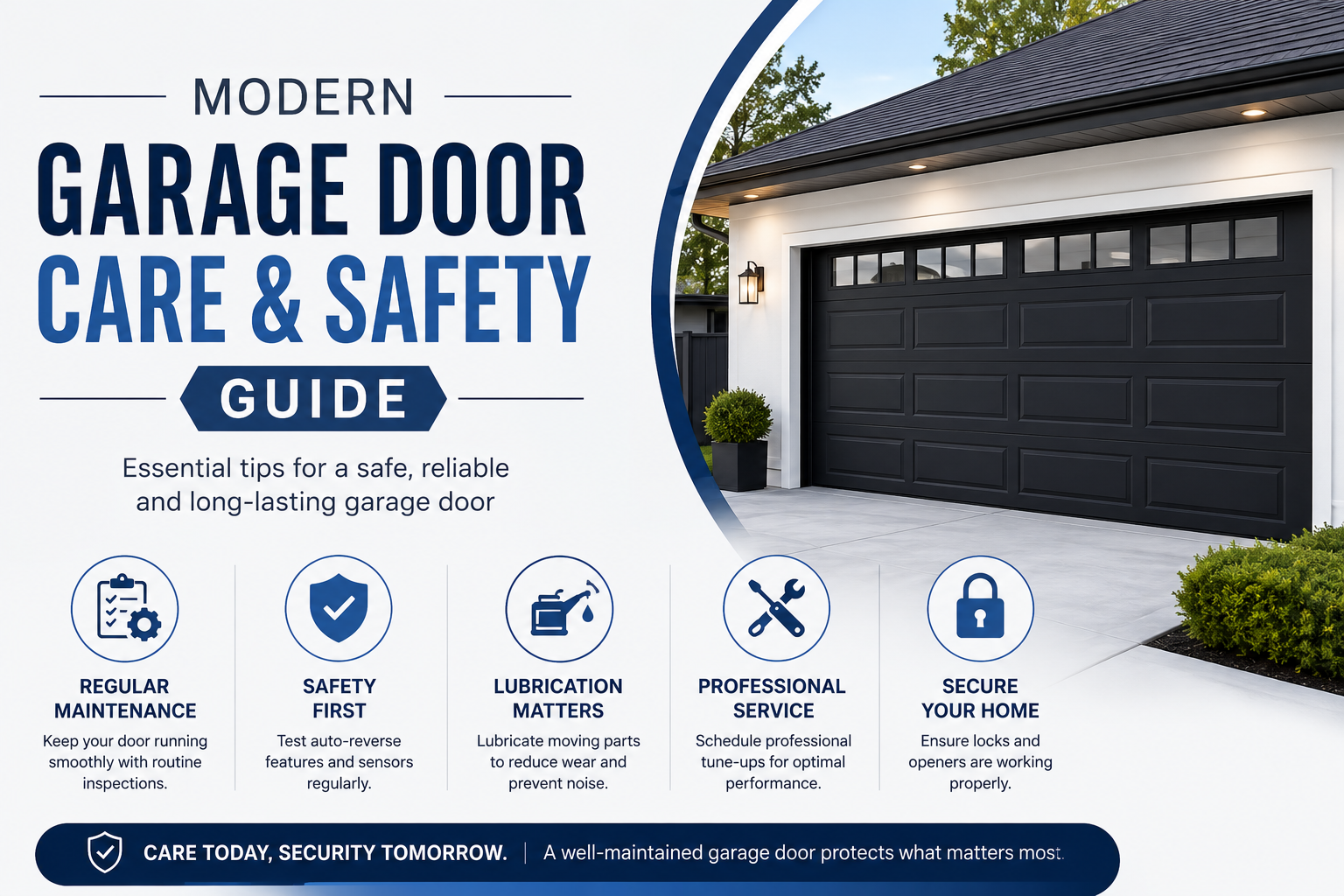
A simple routine check can add years to the life of your garage door. Here are four essential steps every homeowner can follow:
- Step 1: Visual Inspection
- Examine the cables, springs, and hinges for signs of wear, fraying, or rust. Do not adjust high-tension parts yourself; simply check their physical condition.
- Step 2: Clean the Tracks
- Wipe down the inner side tracks with a damp cloth to clear out dust, dirt, and hardened grease buildup that could snag the rollers.
- Step 3: Test the Safety Sensors
- Place an object, like a small block of wood, in the door’s path. Close the door using your remote; it should touch the object and immediately reverse direction.
- Step 4: Lubricate Moving Parts
- Apply a silicone- or lithium-based garage door lubricant to hinges, steel rollers, and springs every six months to ensure whisper-quiet motion.
DIY Care vs. Professional Repair
While basic maintenance like cleaning tracks and testing sensors is safe for DIY enthusiasts, high-tension repairs require professional expertise.
| Garage Door Task | Safe for DIY? | Requires Professional? |
| Sensor Lens Cleaning | Yes | No |
| Hinge & Roller Lubrication | Yes | No |
| Tightening Hardware Bolts | Yes | No |
| Spring Tension Adjustment | No | Yes (High Pressure Risk) |
| Cable Replacement | No | Yes (High Pressure Risk) |
| Track Realignment | No | Yes |
| Opener Motor Repair | No | Yes |
Important Safety Note: Garage door springs and bottom brackets are kept under immense mechanical pressure. Unwinding or disconnecting them without specialized tools can result in severe physical injury. Always leave spring and cable work to certified experts.
Benefits of Upgrading Your Garage Door
Upgrading an outdated garage door system yields long-term practical and aesthetic benefits for your entire property:
- Improved Home Security: Modern openers feature rolling code tech, preventing unauthorized device cloning.
- Lower Energy Bills: Insulated door panels reduce heat transfer, keeping your garage cooler in summer and warmer in winter.
- Quiet Performance: Replacing old steel wheels with sealed nylon rollers reduces operational noise significantly.
- Boosted Curb Appeal: A fresh, modern garage door design instantly increases your home’s exterior aesthetic and resale value.
Keep Your Garage Door Working Safely
By staying on top of periodic maintenance and contacting qualified technicians when complex spring or cable issues arise, you ensure your garage door remains reliable, quiet, and safe for years to come.