





















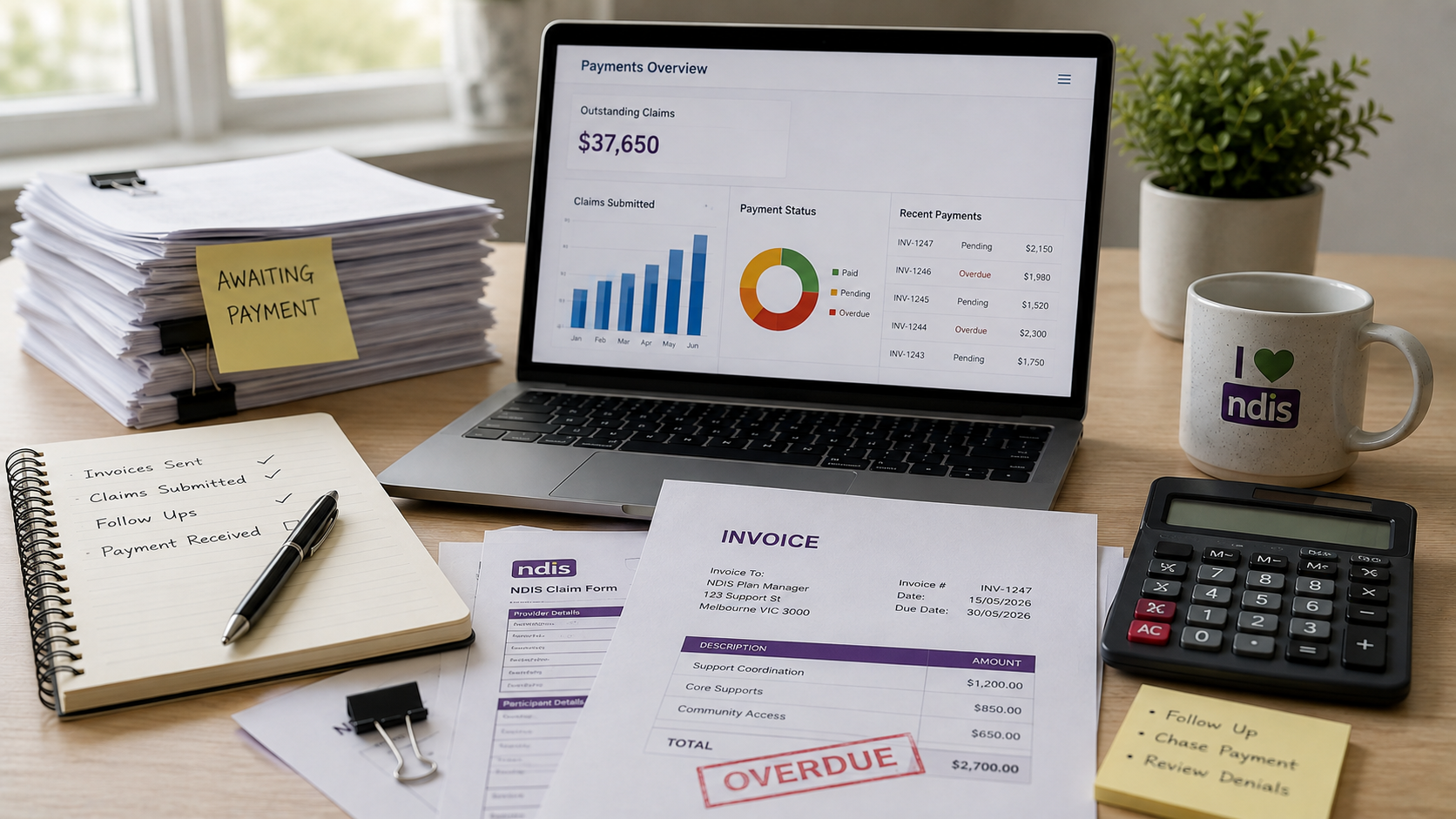
Talk to almost any NDIS provider right now and payment delays come up within the first few minutes. It’s become one of those shared frustrations across the disability support sector, the kind of thing people nod along to at industry meetups because everyone’s dealt with it. Support gets delivered, the invoice goes in, and then the waiting starts. Sometimes it’s a few extra days. Sometimes it stretches into weeks, and for smaller providers running on thin margins, that gap can genuinely threaten the business.
What’s interesting is that this isn’t really about providers doing anything wrong. The NDIS payment system has enough moving parts that delays creep in through no fault of the organisation delivering the care.
The Unique Cash Flow Pressures NDIS Providers Face
Most small businesses deal with one or two payment pathways. NDIS providers deal with three entirely different ones, NDIA-managed, plan-managed, and self-managed arrangements, each with its own timelines, quirks, and points of failure. A support worker might deliver five sessions in a week to five different participants, each one running through a completely different payment process behind the scenes.
This complexity means cash flow forecasting becomes genuinely difficult. A provider can do everything right on their end and still watch payment sit in limbo because of something happening entirely outside their control, a portal glitch, a plan manager who’s behind on processing, or funding that’s technically exhausted even though services were properly delivered.
Why NDIS Invoices Get Delayed or Rejected in the First Place
A lot of unpaid invoices trace back to something surprisingly small. A line item that doesn’t quite match the NDIS Price Guide. A missing service booking. A participant detail that’s slightly off from what’s recorded in the portal. None of these are dramatic mistakes, but the claims system doesn’t leave much room for near enough, and a rejected claim just sits there until someone catches it and resubmits.
Self-managed participants add another layer of risk, since providers are responsible for invoicing directly and following up themselves rather than relying on an automated claims process. Plan-managed and NDIA-managed arrangements come with their own headaches too, mostly around reconciliation discrepancies and remittance advice that doesn’t always land when expected. And with the 2026 PACE system requiring providers to be properly recorded as a participant’s registered provider, invoices submitted without an active service booking or endorsement in the portal often stall before they’ve even been reviewed.
The Ripple Effect of Late Payments on Service Delivery
Here’s where it stops being just an accounting headache. When payments lag, providers start making harder decisions about staffing, rostering, and which services they can keep offering at current levels. Smaller organisations in particular can find themselves stretched thin, trying to maintain quality of care while genuinely uncertain about when the next round of payments will actually land.
This matters beyond the provider’s own bottom line too. Participants rely on consistent, reliable support, and a provider under serious cash flow pressure isn’t set up to deliver that as well as one operating with financial breathing room. Late payments aren’t just a business problem sitting off to the side, they touch the actual quality of care being delivered.
What Providers Can Do Before an Invoice Becomes a Problem
A surprising amount of this is preventable with the right habits built in early. Clear, well-structured service agreements matter more than most providers realise, since they set out payment terms and expectations in a way that heads off disputes before they start. Accurate invoicing that matches NDIA requirements exactly, right down to line items and service dates, reduces the chance of rejection significantly.
Regular reconciliation helps too. Checking claims against payments received on a consistent schedule, rather than only when something feels off, means issues get caught while they’re still small and easy to fix. Providers who build this into a routine tend to have far fewer overdue accounts piling up compared to those who only look at the books when cash flow starts feeling tight.
When Reminders and Follow-Ups Aren’t Enough
Sometimes, despite doing everything reasonably well, an invoice just stays unpaid. A self-managed participant stops responding. A plan manager sits on a claim indefinitely. The NDIA raises questions that drag on for months without resolution. At this point, chasing it alone starts to feel like a losing battle, and providers understandably start looking for a more structured way to handle unpaid NDIS invoices rather than continuing to send the same follow-up email on repeat.
This is where specialist support becomes genuinely worth considering. Providers dealing with persistent non-payment, whether from self-managed participants, unresponsive plan managers, or NDIA claim disputes, often get better results working with people who understand the specific rules and sensitivities of the disability sector rather than treating it like a generic overdue account. The process needs to stay compliant with the NDIS Code of Conduct throughout, which isn’t always something a general collections approach accounts for properly.
Building Financial Resilience as an NDIS Provider
None of this means payment delays will disappear entirely. The system’s complexity isn’t going anywhere soon, and a certain amount of friction seems built into how funding flows through NDIA, plan managers, and participants. What providers can control is how prepared they are for it, through solid documentation, consistent reconciliation, and knowing when it’s time to escalate rather than keep waiting quietly.
Providers who treat this as an ongoing part of running the business, rather than a crisis that flares up occasionally, tend to weather the inevitable payment hiccups with a lot less stress. It’s not a perfect system, but it is one that rewards providers who stay on top of it.
Frequently Asked Questions
Why do NDIS invoices get rejected so often? Most rejections come down to small mismatches, incorrect line items, missing service bookings, or participant details that don’t align with what’s recorded in the NDIS portal. These are usually fixable once identified, but they slow payment down considerably.
Can NDIS providers charge late fees on overdue invoices? No. Under the NDIS Pricing Arrangements and Price Limits, registered providers generally can’t charge interest or late fees. Well-structured service agreements that allow for service suspension in cases of non-payment are the more realistic tool available.
What’s the difference between self-managed and plan-managed payment risk? Self-managed participants require providers to invoice directly and chase payment themselves, which carries more risk of delay. Plan-managed and NDIA-managed arrangements involve more administrative layers, so delays there tend to come from claims processing issues rather than participant behaviour.
When should an NDIS provider bring in outside help for unpaid invoices? Generally once internal follow-up, reminders, and formal letters of demand haven’t resolved the matter. At that point, specialist support familiar with the sector’s specific compliance requirements tends to produce better outcomes than continuing to chase it alone.