




















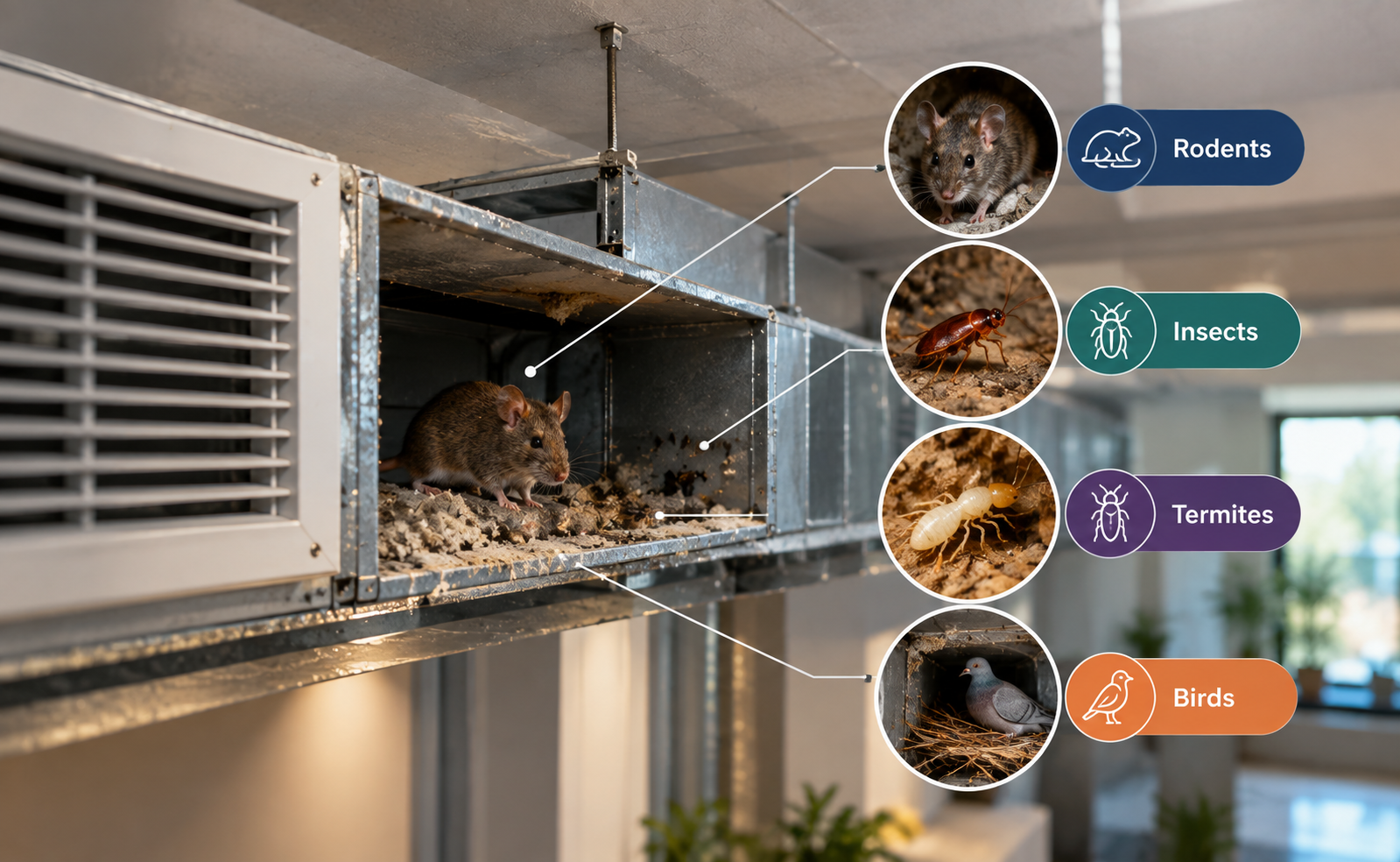
Imagine sitting quietly in your living room late at night, and suddenly you hear a faint scratching sound echoing from behind the drywall. Before you blame the local ghost population, take a moment to look up at your ceiling registers. Your heating and ventilation system provides a climate controlled highway for all sorts of uninvited guests seeking warmth, shelter, and a safe nesting ground. When rodents, insects, and wildlife find their way into your ductwork, they bring more than just a case of the creeps. They turn a clean mechanical system into a biological hazard zone that can compromise your indoor air quality and damage your entire HVAC infrastructure.
The Uninvited Tenants Squirming Through Your Ductwork
When pests breach your home, they rarely stay out in the open where you can spot them easily. Mice, rats, squirrels, and even raccoons view dark, enclosed metal trunk lines as the ultimate luxury apartment complex. Unlike the drafty outdoors, your ductwork offers protection from predators, consistent ambient temperatures, and plenty of cozy insulation to shred for bedding. Insects like roaches, silverfish, and spiders also love the humid microclimates found inside neglected supply and return lines. These creatures do not just pass through for a quick visit. They settle down, build sprawling nests, and leave behind organic waste that quickly circulates through every room in your property whenever the furnace or air conditioner kicks on.
How Pests Breach the Perimeter of Your HVAC System
Understanding how these critters gain entry requires a look at how vulnerable standard residential and commercial ventilation layouts can be. Rodents possess teeth capable of chewing through flexible plastic ducting, thin aluminum foil liners, and fiberglass duct board in a matter of minutes. If an exterior dryer vent flap is left unlatched, or if a chimney cap has a missing mesh screen, pests exploit these openings to drop straight down into the main system. Additionally, gaps around outdoor condenser units, poorly sealed crawl space penetrations, and loose attic gable vents act as welcoming neon signs for opportunistic wildlife looking for an indoor retreat.
The Hidden Damage to Duct Insulation and Sheet Metal
The physical damage pests leave behind goes far beyond a few scattered droppings. When rodents nest inside flexible duct runs, they tear up the inner acoustic liner and shred the thermal fiberglass insulation wrapped around the exterior of the pipe. This destruction reduces your system’s energy efficiency, leading to skyrocketing utility bills as conditioned air escapes into crawl spaces or attics before ever reaching your living areas. Furthermore, rodent urine and droppings are highly acidic. Over time, this waste corrodes galvanized steel sheet metal joints, creating structural leaks that allow dust and carbon monoxide from combustion appliances to infiltrate living spaces.
The Air Quality Crisis Circulating Through Your Rooms
Perhaps the most alarming consequence of an active pest infestation in your duct network is the direct impact on your breathing environment. Every time your blower motor activates, it forces air across accumulated rodent nesting debris, shed insect skins, mold spores thriving on organic waste, and dried urine dust. For property owners dealing with unexplained allergy flare ups, persistent asthma symptoms, or lingering musty odors that refuse to go away, the root cause is frequently hiding inside the supply trunks. If you want expert help tackling these severe contamination issues, property owners often turn to specialists likeWarrior Air Duct Cleaning in Dallas-Fort Worth to restore proper sanitation. Breathing contaminated air day after day puts everyone in the building at risk for chronic respiratory irritation.
Why DIY Pest Control Fails Inside Duct Networks
When property owners discover a critter problem in their vents, the initial instinct is usually to toss a few store bought traps into the crawl space or spray standard bug killer near the register groves. Unfortunately, standard pest control methods rarely solve the root of an HVAC infestation. Setting traps might catch an individual mouse, but it leaves behind decomposing organic matter, hidden nests, and dangerous microbial pathogens tucked deep inside unreachable elbows and plenum boxes. Aerosol sprays can also leave toxic chemical residues that your HVAC system will happily atomize and blow directly into your bedrooms and offices. True remediation requires specialized high-powered vacuum extraction, mechanical agitation, and professional grade antimicrobial treatments.
Professional Restoration and Long Term Prevention
Clearing out a pest-ridden duct system demands a comprehensive approach that goes beyond a simple surface sweep. Professional technicians use specialized negative air machines, heavy-duty collection vacuums, and rotary brushes to scour every linear foot of the duct network. Once all physical debris, nesting materials, and waste are completely extracted, the system requires a targeted antimicrobial fogging treatment to neutralize harmful bacteria and odor-causing microbes. To prevent future invasions, technicians seal exterior entry points, install sturdy mesh guards over dryer vents and fresh air intakes, and repair damaged duct runs. Protecting your property from pests means securing both your perimeter and your ventilation network, ensuring the air you breathe remains fresh, clean, and entirely critter-free.