























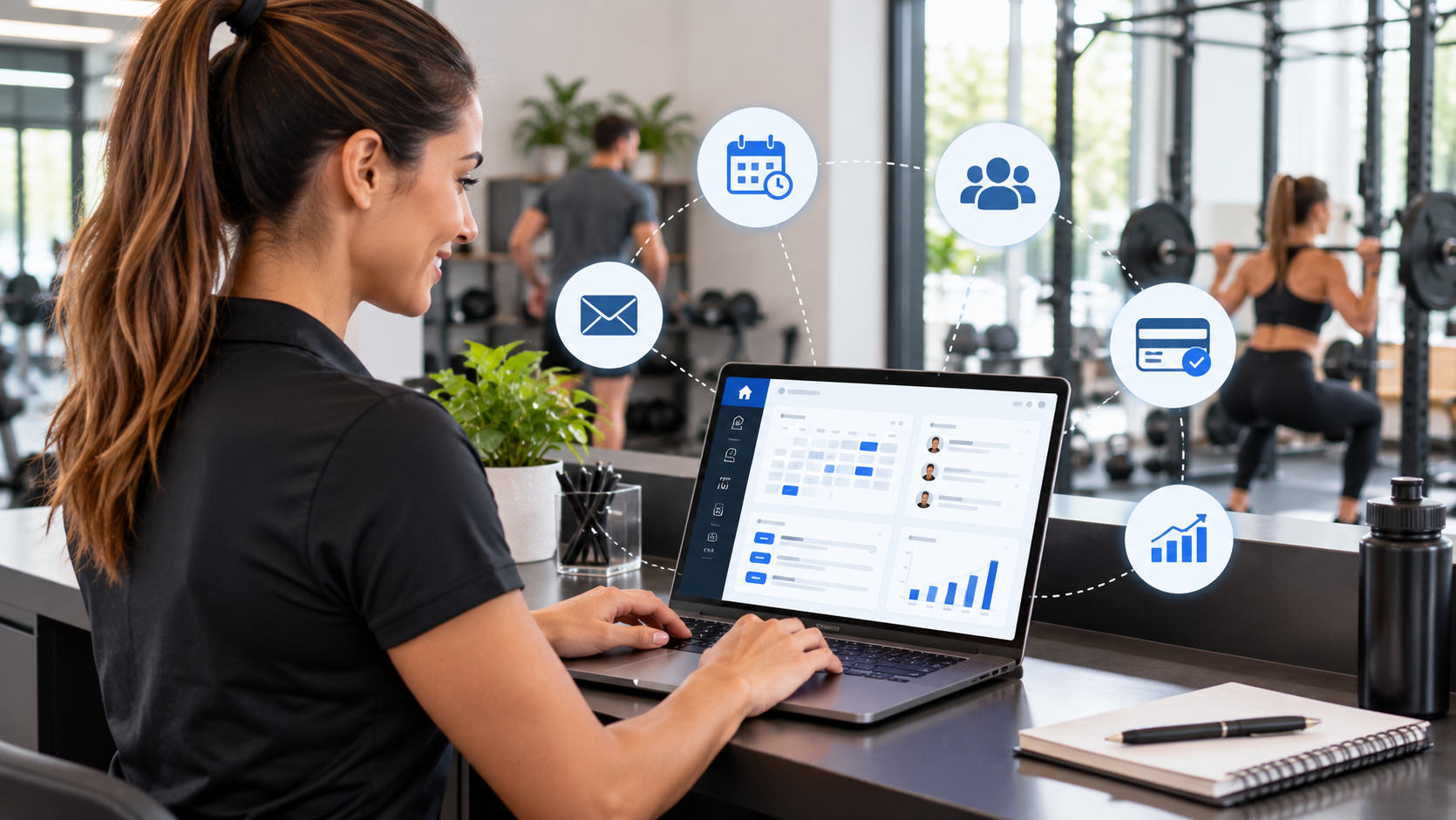
Running a fitness studio involves much more than delivering great classes and helping members achieve their goals. Behind every successful gym, yoga studio or Pilates business is a steady stream of administrative work, from managing bookings and collecting payments to tracking attendance and responding to enquiries.
For smaller fitness businesses, these responsibilities often fall on the owner or a handful of staff members. As membership numbers grow, manual processes become increasingly difficult to manage.
Fortunately, modern business software makes it possible to automate many of these repetitive tasks without sacrificing the personal service that members expect.
Here are five areas where automation can make a measurable difference to daily operations.
1. Class Bookings and Scheduling
Managing class schedules manually can become complicated surprisingly quickly. Members cancel at short notice, instructors change their availability, and popular sessions fill up while others remain half-empty.
Studios relying on spreadsheets, phone calls or direct messages can easily encounter double bookings, outdated schedules and unnecessary administrative work.
An automated booking system allows members to view available sessions, reserve places and manage their bookings without contacting reception.
For studio operators, this creates several advantages:
- Real-time availability: Members see current class capacity and available spaces.
- Automated waitlists: When someone cancels, another member can be offered the vacant place.
- Cancellation management: Booking rules can be applied consistently without manual intervention.
- Instructor scheduling: Staff can access updated timetables and class assignments.
Automation also provides useful information about demand. Over time, owners can identify their busiest sessions, underused time slots and opportunities to adjust the timetable.
This helps studios make scheduling decisions based on actual attendance patterns rather than assumptions.
2. Membership Billing and Payment Collection
Recurring membership payments are essential to the financial stability of many fitness businesses. However, manually tracking payment dates, following up on overdue invoices and updating membership records can consume hours every week.
These tasks become particularly challenging when a studio offers several membership types, class packages and payment arrangements.
Automated billing software can handle recurring charges according to each member’s subscription terms. Depending on the system, it can also issue invoices, record successful transactions and notify members when payments fail.
This reduces the need for staff to check individual accounts and contact members about routine billing matters.
For businesses considering a more integrated approach, gym management software can bring membership administration, payment processing, bookings and customer records into a single system.
Having these functions connected is particularly useful when membership status affects booking privileges or access to certain services.
However, automation does not eliminate the need for financial oversight. Studio owners should still review failed transactions, refunds and billing reports regularly to ensure that everything is working correctly.
3. Member Communication and Reminders
Communication plays an important role in keeping members engaged, but sending every message manually is rarely practical.
A typical fitness studio might need to send booking confirmations, class reminders, membership renewal notices, timetable updates and welcome messages to new members.
Automating routine communication ensures that important information reaches members without requiring constant staff involvement.
For example, a studio could create a simple communication sequence for new members:
- Send a welcome email immediately after registration.
- Provide booking instructions and essential studio information.
- Send a reminder before the member’s first scheduled class.
- Follow up after the first visit to encourage continued participation.
Similar workflows can be created for expiring memberships, unused class packages and changes to scheduled sessions.
The key is to make automated communication relevant rather than excessive. Members are unlikely to appreciate receiving several generic promotional messages every week.
Personal messages from instructors and staff should still have a place, particularly when addressing individual concerns or building relationships with long-term members.
Automation works best when it handles predictable communication and leaves employees more time for meaningful conversations.
4. Attendance Tracking and Member Engagement
Attendance records can reveal important information about how a fitness business is performing.
A member who regularly attends three classes per week but suddenly stops visiting may be losing motivation, experiencing scheduling difficulties or considering cancelling their membership.
Without reliable attendance data, staff may not notice this change until the member decides to leave.
Digital check-in systems and booking software can automatically record participation, giving studio owners a clearer picture of member activity.
This information can support several operational decisions.
Identifying attendance patterns
Owners can see which classes consistently attract strong participation and which struggle to fill available places.
Recognising inactive members
Staff can identify members whose attendance has declined and decide whether a personal check-in would be appropriate.
Evaluating membership engagement
Attendance trends can help businesses assess whether particular membership packages are being used as expected.
Improving capacity planning
Historical attendance data can guide decisions about instructor availability, class sizes and future timetable changes.
Some systems also allow businesses to create automated reminders or re-engagement messages based on attendance activity.
However, declining attendance does not always indicate dissatisfaction. A member may simply be travelling, recovering from an injury or dealing with personal commitments.
Automated alerts should therefore support thoughtful staff follow-up rather than trigger aggressive retention campaigns.
5. Business Reporting and Performance Monitoring
Many studio owners know approximately how their business is performing but struggle to access reliable figures without spending time gathering information from different sources.
Revenue might be tracked in accounting software, attendance in a booking system and membership details in a spreadsheet.
When these records are disconnected, preparing even a basic monthly report can require substantial manual work.
Integrated reporting tools simplify this process by collecting operational information and presenting it through dashboards or scheduled reports.
Depending on the software, studio owners may be able to monitor:
- Active memberships: How many paying members the business currently has.
- Recurring revenue: The income generated through ongoing membership subscriptions.
- Membership cancellations: How many members leave during a given period.
- Class utilisation: The percentage of available class places being used.
- Outstanding payments: Unpaid invoices or unsuccessful recurring transactions.
These figures can highlight issues before they become serious problems.
For example, a studio might experience stable membership numbers but declining class attendance. Another might see strong new-member registrations alongside an increasing cancellation rate.
Both situations deserve attention, but they require different responses.
Automated reporting makes these patterns easier to identify. The decisions that follow still depend on the owner’s knowledge of the business and its members.
Choosing What to Automate First
Not every fitness studio needs to automate every process immediately.
A small yoga studio running a handful of weekly classes may have very different requirements from a multi-location gym managing hundreds of memberships.
The most practical starting point is to identify tasks that are repetitive, time-consuming and prone to human error.
Payment collection and booking management are often strong candidates because they directly affect revenue and customer experience.
Before introducing new software, owners should also consider how well it integrates with their existing systems. Adding several disconnected applications can create new administrative problems instead of solving the original ones.
Staff training is equally important. Even the most capable software delivers limited value when employees do not understand how to use it consistently.
A gradual approach allows businesses to test new workflows, resolve problems and expand automation once the initial improvements are working reliably.
Technology Should Support the Member Experience
Fitness businesses are built around human interaction. Members return because they enjoy the classes, trust their instructors and feel comfortable in the studio environment.
Automation cannot replace those relationships, nor should it attempt to.
Its greatest value comes from reducing the routine work that competes for staff attention.
When bookings, payments, reminders, attendance records and reporting operate efficiently, instructors can focus on teaching, reception staff can spend more time helping members, and owners can devote more energy to improving their businesses.
For independent fitness studios operating with limited resources, that combination of operational efficiency and personal service can provide a meaningful competitive advantage.