


















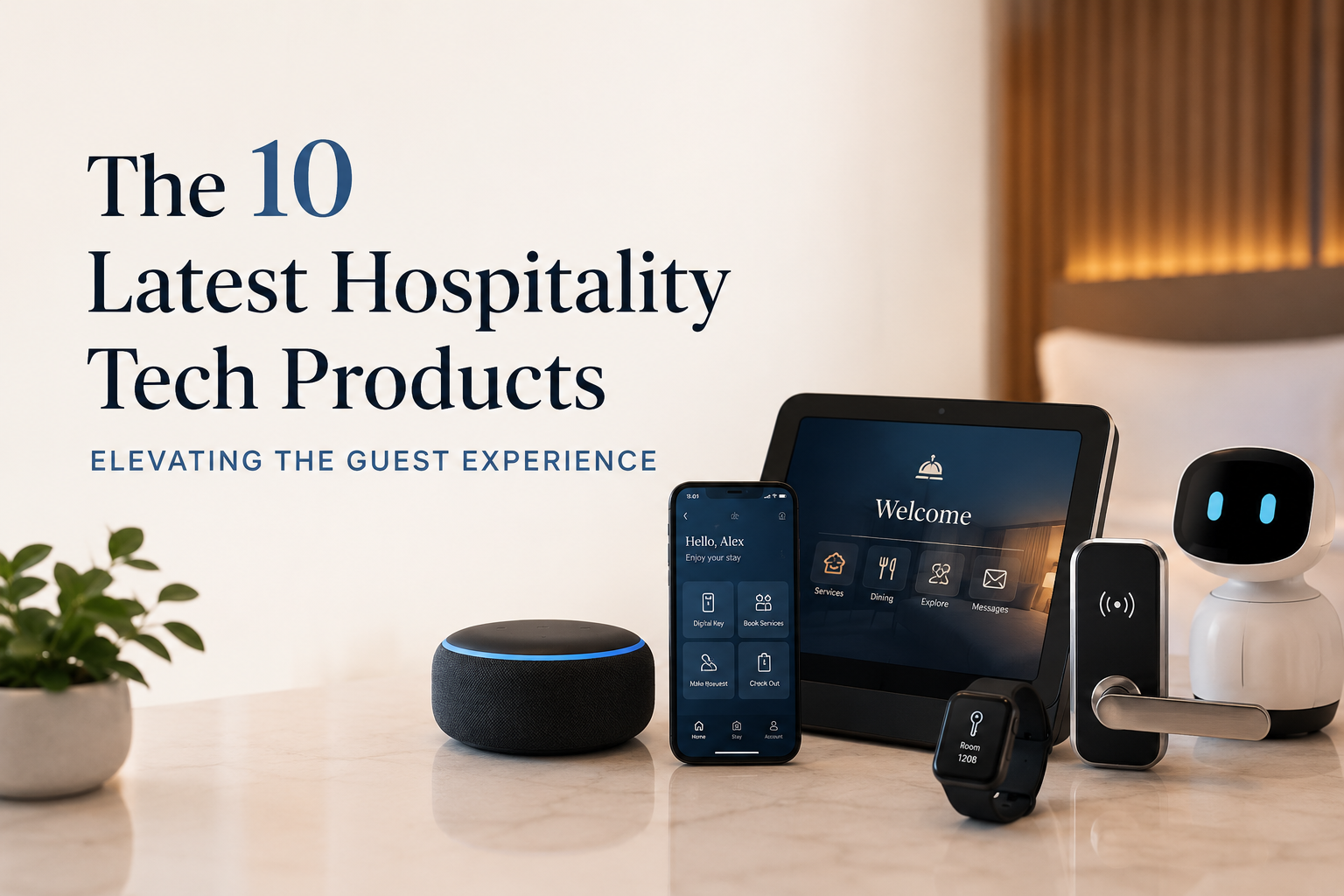
The hospitality industry continues to evolve as hotels embrace innovative hospitality technology products designed to enhance comfort, convenience, personalization, and operational efficiency. Today’s travelers expect seamless digital experiences that mirror the technology they use in their everyday lives. From smart guest rooms and mobile check-in solutions to AI-powered concierge services and advanced entertainment platforms, the latest hospitality technology products are transforming the guest journey from arrival to departure.
As hotels compete to attract modern travelers, investing in cutting-edge technology has become essential. Here are some of the latest hospitality tech products helping hotels elevate the guest experience and drive guest satisfaction.
Smart Room Control Systems
One of the most impactful innovations in hospitality technology is the rise of smart room control systems. These platforms allow guests to manage room features through a mobile app, tablet, or voice assistant.
Guests can adjust lighting, temperature, window shades, television settings, and even room service requests without needing to contact the front desk. Modern systems integrate with property management systems (PMS) and guest profiles to automatically personalize room settings based on previous stays and preferences.
By offering greater convenience and customization, smart room technologies help create memorable guest experiences while also improving energy efficiency for hotel operators.
AI-Powered Virtual Concierge Solutions
Artificial intelligence is becoming increasingly valuable in hospitality, particularly through virtual concierge platforms. These AI-driven solutions provide guests with instant access to information and services throughout their stay.
Available through mobile apps, hotel websites, text messaging, or in-room tablets, virtual concierge systems can answer questions about hotel amenities, restaurant recommendations, local attractions, transportation options, and more.
Many advanced solutions now use generative AI to deliver natural, conversational interactions that closely resemble speaking with a human concierge. This technology allows hotels to provide 24/7 guest support while reducing pressure on front desk teams.
Mobile Check-In and Digital Key Platforms
Guests increasingly prefer contactless experiences that reduce wait times and streamline arrivals. Mobile check-in and digital key solutions have quickly become standard offerings at many hotels.
Using a hotel app, guests can complete check-in procedures before arrival, receive room assignments, and unlock guest room doors using their smartphones. This eliminates the need to visit the front desk while providing greater flexibility and convenience.
These platforms also allow hotels to send personalized messages, upsell amenities, and provide important stay information directly through the guest’s mobile device.
Advanced Hospitality Television Systems
Hospitality televisions have evolved far beyond traditional cable programming. Today’s advanced hospitality TV systems function as entertainment, communication, and service platforms.
Modern hospitality TVs allow guests to stream content directly from their personal devices using technologies such as Google Cast and Apple AirPlay. Guests can access their favorite streaming services without entering credentials on shared devices.
Additionally, hospitality TV platforms can integrate with hotel systems to display personalized welcome messages, promote on-property amenities, offer dining menus, showcase local attractions, and enable room service ordering directly through the television.
These interactive features help create a more engaging and personalized guest experience while generating additional revenue opportunities for hotels.
Guest Messaging Platforms
Guest messaging solutions have become one of the most effective communication tools in modern hospitality. These platforms allow guests to interact with hotel staff via SMS, WhatsApp, mobile apps, or web chat.
Whether requesting extra towels, scheduling housekeeping, ordering room service, or asking for local recommendations, guests can communicate using familiar messaging channels rather than making phone calls.
Hotels benefit from faster response times, improved service consistency, and detailed records of guest interactions. Many messaging platforms also incorporate AI-powered automation to handle common requests instantly.
In-Room Tablets and Digital Guest Directories
Traditional printed guest directories are increasingly being replaced by interactive in-room tablets. These devices serve as centralized hubs for guest services and hotel information.
Guests can browse restaurant menus, book spa appointments, request housekeeping, control room features, review local attractions, and communicate directly with hotel staff from a single interface.
Hotels can update content instantly, eliminate printing costs, and promote revenue-generating services more effectively. The result is a more modern and convenient guest experience that aligns with today’s digital expectations.
Smart Minibars and Retail Technology
The latest smart minibar solutions are helping hotels improve convenience while reducing operational challenges. These systems use sensors and automated inventory tracking to monitor product consumption in real time.
When guests remove items, charges can automatically be added to their folios, reducing disputes and improving billing accuracy. Some properties are also introducing self-service retail kiosks and grab-and-go marketplaces powered by automated checkout technology.
These innovations provide guests with faster access to snacks, beverages, and travel essentials while reducing labor requirements for hotel operators.
Service Robots for Hospitality
Hospitality robots are becoming increasingly common in hotels worldwide. While they do not replace human staff, they help improve efficiency and guest convenience.
Service robots can deliver amenities, room service orders, toiletries, and guest requests directly to rooms. Some robots assist with luggage transport, cleaning tasks, and public area monitoring.
Guests often view robotic services as innovative and memorable, particularly in tech-forward hotels targeting younger travelers and business guests. These solutions also allow staff to focus on higher-value guest interactions.
Smart Sleep Technology
Sleep quality remains one of the most important factors influencing guest satisfaction. As a result, hotels are increasingly investing in sleep-enhancing technology.
Modern smart sleep products include adjustable beds, circadian lighting systems, sleep-tracking devices, white noise systems, and intelligent climate control solutions. Some platforms even allow guests to customize room environments specifically for better sleep.
By helping travelers achieve higher-quality rest, hotels can significantly improve guest satisfaction scores and encourage repeat visits.
Personalized Guest Experience Platforms
Personalization has become a major competitive advantage in hospitality. Advanced guest experience platforms leverage data analytics, customer relationship management (CRM) systems, and artificial intelligence to deliver highly personalized stays.
These systems collect guest preferences related to room type, dining habits, communication preferences, loyalty status, and previous interactions. Hotels can then use this information to tailor recommendations, promotions, room settings, and service offerings.
Guests increasingly expect personalized experiences, and technology enables hotels to deliver them at scale.
The Future of Hospitality Technology
The future of hospitality technology will continue to focus on personalization, convenience, and seamless integration. As artificial intelligence, smart devices, automation, and data analytics become more sophisticated, hotels will gain even greater opportunities to create exceptional guest experiences.
Successful hotels understand that technology should not replace hospitality, it should enhance it. The most effective solutions empower staff to provide better service while giving guests greater control, convenience, and personalization throughout their stay.
By investing in the latest hospitality tech products, hotels can improve guest satisfaction, strengthen brand loyalty, increase operational efficiency, and remain competitive in an increasingly technology-driven marketplace.