





















For years, technical SEO was often viewed as the “behind-the-scenes” aspect of search engine optimization. It wasn’t as exciting as publishing blog posts, building backlinks, or launching digital marketing campaigns, but it served as the foundation that allowed every other SEO effort to succeed.
Today, that foundation has become even more important.
As artificial intelligence reshapes how search engines understand, organize, and recommend information, technical SEO is no longer simply about helping Google crawl your website. It’s about helping AI systems confidently interpret your business, your expertise, and the information you publish.
Businesses investing in technical SEO today aren’t just improving rankings—they’re preparing their websites for the future of search.
AI Still Depends on Well-Structured Websites
One of the biggest misconceptions about AI-powered search is that technical SEO matters less because AI is “smart enough” to understand everything.
The reality is quite different.
Artificial intelligence depends on structured, organized, and accessible information. Before AI can summarize your content, recommend your business, or reference your expertise, search engines must first discover, crawl, index, and understand your website.
If your website is difficult to crawl, loads slowly, contains duplicate content, or lacks structure, AI has less confidence in the information it finds.
The better organized your website is, the easier it becomes for both search engines and AI systems to accurately interpret your content.
Technical SEO Creates Trust for Search Engines
Google’s goal has always been to provide users with the best possible answers.
AI has simply raised the expectations.
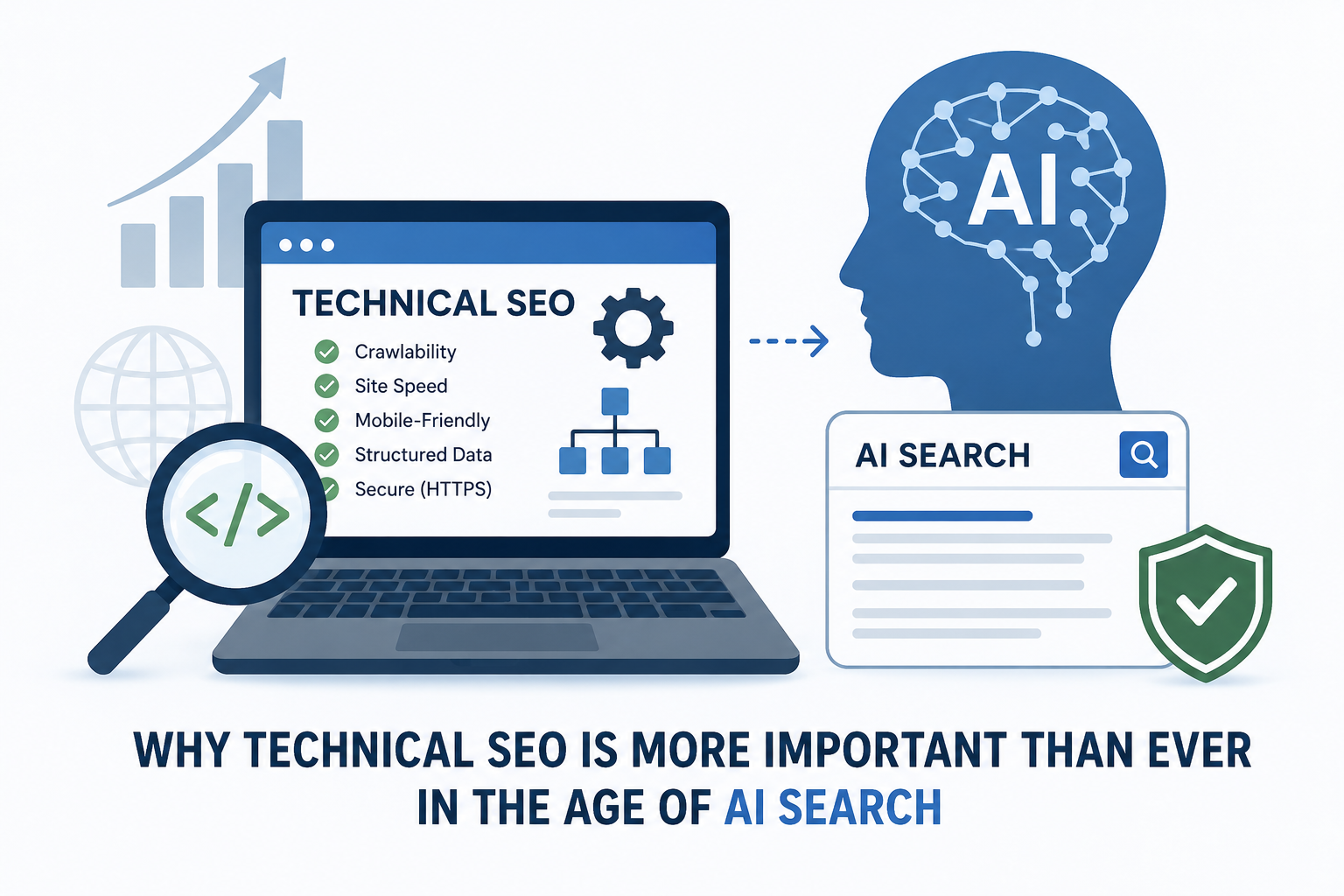
Search engines now evaluate websites based on dozens of technical factors, including:
- Crawlability
- Mobile usability
- Site speed
- Security
- Internal linking
- Structured data
- URL architecture
- Duplicate content
- Core Web Vitals
- Accessibility
Each of these elements contributes to one larger objective: determining whether your website can be trusted as a reliable source of information.
When technical issues accumulate, that trust begins to erode.
Website Speed Still Influences Everything
Users expect websites to load almost instantly.
If your pages are slow, visitors leave before they engage with your content. Search engines recognize this behavior and often treat it as a signal that the user experience needs improvement.
Fast websites benefit from:
- Lower bounce rates
- Longer session durations
- Higher engagement
- Better conversion rates
- Improved mobile usability
- Stronger crawl efficiency
Speed isn’t just a user experience factor—it directly affects how efficiently search engines crawl your website and how confidently they recommend it.
Improving performance often produces benefits across SEO, paid advertising, and overall customer satisfaction.
Mobile Optimization Is No Longer Optional
More than half of all searches now occur on mobile devices, and many AI-powered searches originate from smartphones.
A mobile-friendly website should provide:
- Fast loading pages
- Easy navigation
- Readable typography
- Proper button spacing
- Responsive layouts
- Simple contact options
Businesses that neglect mobile optimization risk frustrating both users and search engines.
A technically excellent desktop experience cannot compensate for poor mobile usability.
Structured Data Helps AI Understand Your Business
One of the most valuable technical SEO investments is implementing structured data, commonly known as Schema markup.
Schema helps search engines identify:
- Business information
- Products
- Services
- Reviews
- Frequently asked questions
- Articles
- Authors
- Events
- Locations
Rather than forcing search engines to infer meaning from page content alone, structured data provides explicit context.
As AI continues generating summaries and recommendations, this additional clarity becomes increasingly valuable.
Think of Schema as translating your website into a language search engines understand more efficiently.
Internal Linking Builds Topical Authority
Many businesses underestimate the importance of internal linking.
A well-planned internal linking strategy helps search engines understand:
- Which pages are most important
- How topics relate to one another
- The depth of your expertise
- The overall architecture of your website
Strong internal linking also improves user navigation, helping visitors discover related resources while distributing authority throughout the site.
When AI evaluates topical expertise, a logical website structure reinforces your authority far more effectively than isolated pages.
Clean Site Architecture Improves Understanding
Search engines prefer websites that are easy to navigate.
An organized structure typically includes:
- Logical navigation
- Clear service categories
- Descriptive URLs
- Organized content hubs
- Consistent page hierarchy
- Minimal orphan pages
This organization helps both users and search engines understand how your content fits together.
Businesses with hundreds of disconnected pages often struggle to establish topical authority because their expertise appears fragmented.
Core Web Vitals Continue to Matter
Google’s Core Web Vitals remain an important indicator of page quality.
These metrics evaluate:
- Loading performance
- Visual stability
- User interaction responsiveness
Although Core Web Vitals represent only one part of Google’s ranking systems, they directly influence user satisfaction.
AI search platforms ultimately want to recommend websites that provide excellent experiences—not just accurate information.
Improving these metrics often results in stronger engagement and higher conversion rates.
Crawlability Is the Foundation of Visibility
Search engines cannot recommend pages they cannot effectively crawl.
Common crawl issues include:
- Broken links
- Redirect chains
- Duplicate pages
- Incorrect canonical tags
- Blocked resources
- Missing XML sitemaps
- Poor robots.txt configurations
Regular technical audits help identify these problems before they negatively impact visibility.
Businesses frequently spend thousands of dollars creating content that search engines struggle to access because of preventable technical errors.
HTTPS and Security Build Confidence
Website security has become a basic expectation.
HTTPS encryption protects user information while reinforcing trust with both visitors and search engines.
Modern browsers actively warn users when websites lack proper security certificates.
Those warnings often reduce conversions before visitors even engage with your content.
Security may not directly generate rankings, but it absolutely influences credibility.
Technical SEO Supports Every Other Marketing Channel
One of the greatest misconceptions about technical SEO is that it benefits only organic search.
In reality, it improves the performance of nearly every digital marketing initiative.
A technically optimized website supports:
- Organic SEO
- AI search visibility
- Google Ads landing pages
- Social media traffic
- Email marketing campaigns
- Conversion optimization
- User experience
- Analytics accuracy
Every marketing dollar becomes more effective when visitors arrive on a fast, secure, and well-organized website.
Technical SEO Is a Competitive Advantage
Many businesses continue focusing almost exclusively on content creation while overlooking technical improvements.
This creates a significant opportunity.
Companies that invest in technical SEO often achieve stronger long-term performance because they eliminate the friction that prevents search engines from fully understanding their websites.
This is one reason businesses frequently partner with an experienced Colorado Springs SEO agency or another technical SEO specialist. While content and backlinks often receive the attention, technical optimization ensures every other SEO investment performs at its highest potential.
Preparing for the Future of AI Search
As AI-powered search continues to evolve, businesses should prioritize creating websites that are easy for both humans and machines to understand.
Practical priorities include:
- Improve website speed and Core Web Vitals.
- Ensure every page is mobile-friendly.
- Implement comprehensive Schema markup.
- Strengthen internal linking between related topics.
- Eliminate crawl errors and duplicate content.
- Maintain secure HTTPS encryption.
- Organize content into clear topical clusters.
- Conduct regular technical SEO audits.
These improvements not only strengthen traditional SEO but also position businesses for greater visibility across AI-powered search platforms.
Final Thoughts
Technical SEO has always been the engine behind successful search marketing. In the age of AI search, its importance has only grown.
Artificial intelligence depends on accurate, structured, and trustworthy information. Businesses that invest in technical excellence make it easier for search engines and AI systems to understand their websites, recognize their expertise, and confidently recommend their services.
While content, backlinks, and brand authority remain essential, none of those efforts can reach their full potential without a technically sound website supporting them.
The future of SEO won’t belong solely to businesses that publish the most content or build the most links. It will belong to those that create fast, secure, well-structured websites that provide exceptional experiences for users while giving search engines every reason to trust what they find.
In an AI-first search environment, technical SEO is no longer just a best practice—it’s a strategic advantage.